November 6, 2026
Best WMS software for D2C businesses in India in 2027
Compare WMS software for D2C businesses in India in 2027. Explore inventory, picking, returns and multi-warehouse features before choosing a system.
Jahnvi Gupta

November 6, 2026
Compare WMS software for D2C businesses in India in 2027. Explore inventory, picking, returns and multi-warehouse features before choosing a system.
Jahnvi Gupta
As a D2C brand grows, managing stock across its website, marketplaces and warehouses becomes harder. Teams need to know what is available, where each product is stored and which orders are ready to ship. When those details sit in separate tools or spreadsheets, stock can fall out of sync. As a result, teams may oversell products, delay dispatch or spend more time resolving errors.
A warehouse management system, or WMS, brings these tasks into a connected workflow. It helps teams record incoming stock, locate products, pick and pack orders, and track returns. This guide compares 7 WMS platforms that D2C businesses in India can evaluate in 2027. It also explains which features to check before choosing a system.
A warehouse management system is software that helps a business manage inventory and daily warehouse work. Teams can use it to receive stock, record where items are stored, pick products for orders, pack shipments and update inventory as stock moves.
For D2C brands, warehouse activity is only one part of fulfilment because orders also come from websites and marketplaces. Therefore, a WMS should connect warehouse inventory with these sales channels. When a product sells on one channel, the system can update its available stock across the others, helping prevent overselling. As the brand adds products, channels or warehouses, these connected workflows also make it easier to manage fulfilment from one place.
Each WMS platform listed below supports different warehouse and business needs. Use this list to build a shortlist, then compare the systems against your products, order flows and existing tools.
| WMS | What to explore |
|---|---|
| Fynd WMS | Inventory across D2C websites, quick commerce and marketplaces, warehouse visibility, barcode scanning and returns |
| Unicommerce Uniware | Warehouse and inventory workflows connected with ecommerce operations |
| EasyEcom EasyWMS | Warehouse operations across D2C, marketplaces, quick commerce and B2B |
| Increff WMS | Scan-based warehouse operations and multi-channel fulfilment |
| Vinculum Vin WMS | B2B and B2C fulfilment using shared inventory |
| SAP Extended Warehouse Management | Complex warehouse and supply-chain operations |
| Manhattan Active Warehouse Management | Large-scale warehouse operations and multi-channel fulfilment |
Fynd WMS helps D2C brands manage inventory and fulfil orders across multiple warehouses and sales channels. It connects inventory across D2C websites, quick commerce and marketplaces, helping teams keep stock aligned as orders come in from different channels. In addition, it integrates with ERP, POS, OMS and delivery partners.
Fynd WMS gives teams a central view of receiving, picking, packing and returns. For example, warehouse employees can use handheld barcode scanning to record stock movements, while bin-level tracking helps them locate products. When items are returned, reverse quality checks help teams separate saleable products from damaged stock.
The system also supports batch and expiry tracking through FIFO and FEFO workflows. This can help brands selling products with expiry dates, such as food, grocery or beauty products.
Consider Fynd WMS if you sell through your own website and marketplaces, run a local quick commerce platform, manage stock across multiple warehouses, or want warehouse workflows connected with other commerce systems.
Fynd Warehouse Management System (WMS) supports different operating models, from a retail network with multiple warehouses to a school-uniform business connecting its warehouse, outlets, and online store.
Cottonworld moved 30+ stores and two warehouses from four legacy systems to Fynd’s connected platform in one night. The setup included a dedicated warehouse for e-commerce orders and another for offline stock and store transfers. This connected store and online operations through shared inventory and order systems.
School-uniform retailer Kotu is connecting one central warehouse, seven outlets and its Shopify store with Fynd WMS, OMS and POS. The warehouse setup includes bin and location tracking, scan-confirmed goods receipt, and a unique barcode for each unit. This gives Kotu a way to trace inventory as it moves from the warehouse to an outlet or an online order.
Karviyam Family Mart used Fynd WMS as part of a wider retail setup that also included POS, loyalty, and in-store tools. The store opened with around 14,000 catalog entries ready and recorded ₹6.37 lakh in net sales on its first day. This shows how Fynd’s warehouse and inventory workflows can support a new store launch alongside the other systems needed to run it.
Unicommerce Uniware combines warehouse and inventory management with ecommerce operations. Teams can use it to manage receiving, picking, packing, putaway, and inventory updates across warehouses and sales channels.
This may suit D2C brands that want to manage warehouse activity alongside orders from their website and marketplaces. Before choosing it, check how the system handles your channel integrations, stock allocation rules, returns, and busy sale periods.
EasyEcom EasyWMS supports ecommerce warehouse operations across D2C, marketplaces, quick commerce, and B2B. Its workflows cover receiving, inventory accuracy, picking and dispatch across multiple warehouses.
If your brand sells through several channels, check how EasyWMS updates stock and connects with your ecommerce platform, marketplaces, carriers, and ERP. Then ask the provider to demonstrate these workflows using your actual order types.
Increff WMS supports warehouse operations and fulfilment across D2C, ecommerce, quick commerce, marketplaces, wholesale and offline retail. It also includes scan-based warehouse operations and serialized inventory.
This may suit brands that manage many product variants or fulfil orders across different channels. During a demo, ask the provider to show how the system handles SKU identification, picking, stock movement, and exceptions for your products.
Vinculum Vin WMS supports warehouse operations for both B2B and B2C orders. It helps teams manage shared inventory and handle picking, packing, shipping, and returns across channels.
This may suit brands that serve individual customers as well as wholesale or distributor accounts. In that case, check how the system allocates stock between order types and supports your warehouse and fulfilment partners.
SAP Extended Warehouse Management supports warehouse processes within broader supply-chain operations. Its capabilities include inventory visibility, warehouse automation, slotting, and inbound and outbound processes for high-volume warehouses.
SAP EWM may suit D2C companies with complex warehouse networks or an existing SAP environment. However, before shortlisting it, clarify the implementation scope, integration requirements, and expertise your team will need to operate the system.
Manhattan Active Warehouse Management supports warehouse planning and fulfilment operations. It is designed for businesses that need to manage complex, large-scale warehouse activity and multi-channel fulfilment.
For a D2C business, the key question is how well it will connect with your ecommerce channels, order systems, carriers, and existing warehouse processes. So, include those workflows in your evaluation.
Start with the work your warehouse team does every day. Then ask each provider to demonstrate how its platform handles your products, orders, channels, and exceptions.
Fynd WMS onboarding starts by mapping your warehouse locations, inventory workflows, sales channels, and existing systems. The setup can then be configured around how your team receives stock, picks and packs orders, processes returns, and handles exceptions.
During onboarding, teams can:
Most warehouses can go live within weeks, depending on the complexity of the operation and its integration needs. Therefore, confirm the timeline for your warehouse network, systems, and data migration before starting the rollout.

Jahnvi Gupta
Jahnvi Gupta is a Senior Content Writer at Fynd with 6+ years of experience turning complex product ideas into content that’s clear, useful, and easy to follow. She writes about AI-first business tools, ecommerce technology, and the systems shaping modern retail operations with a focus on making technical concepts practical for growing businesses.
Fynd WMS is a strong choice for D2C businesses that need to manage inventory across sales channels and warehouses. It brings together multi-channel inventory, warehouse visibility, barcode scanning and returns workflows. As your business grows, its integrations with ERP, POS, OMS and delivery partners help connect warehouse operations with the rest of your commerce setup.
Fynd’s commerce ecosystem brings Fynd Konnect and Fynd WMS together to connect your marketplaces, website and warehouse operations. Konnect syncs marketplace listings, inventory, pricing, orders and returns, while the WMS dashboard connects with Shopify and other D2C websites. Because these tools work together, stock updates flow across connected channels as orders are placed and fulfilled, giving teams a shared inventory view and helping prevent overselling.
Yes. Fynd WMS gives teams a central view of inventory across multiple warehouses and supports multi-channel fulfilment. It also integrates with POS and OMS, which helps connect warehouse stock with store and online operations. Therefore, teams can coordinate inventory and fulfilment as they add locations and sales channels.
An ecommerce WMS should support multi-channel inventory, receiving, picking, packing, dispatch, barcode scanning, bin-level tracking and returns. Fynd WMS brings these workflows together with a warehouse control tower, exception handling and FIFO/FEFO inventory management. This helps teams track stock and manage fulfilment from one system.
Fynd WMS supports barcode scanning across receiving, picking, packing and putaway. Since employees can scan products and track them by bin location, they can verify stock as it moves through the warehouse and resolve mismatches sooner. The system’s exception workflows also help teams manage stock discrepancies before they affect fulfilment.
Upgrade your WMS when your current system cannot keep inventory aligned across channels, manage multiple warehouses or give teams clear visibility into fulfilment. Fynd WMS supports multi-channel inventory, warehouse visibility, barcode scanning, returns and integrations with ERP, POS, OMS and delivery partners, giving growing brands a connected foundation for warehouse operations.
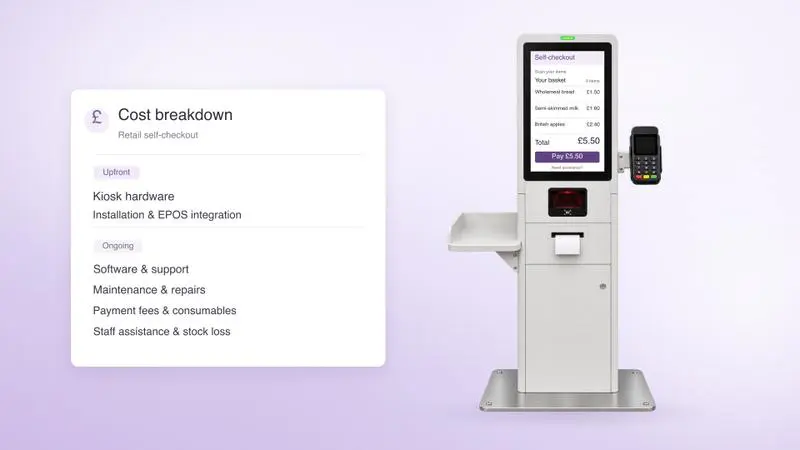
Self-checkout kiosk costs in the UK range from about £4,400 for compact hardware to £40,000 for a full grocery lane, before software and installation.

Compare the best TMS software for delivery-first businesses in India in 2027. Explore tools for route planning, dispatch, rider tracking and carrier management.
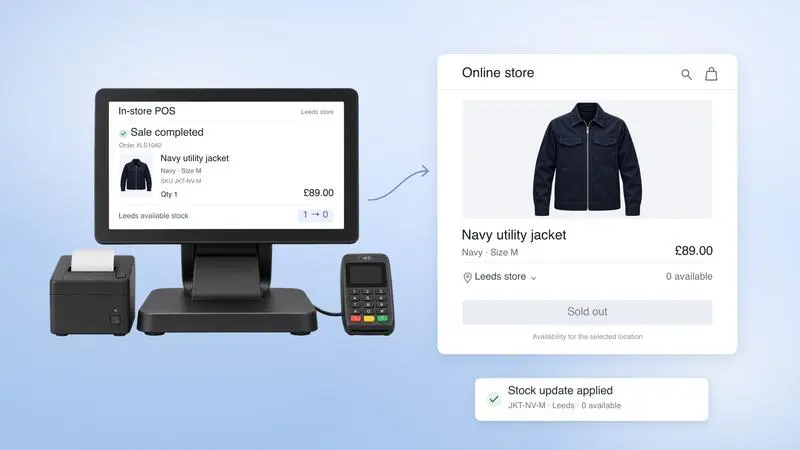
How POS ecommerce integration works, how stock syncs between stores and online, which system should hold master data, and what happens when a sync fails.
Fill out the form
Share your contact information to get started
Speak to an expert
A member of our sales team will get in touch with you