November 6, 2026
Best AI PIM software for ecommerce businesses in India in 2027
Compare AI PIM software for ecommerce businesses in India. Explore catalog enrichment, marketplace listings, AI content generation, and channel publishing.
Jahnvi Gupta

November 6, 2026
Compare AI PIM software for ecommerce businesses in India. Explore catalog enrichment, marketplace listings, AI content generation, and channel publishing.
Jahnvi Gupta
When an ecommerce business starts selling through more websites and marketplaces, its product catalogue grows too. Teams then have to keep product titles, descriptions, images, attributes and prices accurate on every channel. If that information is spread across spreadsheets and separate systems, even a small change can mean repeating the same work. As a result, listings may become inconsistent or remain incomplete.
An AI-powered product information management system, or AI PIM, brings product data together in one place. Teams can use it to generate product content, organize attributes and check listings against channel requirements. This makes it easier to update and publish accurate product information as the business grows. In this guide, we compare seven AI PIM platforms for ecommerce businesses to consider in 2027 and explain what to look for when choosing one.
AI PIM software centralizes product information and uses artificial intelligence to help teams organize, enrich and prepare it for sales channels. It can work with information such as product images, spreadsheets and raw product data to generate titles, descriptions, attributes and SEO keywords.
A PIM also helps teams adapt product information to the requirements of different channels. For example, marketplaces may require specific fields, formats or category attributes. With AI PIM, teams can manage product information in one workspace, check it against channel requirements and publish listings without rebuilding each one manually.
Each PIM platform supports different product data and publishing needs. Use this list to build a shortlist, then compare the systems against your catalogue, sales channels and existing tools.
| AI PIM platform | What to explore |
|---|---|
| Fynd AI PIM | AI-generated product listings, marketplace-specific attributes, validations and multi-channel publishing |
| Akeneo Product Cloud | Product data management, AI enrichment, translations and supplier data workflows |
| Pimcore PIM | Flexible product data management, AI-enabled workflows and multi-channel publishing |
| Salsify PXM | Product information management, syndication and AI-powered automation |
| Plytix PIM | Product data management, digital assets and AI content tools |
| Inriver PIM | AI-assisted enrichment, product data governance and channel activation |
| Syndigo PIM | Product information, syndication, data quality and connected product experiences |
Fynd AI PIM helps ecommerce teams create, manage and publish product listings from one workspace. Teams can upload product images or raw data, and AI PIM can generate product titles, descriptions and SEO keywords aligned with their brand voice. It can also transform product images for different channel requirements.
Fynd AI PIM organizes product information in one place, so teams do not have to manage catalogues across disconnected spreadsheets, drives and databases. It supports custom attributes, product templates and product relationships. In addition, its AI-powered validations help teams identify missing or incorrect information before publishing.
The platform also adapts product information to marketplace schemas. Attribute coverage indicators and value mapping help teams prepare listings for marketplaces such as Amazon, Myntra and Flipkart. Teams can publish to multiple channels from one source, while APIs support custom and D2C integrations.
Consider Fynd AI PIM if you need to create product content from images or raw data, prepare listings for multiple marketplaces, or manage product information for your website and other sales channels.
Akeneo Product Cloud helps businesses centralize, enrich and activate product information across sales channels. Its platform includes generative AI for product content, automated translation, data validation workflows and product asset management.
Akeneo also supports supplier data workflows, which can help teams bring product information into the PIM for review and enrichment. This may suit businesses that manage product information from multiple suppliers or need to adapt content for different markets.
Pimcore PIM centralizes product information and supports data integration, enrichment and multi-channel publishing. The platform also includes AI and machine-learning capabilities for product data and customer experiences.
Pimcore may suit businesses that need flexibility to connect product information with other data and content systems. Before choosing it, assess the configuration, integrations and technical resources required for your implementation.
Salsify PXM brings together product information management, syndication and AI-powered automation. The platform helps brands organize product content and distribute it to the channels where customers shop.
Salsify may suit brands that need to manage product content and marketplace syndication as connected workflows. During evaluation, check whether its channel coverage, data requirements and content processes match your selling markets.
Plytix PIM combines product information management with digital asset and AI content tools. Teams can use its AI features to create or update product text, adapt content for new markets and work with product information in bulk.
This may suit businesses that want to manage product details and digital assets together. Check how Plytix organizes product variations, supports your sales channels and handles approvals before listings go live.
Inriver PIM helps brands and manufacturers manage product information through enrichment, governance and channel activation workflows. Its AI tools can assist teams with product content enrichment, while workflows help keep product updates organized and reviewed.
Inriver may suit businesses with large product portfolios and structured governance needs. As you assess it, check how its workflows connect with the systems and channels your teams already use.
Syndigo PIM helps businesses manage product information and distribute it across sales channels. Its platform connects PIM with product data management, syndication and analytics capabilities.
This may suit businesses that need to manage product information alongside supplier and channel data. During a demo, check how the platform supports your product categories, marketplace requirements and current data workflows.
Start with the product data your teams manage and the channels where you sell. Then ask each provider to demonstrate how its platform handles your actual catalogue and publishing workflows.
Start by mapping your product data sources, catalogue structure and sales channels. Then configure Fynd AI PIM around the attributes, templates and publishing requirements your teams use.
Teams can:
Because product data and channel requirements vary by business, set up Fynd AI PIM around your catalogue and integrations. This gives your team consistent workflows as you add products and channels. Book a demo of Fynd AI PIM to see how it can help you enrich, validate and publish product listings from one place.

Jahnvi Gupta
Jahnvi Gupta is a Senior Content Writer at Fynd with 6+ years of experience turning complex product ideas into content that’s clear, useful, and easy to follow. She writes about AI-first business tools, ecommerce technology, and the systems shaping modern retail operations with a focus on making technical concepts practical for growing businesses.
An ecommerce business should use a PIM when it needs to manage product information across a growing catalogue and multiple sales channels. Fynd AI PIM centralizes product data and helps teams generate, validate and publish channel-ready listings. As a result, teams can manage catalogue updates from one workspace instead of repeating them across separate tools.
Fynd AI PIM lets your team manage product information in one workspace and prepare it for different channels. It maps catalogue data to marketplace-specific requirements and supports custom and D2C integrations through APIs. As a result, your team can publish consistent listings across marketplaces and websites without rebuilding each listing manually.
Fynd AI PIM supports bulk operations and lets teams bring raw product data into one workspace. You can organize catalogue information with templates, attributes and product relationships, then use AI to enrich listings at scale. This helps teams manage large catalogues without relying on separate spreadsheets for every product update.
Fynd AI PIM lets teams define product attributes, templates and product relationships to organize detailed catalogue data. This helps businesses structure products with attributes such as size, colour and collection, then prepare that information for their sales channels. Teams can review how the setup handles their specific product variants during a demo.
Yes. Fynd AI PIM can generate product titles, descriptions and SEO keywords from product images or raw data. Teams can align the content with their brand voice and use built-in validations to check listings before publishing. This helps reduce repetitive writing while keeping review and approval within the catalogue workflow.
Compare the catalogue size, number of sales channels, required integrations and workflows each PIM supports. Fynd AI PIM includes marketplace-ready schemas, channel-specific attribute mapping, validations and APIs for custom or D2C integrations. For an accurate price and rollout plan, book a Fynd AI PIM demo and review your catalogue and integration needs with the team.

Compare WMS software for D2C businesses in India in 2027. Explore inventory, picking, returns and multi-warehouse features before choosing a system.
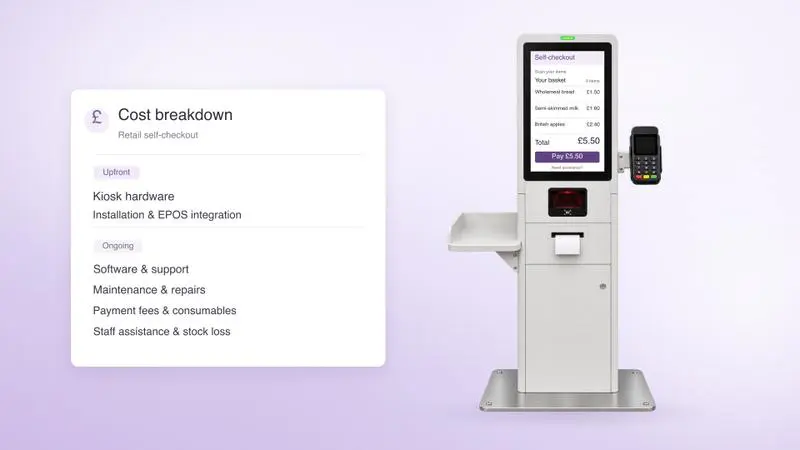
Self-checkout kiosk costs in the UK range from about £4,400 for compact hardware to £40,000 for a full grocery lane, before software and installation.

Compare the best TMS software for delivery-first businesses in India in 2027. Explore tools for route planning, dispatch, rider tracking and carrier management.
Fill out the form
Share your contact information to get started
Speak to an expert
A member of our sales team will get in touch with you