November 6, 2026 • Fynd Out with Ragini Editorial Team
Why India's Kirana Stores Aren't Going Anywhere
Damodar Mall, CEO, Grocery Retail at Reliance Retail, believes India's neighbourhood kirana stores have been practising their own form of e-commerce for years. In a conversation with Ragini Varma, he explains why quick commerce isn't making traditional retail irrelevant, how AI could transform local shops, and what D2C brands misunderstand about selling offline.
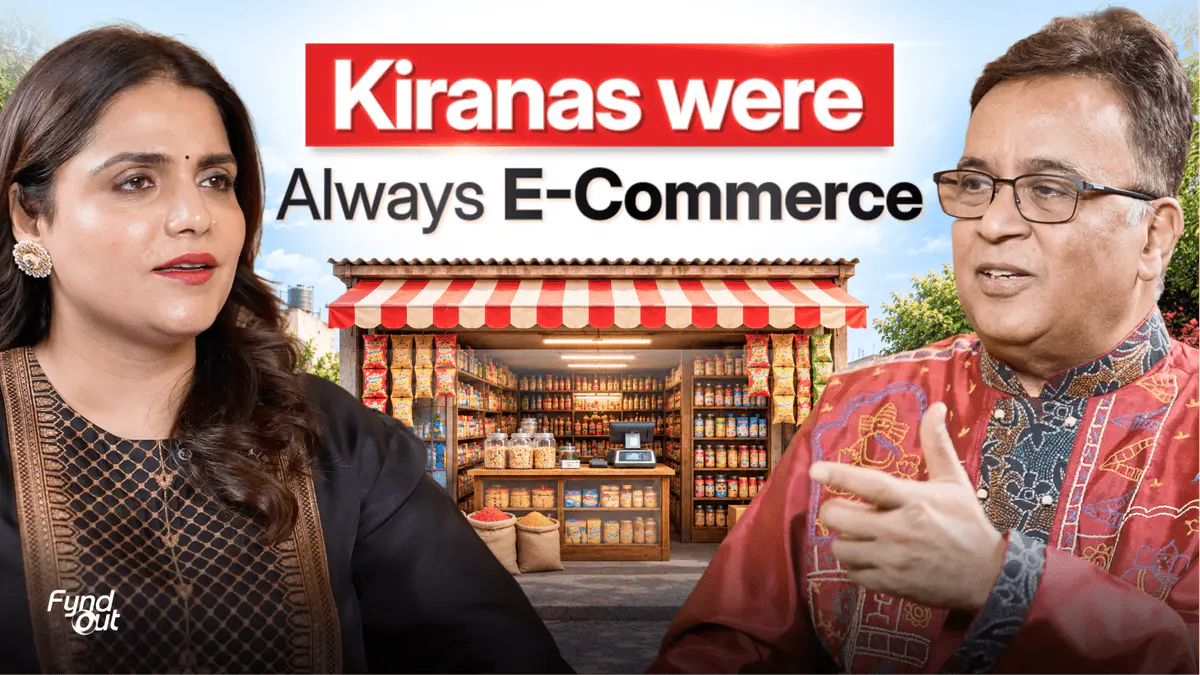
A grocery list written on paper, photographed and sent to a shopkeeper on WhatsApp. A phone call to confirm a substitute. Groceries delivered home, followed by a QR code for payment. This is how Damodar Mall's maasi shops at her neighbourhood kirana. There is no shopping app involved, yet almost the entire transaction happens digitally. On Fynd Out with Ragini, Fynd's commerce intelligence podcast, Mall uses this everyday example to explain something much larger about Indian grocery retail. While quick commerce, supermarkets and digital-first brands compete for attention, the traditional kirana is quietly adapting to the same changes.
Who really owns the customer's shopping cart?
The customer does, according to Damodar Mall. Whether it's a neighbourhood kirana, a supermarket or a quick-commerce app, no retailer can claim exclusive ownership of the shopper.
When Ragini asks him this question, his answer is clear: "Only the customer owns her shopping cart." A family may visit a supermarket for its monthly groceries, order something through quick commerce when it needs an item immediately, and continue buying everyday essentials from a familiar neighbourhood shopkeeper. The choice depends on what the customer needs at that moment.
Mall believes retailers make a mistake when they assume that someone who shops with them today will automatically return tomorrow. He compares the relationship to dating. Customers have options, and every retailer has to remain worth choosing. For kiranas, the advantage lies in their existing relationships with neighbourhood customers. But familiarity alone isn't enough. They still need to give customers a reason to come back.
How have kirana stores been doing e-commerce all along?
Mall argues that kirana stores have been fulfilling remote orders long before app-based grocery shopping became commonplace. His maasi's WhatsApp grocery order is a perfect example. She writes a list, sends a photograph to her local shop and receives the items at home. If a product isn't available, the shopkeeper calls or shows her an alternative over video. She pays digitally. The transaction brings together personal familiarity, home delivery and technology without requiring the customer to learn a new shopping process.
Mall asks why this isn't considered e-commerce. For him, the distinction matters because the growth of digital retail is often presented as something happening outside traditional shops. But many kiranas have already incorporated digital tools into the service they were offering. They know their customers, understand their preferences and can now communicate with them more easily.
Technology hasn't replaced the shopkeeper. It has made an existing relationship more convenient.
Is quick commerce changing what Indians buy?
Quick commerce isn't only making grocery delivery faster. Mall believes it is also encouraging people to buy things they might otherwise have postponed or forgotten. He calls it the "shortest distance between desire and consumption."
A customer who suddenly wants a snack or remembers a missing ingredient no longer has to plan a shopping trip. The product can arrive before the impulse fades. According to Mall, this makes quick commerce a stimulant for demand, not merely a faster delivery system. He also points to the conditions that helped the model develop in urban India: densely populated neighbourhoods, affordable mobile data and delivery networks operating close to customers. These developments are attracting attention outside India too. Mall discusses how Walmart is studying rapid-delivery models and learning from developments involving Flipkart Minutes.
India adopted the supermarket and self-service retail formats from other markets. Mall believes quick commerce is an example of Indian retail innovation now influencing the wider world. But increased convenience doesn't mean every purchase will move online. A customer may still prefer examining fresh produce in a store or browsing products in person. The shopping occasion determines the choice.
Why do successful D2C brands struggle when they enter offline retail?
A D2C brand that has succeeded online cannot assume the same marketing approach will work in a supermarket. Mall explains that digital retail gives brands a relatively uniform space to present themselves. On a screen, products appear through images, descriptions and listings. A physical store works differently.
Shelf position, packaging, product visibility and the ability to touch or examine an item all influence the experience. Customers may spend more time browsing, but they are also surrounded by competing products. The brand has to communicate differently. Mall compares entering a new retail channel to doing business in a region where people speak another language. You cannot expect to succeed without learning how that market works.
For D2C founders, this means adapting their communication, distribution and merchandising instead of simply repeating successful online campaigns.
Mall sees digital commerce as an important testing ground for new brands. It can help them find customers and validate products without first building a large physical distribution network. But winning online is only the beginning. Each new channel demands its own understanding of the customer.
What kinds of Indian food brands have the biggest opportunity?
Mall believes food brands have a significant opportunity in making familiar Indian dishes easier to prepare without taking away the experience of cooking them. He challenges the assumption that busier Indian households will necessarily abandon home-cooked meals for ready-to-eat food. From his observations of household pantries, Indian kitchens are becoming more varied rather than simpler. Families want to prepare different cuisines, experiment with ingredients and serve fresh food, even when they have less time. That creates demand for products that reduce preparation work.
Cooking pastes, batters, chutneys and convenient versions of familiar foods fit this pattern. Customers can save time while still finishing the dish in their own kitchens. Mall discusses categories such as masala chai, chaat and pani puri as examples of familiar consumption habits that brands can serve in new ways. He is equally optimistic about regional food businesses.
Many have spent decades building loyal customers in a particular city or state. Younger generations are now bringing new ambitions, packaging and distribution ideas to these established businesses. For a national retailer, introducing these regional favourites to customers elsewhere in India can create demand that did not previously exist. Mall's advice to food entrepreneurs is rooted in understanding what people already love consuming, then finding a more convenient way to deliver it.
Can AI make India's kirana stores more powerful?
Mall believes AI could give enterprising kirana stores capabilities that were once difficult for small retailers to access. Running a store involves considerable routine work, from maintaining records to managing inventory and collecting information. As AI tools become more accessible, some of that administrative effort could be reduced. Mall's argument is that the time saved can go towards customers.
A neighbourhood shopkeeper already has the advantage of knowing local households and their shopping habits. Technology could help that shopkeeper manage the business more efficiently while continuing to offer familiar, personal service. He believes the more innovative kiranas could become considerably more competitive as these tools improve. The same principle applies to supermarket employees. If technology handles more repetitive tasks, staff can spend more time helping customers discover products and make decisions.
For Mall, the human relationship remains central to retail, even as the technology becomes more sophisticated.
Will supermarkets and physical stores still matter in the future?
Physical stores will remain relevant, Mall believes, because shopping is about more than obtaining products. He compares retail with live music. Streaming has made music accessible anywhere, but people still attend concerts for the experience. A supermarket can offer something similar through discovery, interaction and the pleasure of shopping with family. Customers can explore unfamiliar brands, examine products and encounter things they weren't originally planning to buy.
Mall also sees large stores as places where new products gain visibility. When shoppers respond positively to an emerging brand, that interest can eventually influence what other retailers choose to stock. This makes physical retail important for both established businesses and smaller brands looking to reach new customers. It also reinforces Mall's central argument: the future of Indian grocery retail isn't about one format eliminating every other.
Quick commerce, supermarkets and kirana stores can each serve different purposes. The retailers that understand those purposes, and continue adapting to their customers, are the ones best placed to remain relevant.
For Damodar Mall, India's changing retail landscape offers more opportunities for shopkeepers and consumer brands willing to adapt. The customer's choices may be expanding, but the need for trust, convenience and a good shopping experience remains.
Watch the full conversation with Damodar Mall on Fynd Out with Ragini.