October 29, 2026
Why Indian men will pay Rs 4,000 for a custom shirt but complain if a white t-shirt costs more than Rs 800
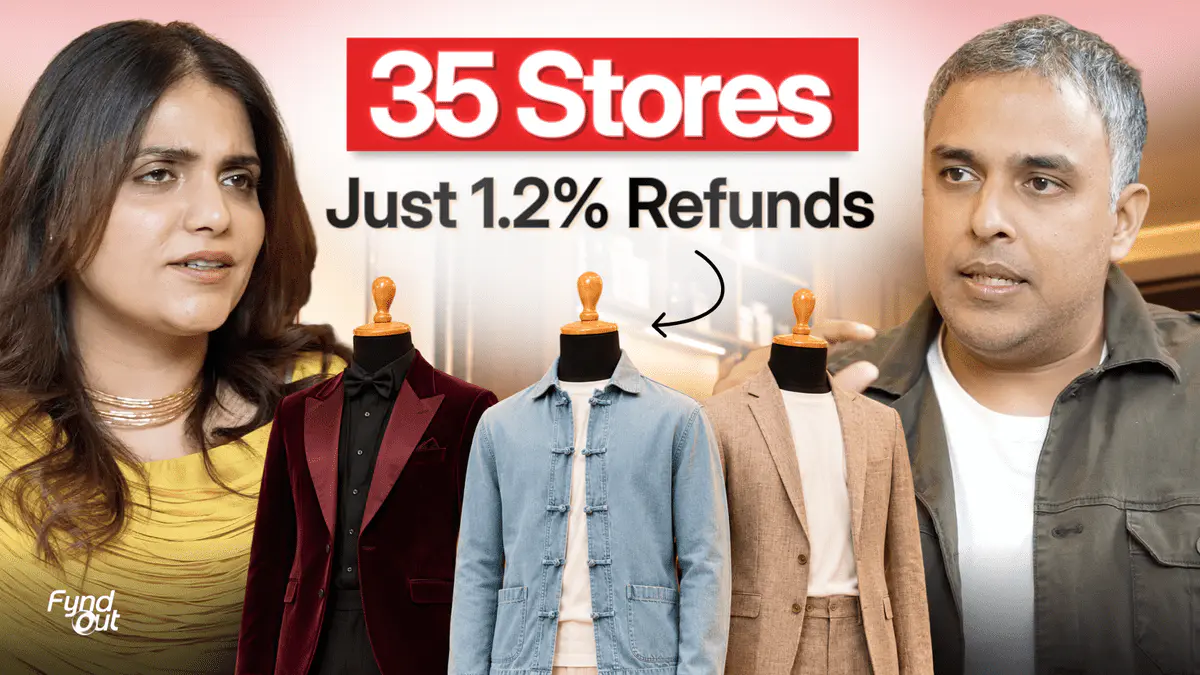
Akshay Narvekar started Bombay Shirt Company online in 2012, built it to 35 stores without relying on a single marketplace, and counts 60% of monthly orders from repeat customers. He spoke to Ragini about why fewer choices sell more shirts and why the first store changed everything.
Bombay Shirt Company is not a complicated idea. Custom-made shirts, Indian fit, modern fabrics, priced between Rs 2,000 and upwards. But the execution of that simple idea took Akshay over a decade to get right, a deliberate rejection of marketplaces, a calculated bet on physical retail after starting online, and a focus on repeat customers that he says matters more than chasing new ones.
He spoke to Ragini about the paradox of choice in customisation, why Indian fabric mills need to change before India can stop importing premium fabric, and what it means to build a brand you want to last a thousand years.
Why the first store changed everything
Bombay Shirt Company launched as an online-only business in 2012. For the first few years, the brand existed entirely on the internet. Then they opened their first physical store, and Akshay is direct about what happened: the real traction only started there.
For a custom product, this makes a specific kind of sense. A man buying a shirt online is trusting measurements he may not know how to take, fabric descriptions he cannot feel, and a fit he cannot verify until the shirt arrives. A man walking into a store can do all three in twenty minutes. The product requires that trust layer. The store provided it. Now, with around 35 stores across Mumbai, Delhi NCR, Bengaluru and other cities, Bombay Shirt Company treats its physical presence as the backbone of the brand rather than a complement to it.
Why they deliberately stayed off marketplaces
At some point, being on marketplaces was considered the obvious move for any D2C brand. Akshay tried it. It never worked. The interface a marketplace provides cannot accommodate the order flow a custom product requires. You need to be able to take a measurement, confirm it, adjust it, and process an order that is genuinely different from a standard size transaction.
So Bombay Shirt Company chose to build through its own channels, online and offline, and tell its story on its own terms. He does not rule out returning to marketplaces if the interface problem gets solved, but the decision to stay off them was not a default. It was a choice about where the brand belongs and what the brand needs to do at the point of sale.
60% of orders from repeat customers
The price point of a Bombay Shirt Company shirt starts at Rs 2,000 and goes up. That is not an impulse purchase. The audience is concentrated in the top ten or eleven cities in India and the total addressable market is smaller than a mass-market brand. Akshay is clear-eyed about this.
His answer to a smaller market is a deeper one. 60% of monthly orders come from repeat customers. Men buy roughly six to eight shirts a year. If Bombay Shirt Company is the brand they keep coming back to, the maths works. A smaller number of loyal customers buying frequently and in larger basket sizes is a more durable business than a large number of one-time buyers. He has built the company around making that happen rather than trying to be everything to everyone.
Too many choices kill a sale
Customisation is the product. But Akshay has a sharp view on how much customisation is too much. He calls it the paradox of choice: when a customer is presented with too many options, they get overwhelmed and stop deciding. The purchase does not happen.
His approach is to give options on the things that genuinely make a shirt personal, collar, cuff, fit, fabric. But on the decisions that the brand should be making on the customer's behalf, those get made. The customer does not need to choose between twelve collar types if three great ones cover everything they need. Less choice, executed well, converts better than more choice, offered anxiously.
Why Indian fabric mills need to change
One of the most candid parts of the conversation is about sourcing. Bombay Shirt Company still imports a significant portion of its premium fabric because the Indian mills that exist are largely catering to domestic sensibilities rather than international quality standards. The quality gap is real, and Akshay names it plainly.
His view on what needs to change is straightforward: Indian mills need to build product that can be exported out of India rather than only imported into brands. Some mills in select subcategories can compete internationally. Across the board, it is not yet the case. Until it is, premium Indian shirt brands will keep sourcing from outside because the alternative does not yet meet the bar the product requires.
Building for a thousand years
Ragini asked him about growth pace and the pressure that comes with outside capital. His response is one of the more grounded ones in the episode. He is not in a hurry. He has taken investment and is grateful for it, but he does not want the investment to define the timeline. He wants to build a brand that could last a thousand years.
That framing is not nostalgia. It is a practical argument about quality. A brand that survives centuries is one that earns trust one product at a time, does not compromise on the thing that made it worth choosing, and resists the temptation to move faster than the product can support. He gets more satisfaction from a single customer having a great experience with a shirt than from opening ten stores in a day.
Listen to the full conversation with Akshay Narvekar on Fynd Out with Ragini.