Developers
- A short handler instead of a separate service
- JSON Schema checks before the code runs
- A test console with headers, query and body

Write a handler, describe its input and output, and give partners and machines an API that fits the way they already talk.
Code, contracts, keys and logs in one place, on the same data and permissions as the ERP.
Builders write the endpoint once, and the people around them can see what it does.
Real screens from Fynd ERP, shown with demo data.
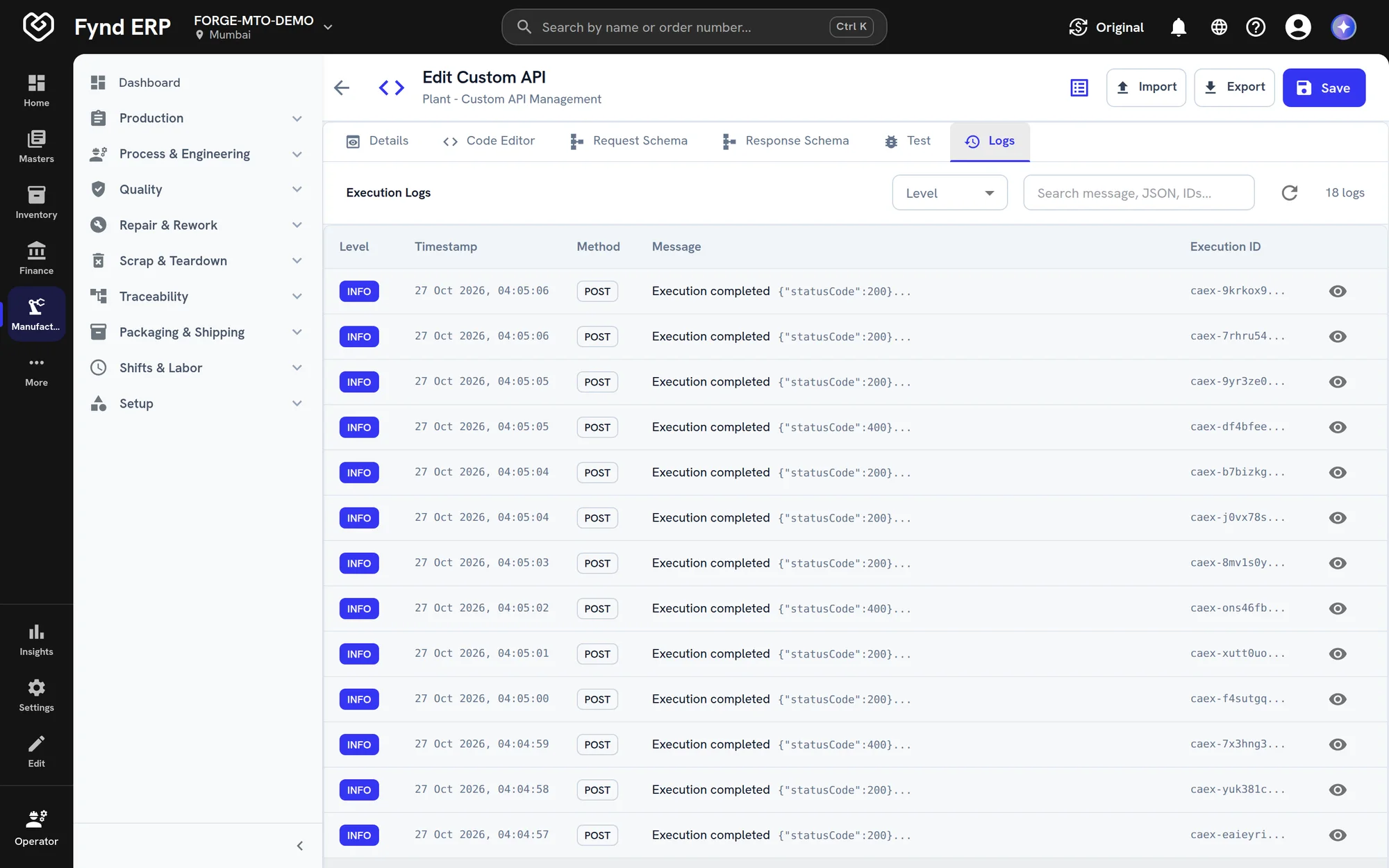
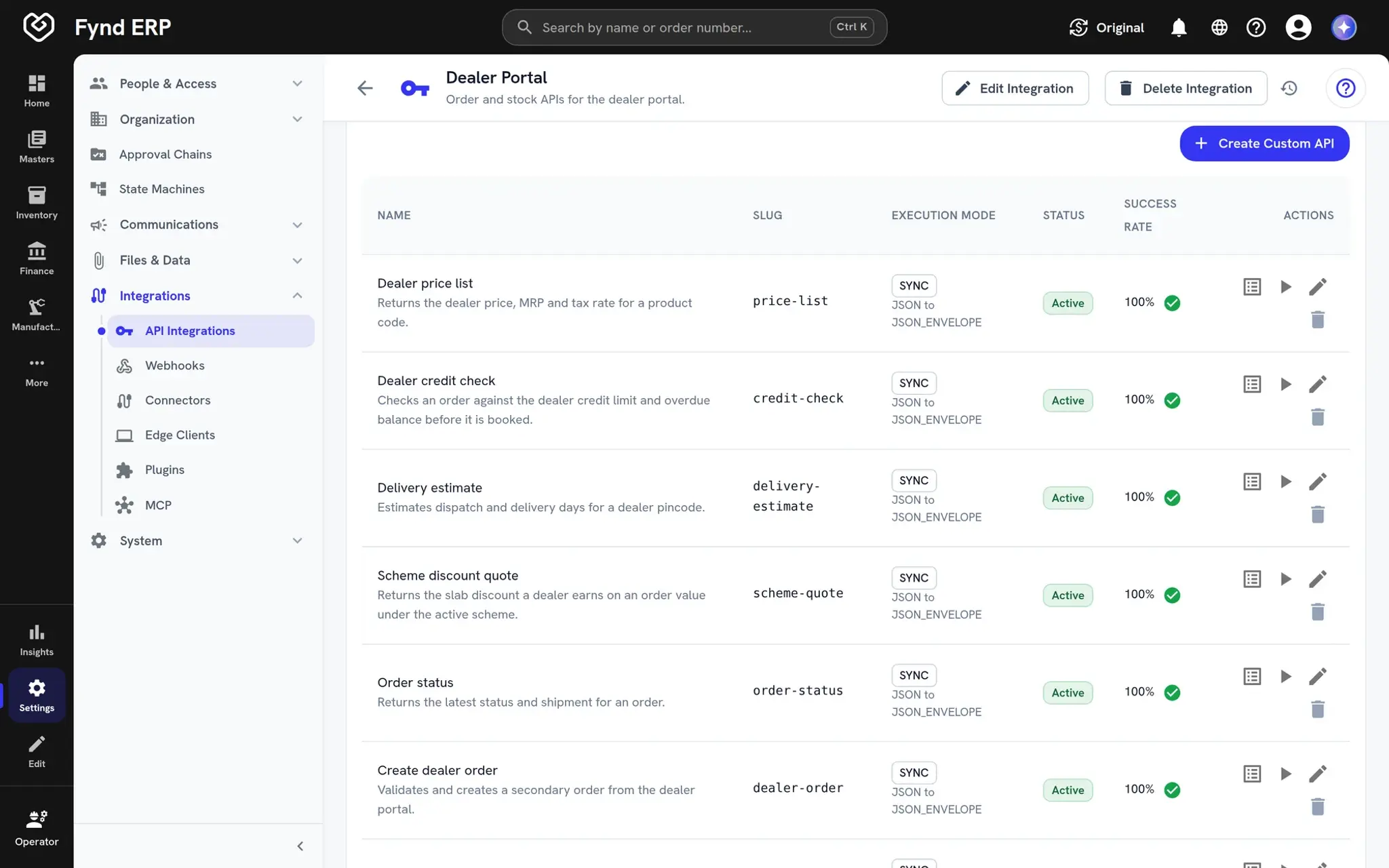
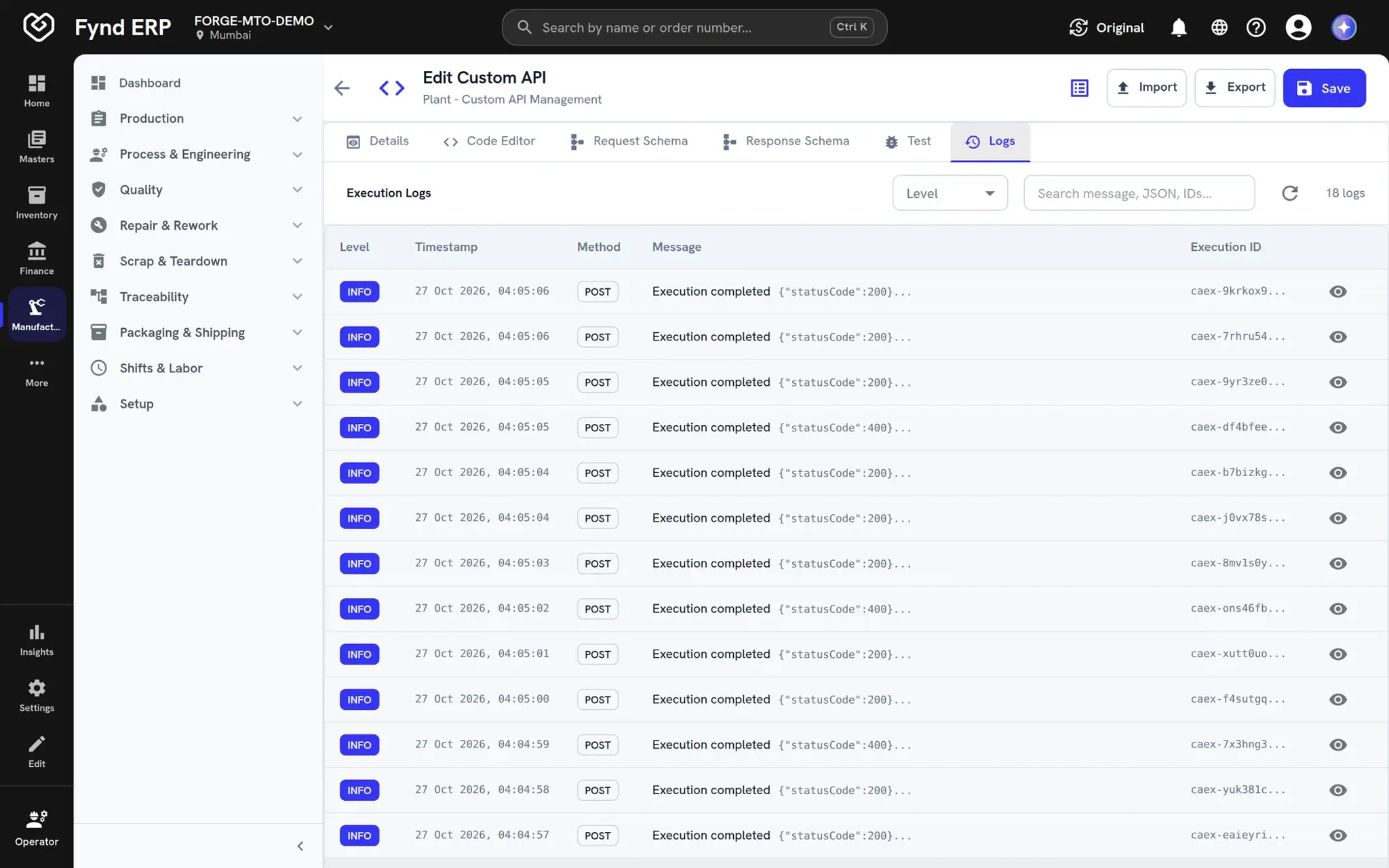
Each integration lists its endpoints with name, slug, execution mode, status and success rate. Open the logs of any API to see every call it served.
Follow one dealer portal endpoint from the first request to live traffic. Each step happens in Fynd ERP.
The team creates a dealer portal integration to hold its keys and endpoints.
A developer writes a short handler and describes its input and output with JSON Schema.
The team tries the endpoint in the test console with real headers and a body.
The portal gets an API key with a scope, an expiry date and a rate limit.
Every call keeps its status and log lines, and the API shows its success rate.
The parts of building an API that teams ask about most.
Each API is a short handler that reads the request and writes the response, running inside the ERP. It works on ERP records with the same data and permissions as the rest of the system.
Describe the input and output of each API with JSON Schema. Bad requests are turned away before your code runs, and callers know exactly what to send.
Answer straight away, or accept the request, run it in the background and let the caller poll for the result. Long jobs stop timing out on the caller's side.
Issue keys with scopes, an expiry date and a rate limit, and keys are never shown again after creation. Each run keeps its status and log lines, so you can see what happened.
Handlers work with ERP records, so partners and machines can read and act on live data.
Recently added to this module.
Caller authentication per API
Choose a custom header key, Basic or Bearer authentication for each API.
A short handler function that reads the request and writes the response, plus optional schemas for the input and output.
Yes. APIs can accept JSON, form or text requests and reply with JSON or text, including XML content types.
Make the API async. The caller gets a receipt straight away and polls for the result.
With API keys that carry scopes, an expiry date and a rate limit. Per-API authentication options are coming soon.
Yes. Every run keeps its status and log lines, and each API shows its success rate and average time.