January 24, 2026
PDS runs about fifty businesses. Almost none of them report to a boss.
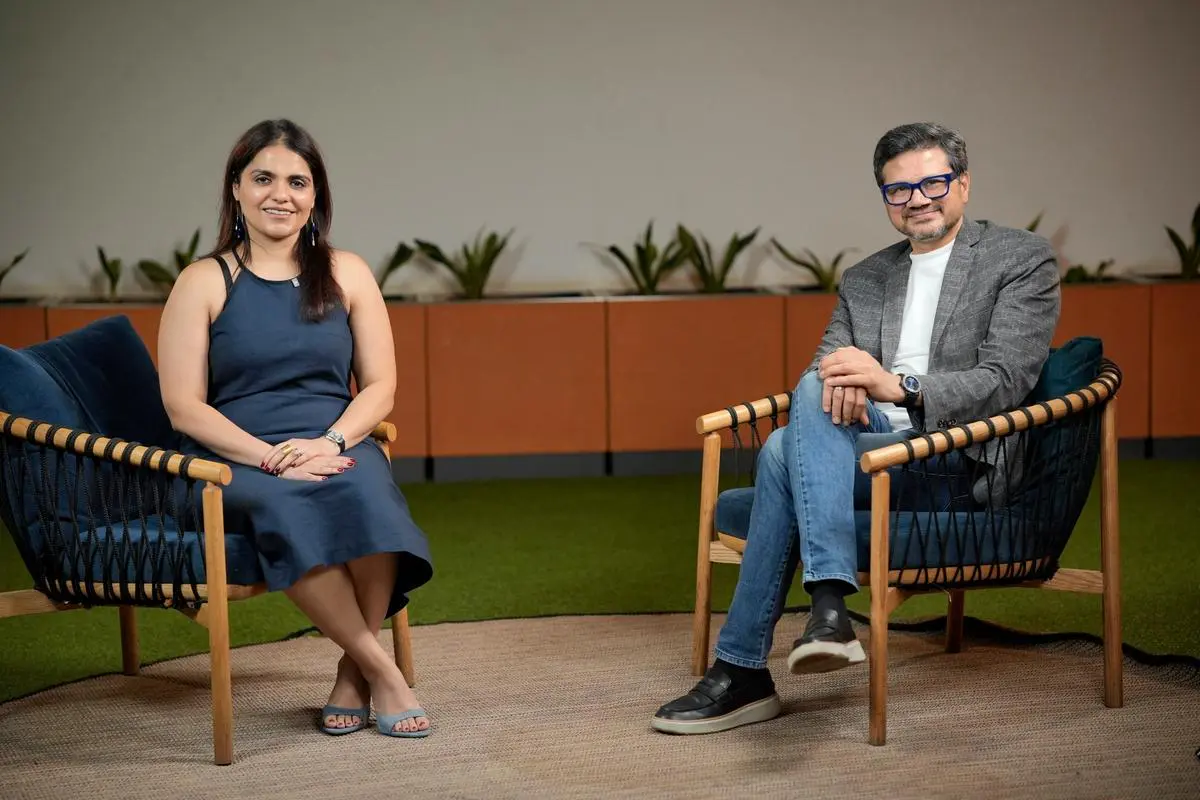
Sanjay Jain is Group CEO of PDS Limited, a fashion supply chain platform operating across 22 countries. His description of the structure is a federation of entrepreneurs, and it is stranger than it sounds.
The division of labour Sanjay describes is simple. A retailer should own the customer: the store, the site, the merchandising, the loyalty, the reason someone picks that brand. PDS runs the backyard, translating demand into designs, sampling them, finding manufacturing capacity, holding standards across partner factories, and moving product.
His analogy is IT services. Companies used to do everything in-house until credible service partners emerged and it stopped making sense. Fashion is going through the same shift, and PDS wants to be the counterparty capable of owning a complex function rather than a distant exporter filling orders.
Why the structure exists
The company traces back to Dr. Deepak Kumar Seth, who built garment export and manufacturing businesses in India. When his son Pallak Seth went to Hong Kong in 1999 with capital from his father, he deliberately wanted the flexibility to work with many manufacturers rather than own every unit.
That produced the question every founder eventually hits: how does one person’s capability become an organisation? The answer was to recruit experienced industry people who wanted to be entrepreneurs rather than employees. PDS would provide the platform and support the living costs; the partner would build a vertical and hold a genuine economic stake.
It is a structure built on a specific observation about this industry. The people who matter are the ones with deep relationships to brands and factories, and at large firms those people are employees with weak incentives. PDS made them owners instead. Harvard Business School wrote it up as a case study.

The Group CEO as enabler
The entrepreneurs sit close to either the customer or the sourcing geography. They know the local relationships, the factory capability, the product requirements and the pace of their market. Sanjay does not describe his job as instructing them.
He describes it as enabling people who are already accountable for their own businesses, which changes what leading from the front means. The CEO supplies clarity, standards, capital and support, and takes the accountability. The people doing the work should be the ones visible in front. Leadership lasts, in his view, when the organisation can act without waiting for the leader to occupy every important space.
Freedom inside a listed company
PDS is publicly listed, which means all this entrepreneurial autonomy operates inside obligations to shareholders. Sanjay’s brief has been to bring structure, performance orientation and disclosure to that relationship without replacing founder energy with bureaucracy.
The phrase he uses is responsible profit, meaning performance that reflects the health of the platform rather than being detached from it. Internal systems create operating visibility; leadership converts that into expectations the market can hold them to.
Reacting to ultra-fast fashion without panicking
The compression of the gap between a signal appearing and a product reaching a customer could have been treated as an existential threat. PDS treated it as an emerging requirement and asked what capability it demanded.
Being present in China gave access to an ecosystem built around fast replenishment and smaller, more frequent shipments, and a team on the ground could give an e-commerce retailer confidence those requirements would actually be met. The lesson is not to copy a disruptor. It is to identify the operating capability underneath the disruption and decide whether your customers now expect it from you.
A global footprint is a hedge, not a vanity metric
Tariffs, political decisions and trade disruptions change costs and availability with very little notice. A sourcing platform cannot remove that volatility, but a network spread across both customer and manufacturing markets creates options.
Teams on the ground see constraints earlier and can compare alternatives with context a distant head office does not have. Which is also why sourcing can never be reduced to lowest price: the cheapest quote is meaningless if the factory cannot deliver on time, to standard, and through a compliance regime that will survive an audit.
Going back to being a beginner
Sanjay is an enthusiastic ChatGPT user and treats AI as an aid to thinking rather than a replacement for it. His leadership point is less about the technology than about the posture: experience does not exempt a CEO from returning to beginner mode when the industry’s tools change.
He doesn’t think the human element disappears. He does think people who refuse the tools get left behind. The chain still ends in judgement and relationships. AI changes how fast and how well you arrive at that moment.
Go home and sleep on it
Asked what he does when a solution refuses to appear, his answer is to go home and sleep. Not as avoidance, but as a way of loosening the emotional attachment that makes one answer look inevitable, so the alternatives already sitting nearby become visible. He wakes early and looks for clarity.
A leader still has to decide without certainty and accept the decision may fail. When it goes right, the achievement belongs to the people who executed it. When it goes wrong, the leader holds the consequence. Judgement improves over time not because the mistakes stop, but because you get more honest about them.
The thing that survives every cycle
Trends change, cost pressure returns, technology reorders design and planning. PDS doesn’t try to name a fixed five-year destination in that environment; it tries to stay agile enough to turn change into a service customers value.
What stays constant is whether the ecosystem trusts you. Customers, employees, entrepreneur partners, factories, boards and investors are all making the same assessment: will this company do what it said, disclose what changed, and take responsibility for the result. Speed wins an order. Credibility is what makes there be a next one.
Listen to the full conversation with Sanjay Jain on FyndOutWithRagini.