November 14, 2025
How IGP Built The Supply Chain Behind India’s Gifting Moments
Gifting looks emotional from the outside. But behind every bouquet, cake, hamper, rakhi or wedding flower installation is a business of timing, forecasting, cold chains, personalization, skilled labour and almost zero margin for error.
In this episode of Fynd Out With Ragini, Ankur Gupta, COO at Join Ventures, breaks down the business engine behind IGP, Interflora and Muska. What begins as a conversation about online gifting quickly becomes a deeper lesson in operations, customer experience, category creation and the hidden infrastructure behind celebration-led commerce.
Ankur’s journey into IGP began when his startup, Artisan Gilt, which sold Indian-made handicrafts, fashion jewellery and gifting products, was acquired by IGP. More than a decade later, he is part of a house of brands built around gifting, premium flowers, gourmet indulgence and celebration-led experiences.
Gifting Is Not Just A Product Category
IGP’s early catalogue included flowers, cakes, gift merchandise, rakhis, Diwali products and other Indian occasion-led gifts. A large part of the early use case came from international customers and NRIs who wanted to send gifts to loved ones in India.
That starting point matters because gifting behaves very differently from regular online shopping.
If you order something for yourself and it comes late, wrong or slightly damaged, you can return it, replace it or move on. But if that same product is a gift for your father, mother, partner, sibling or friend, the stakes change completely. The delivery date matters. The name printed on it matters. The condition of the product matters. The emotion attached to it cannot be refunded.
That is why IGP’s business could not be built only like a catalogue-led marketplace. The company had to think beyond discovery and checkout. It had to control the actual experience of gifting.

The Problem With Outsourcing Emotion
In the early flower business, IGP worked with a vendor network across India. But the team soon saw a problem: what the customer ordered and what got delivered were not always the same. If someone ordered red roses and pink carnations, a local vendor could still send another flower and think the job was done because, technically, flowers had been delivered.
But gifting is not technical. It is specific.
So Ankur decided to understand the problem by becoming a vendor himself. IGP set up a warehouse in Parel, hired florists, bought flowers from the market, made bouquets and delivered them in nearby areas. At first, it looked simple. Then came the real issues: spoilage, unavailable flowers, mismatch between demand and supply, and the difficulty of predicting what would be needed on which day.
That experiment became one of the company’s biggest operating lessons: a founder has to get their hands dirty to understand the actual problem.
The conclusion was clear. If IGP wanted to deliver the experience properly, it had to own more of the backend. That is what led to captive fulfillment centers, which Ankur says are now close to 80 across India.
Made-To-Order Became The Real Moat
One of the most important parts of IGP’s model is that every order is made fresh. Whether it is a bouquet, cake, hamper or personalized product, the idea is not to store finished goods and ship them later. The idea is to create the product for the customer, for that occasion, at that moment.
Even cakes are handled with that logic. The base may be ready, but the fresh icing, name and final finishing are done according to the order.
This is what makes the gifting business operationally difficult.
In regular e-commerce, scale often comes from standardization. In gifting, scale comes from controlled customization. Every customer wants something personal, but the company has to make that personalization repeatable, fast and reliable.
That is the tension IGP has built around. The customer should feel like the gift was made especially for them. But behind the scenes, the system has to work like an operating machine.
Rakhi Shows The True Scale Of Indian Gifting
The Rakhi section of the conversation shows how complex Indian occasion-led commerce can become.
During COVID, when people could not travel and families were separated, gifting became even more important. IGP went to artisans and told them that whatever they could make, the company was ready to buy. They bought and stored rakhis while warehouses, teams and protocols were still under pressure.
Ankur says IGP delivers more than a million rakhis during Rakhi season and delivers across India and to 150 countries.
That number is important because Rakhi is not just a product drop. It is date-bound, emotion-heavy and logistics-sensitive. Customers may order early, but they want delivery close to the actual occasion. The business has to forecast demand, plan inventory, manage chocolates and sweets that cannot move too early, and still hit the right delivery window.
For founders, this is a sharp lesson: festival commerce is not just marketing. It is planning, sourcing, forecasting, inventory, manpower and execution.
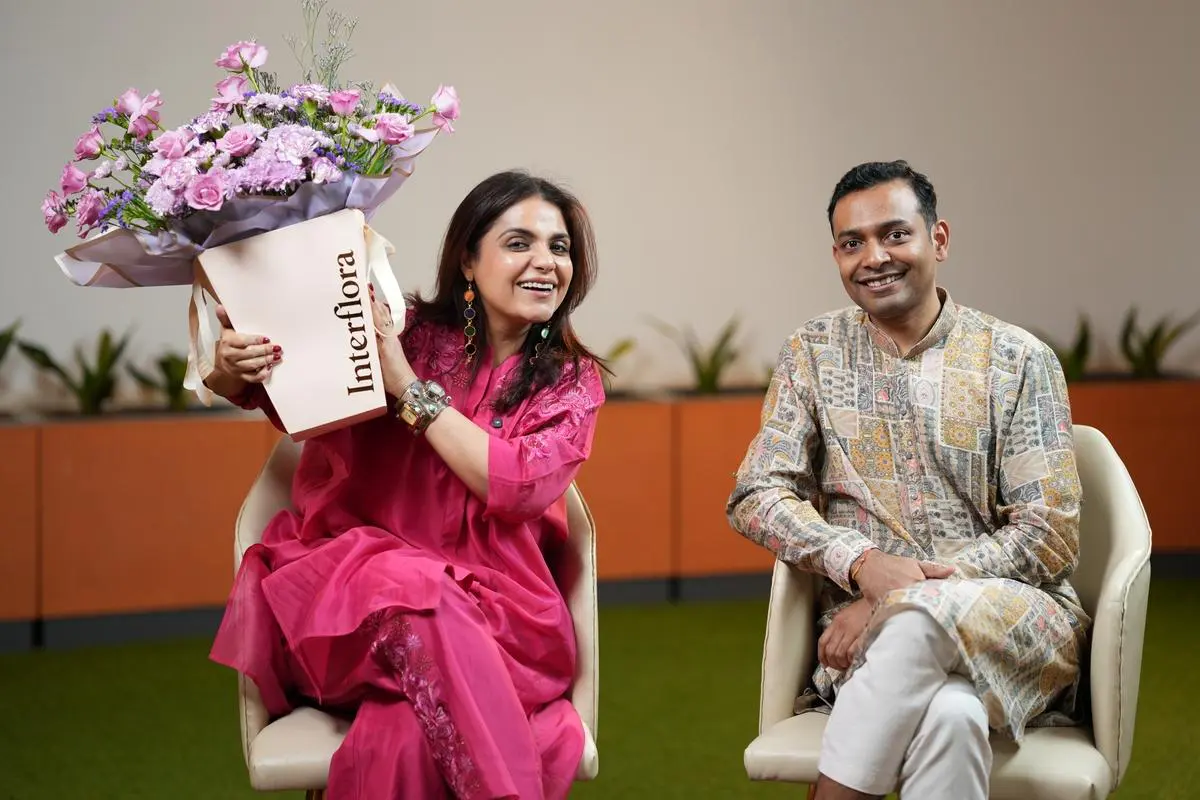
Interflora And The Premium Flower Supply Chain
The Interflora story takes the conversation from gifting into the business of premium flowers.
Ankur explains that Interflora is a UK-based company more than 100 years old. He also shares that one of the earliest remote gifting moments involved a bouquet order transmitted by telegraph from one city to another in 1923.
When Interflora wanted to enter India, the team realised that India’s flower supply chain was far behind what they had seen in markets like the UK and Holland. The issue was not simply selling better bouquets. The real challenge was freshness, cold chain, flower handling and consistency.
So the team went closer to the source.
They began working directly with growers, built flower centers and cold rooms, and created the supply chain required to send flowers across fulfillment locations. Ankur explains that if the cold chain is maintained properly, flowers can stay fresh for 10 to 15 days.
The customer sees a bouquet. The business sees growers, conditioning, cold rooms, flower food, transportation, sourcing cycles and demand planning.
India Had The Flowers. The Market Needed To Be Built.
One of the strongest insights in the episode is that India already had access to high-quality flowers, but much of the best quality was being exported because local demand had not developed enough. Ankur says export-quality roses often did not reach the local market because there was not enough demand.
Interflora helped create that demand.
During COVID, when imports were disrupted, the team worked with Indian growers to grow premium flowers that were earlier being imported, including hydrangeas and other varieties. Over time, imports reduced and the local supply chain became stronger.
That is category creation at the supply side.
A premium brand did not just make flowers look better. It helped improve what could be grown, sourced and sold in India.
Mother’s Day, Valentine’s Day And The Business Of Planning
A surprising data point from the episode is that, for Interflora, Mother’s Day is equal to Valentine’s Day in terms of orders. Ragini is surprised, and Ankur confirms that Mother’s Day is huge in India.
But Valentine’s Day is more complex.
It is not just one day. It is a full week of Rose Day, Chocolate Day, Teddy Day and other occasion-led spikes. Ankur says peaks can be 10 to 20 times a regular day, and planning can begin as early as October or November because roses have to be blocked in advance with growers.
This is what the customer never sees.
A bouquet delivered on 14th February may have been planned months before. The flowers had to be sourced, cut, transported, stored, assigned, arranged and delivered without losing freshness.
Occasions look emotional on the front end. On the backend, they are operations calendars.
Quick Commerce Is Raising The Bar
Ragini brings up how quick commerce platforms are adapting to Indian festivals. Ankur says IGP is present on Swiggy, Zomato, Blinkit and other quick-commerce platforms, but its core offering is different because it combines multiple categories into one gifting experience.
A quick-commerce platform may deliver one item quickly. IGP’s challenge is to deliver a combination: flowers, cake, personalized product, photograph, utility product or hamper.
The company is also working toward 30-minute delivery experiences because customers now expect speed even in gifting.
The new pressure is clear: customers want emotion, personalization and speed together.
Weddings Turn Flowers Into Logistics Theatre
The most cinematic part of the episode is Interflora’s work on luxury weddings.
Ankur says Interflora has worked on some of India’s largest weddings, including the Anant Ambani wedding, where the team worked with an international designer on design nuances, sourcing and execution.
For one major wedding in 2018, he says the team imported millions of flowers and bought every available stem of a delicate Vanda orchid from Holland. There were cold trucks outside venues, cold containers outside the airport and cold rooms built at the site to maintain the required temperature.
The guest sees luxury. The team sees temperature control, timing, procurement and panic management.
One of the biggest nightmares came when a plane full of flowers had a technical issue and could not fly. Since the flowers were already loaded, a similar plane had to be arranged, causing a 24-hour delay. The team used that time to plan offloading, sorting, color coding and movement so they could execute with one less day.
Listen to the full conversation with Ankur Gupta on Fynd Out With Ragini.