February 7, 2026
She spent on marketing before distribution was ready. It hurt.
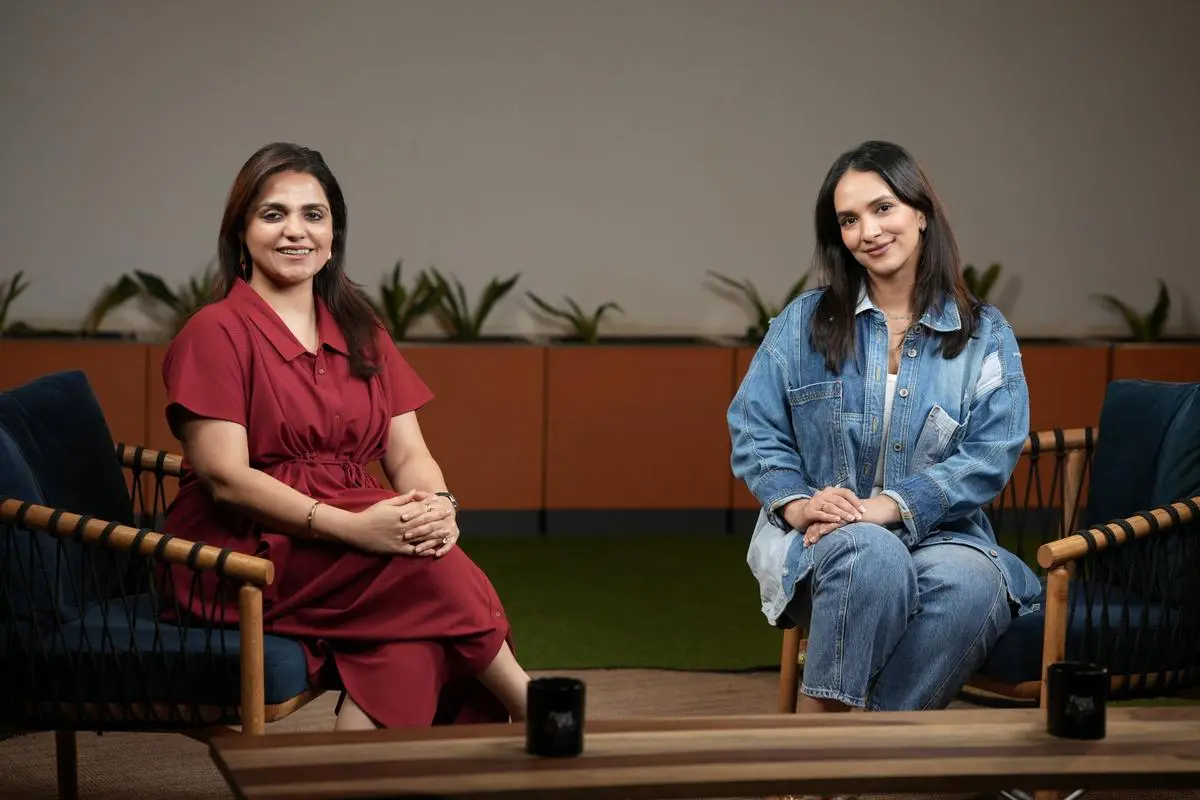
Rubeina Karachiwalla founded Ruby’s Organics after her own skin kept reacting to makeup. Her clearest lesson for founders is about sequence, and she learned it the expensive way.
The order, she says, should be product, then distribution, then marketing. A product that solves something. A system that can reliably deliver it. And only then, demand generation on top.
Ruby’s got that order wrong. The marketing came before the distribution was fully built, and what followed was the kind of thing that doesn’t appear in launch posts: inventory pressure, working capital decisions, and attention arriving faster than the ability to fulfil it. Her advice to new founders is blunt. Don’t manufacture desire for something the customer can’t reliably find and receive.
The question underneath the irritation
It started with her own reactive skin. Makeup left it uncomfortable, so she began reading labels and asking why a product designed to make someone feel good was doing the opposite.
What she did next is the part worth noting. She didn’t treat her own experience as proof that one formula would suit everybody. She treated it as a problem worth investigating, which is the point at which a founder’s personal complaint becomes something testable. Work began in 2015; the brand reached market in 2017.

It has to perform, or the philosophy is decoration
Rubeina describes the brand as makeup made better, and the phrase carries two obligations at once. The formulations have to honour the ingredient philosophy, and they still have to deliver what people actually want from makeup: colour payoff, blendability, wear.
That is why the early work happened in an R&D lab rather than a kitchen, with stability, clinical and challenge testing. A cleaner positioning can win the first trial. Only competitive performance turns it into someone’s default.
Why content is rented
A reel, a campaign, a celebrity mention, a television appearance: each buys a burst of discovery with an expiry date attached. You have to keep paying or keep performing to stay in the same field of view.
Product compounds differently. When someone finishes a tube and buys it again, you have stopped borrowing attention and entered a routine. The signal Ruby’s watches most closely is repeat purchase outside sale periods, because a discounted order can mean curiosity or price sensitivity, while a customer returning at full price is saying something considerably harder to fake.
The catalogue formula trap
The barrier to starting a beauty brand looks low, and that is the danger. A manufacturer will offer a catalogue formula that can be dressed in new packaging with a hero claim attached, and you can be in market quickly.
What you own at the end of that is packaging. Rubeina’s position is that the manufacturer is a strategic partner in developing something proprietary, not a vendor supplying something off a shelf. It is slower, and it is the only route to a formulation that belongs to you.
The founder video that worked, and then stopped working
Founders are usually the cheapest and most convincing salespeople for their own brands, because they know why every decision was made. One early Ruby’s video simply asked viewers whether their kajal was irritating their eyes, and Rubeina says it returned ten to twelve times the spend on Meta.
Then frequency ruined it. At around ten founder videos a month the whole channel started to feel like selling, so they cut back to roughly one more considered video a month. Her read is that the founder’s job on camera is to explain product thinking and formulation choices, not to impersonate every kind of expert.
A famous face sells the first unit, not the second
Celebrity involvement compresses the distance between obscurity and trial, and simultaneously raises expectations, which shrinks the margin for disappointment. Rubeina’s distinction is the same one that runs through everything else she says: recognition can sell one unit and cannot manufacture a repeat purchase.
Beauty is becoming habit-led as well as aspirational. People still want discovery and desire, but they are also asking whether a product performs and deserves a permanent place in a routine. The famous face opens the door. The formula has to still be in the drawer three months later.
Passion is the opening capital, not the business
Passion carries a founder through formulation and a first launch. It does not finance inventory, run a supply chain, hire a team, reconcile accounts or turn performance data into a decision. At scale, she says, the business becomes capital, people, admin, finance and operations.
As a solo woman founder she encountered bias and learned most of those systems the hard way, and describes her own management lens becoming steadily more numerical over time. Her framing is unsentimental: in the operating room, data has to make the case.
Ruby’s appeared on Shark Tank India in Season 4 and closed ₹1 crore with Kunal Bahl. Her stated use for it was unglamorous and consistent with everything above: improve the supply chain, hold more inventory, and hire people with real credibility in beauty.
Change one thing at a time
Her advice to consumers mirrors her advice to founders. Change a routine slowly rather than replacing everything at once. Don’t solve a skin problem you don’t have because an ingredient is trending. And price is not a reliable proxy for formulation quality.
Both versions land in the same place. Ask what is actually inside it, what problem it owns, why anyone would come back, and which parts of the story survive without promotion behind them.
Listen to the full conversation with Rubeina Karachiwalla on FyndOutWithRagini.