June 21, 2026
8,500 people walked into one store on a Sunday
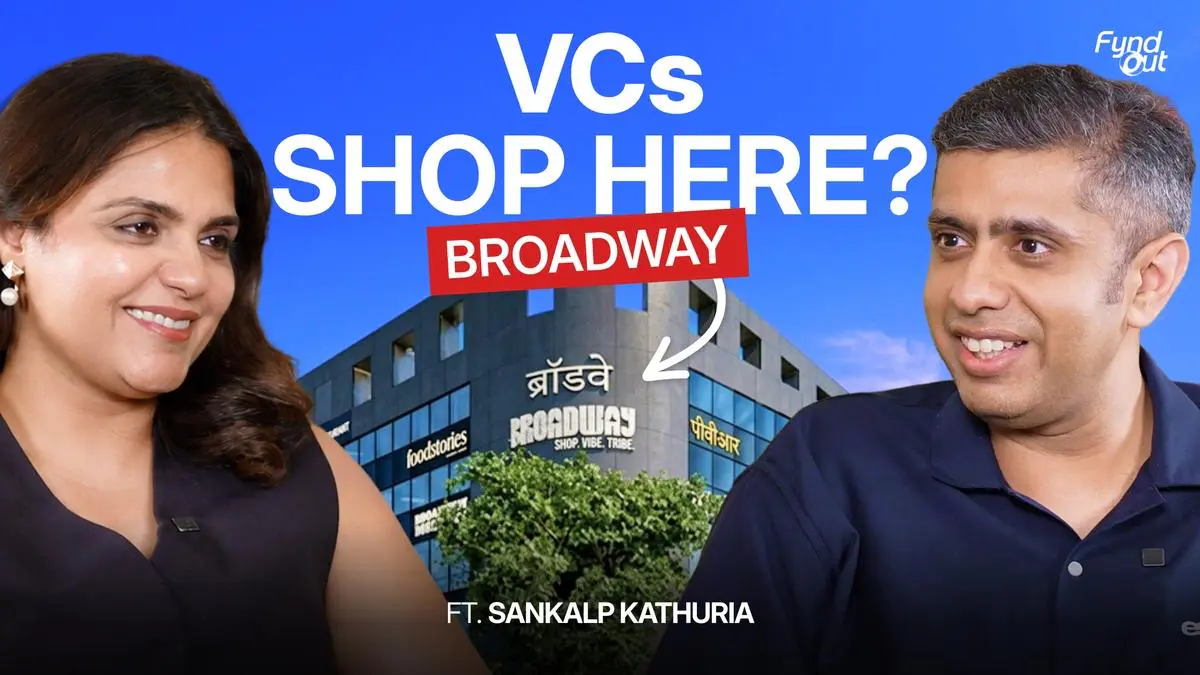
Sankalp Kathuria spent eight and a half years at Bain and six at Zomato before deciding the interesting problem was in physical retail. Broadway is his answer: a 40,000 square foot store in Bandra where the brands from your Instagram feed sit on actual shelves.
Digital-first brands have a specific problem. Instagram gives them reach, but a customer who has never touched the fabric has no way to decide whether the company behind the ad is real. Broadway is built in that gap. Sankalp spoke to Ragini about why a committee of 20-year-olds decides which brands get in, the inventory maths that catches new brands out, and why the first business model had to be thrown away.
Experiential retail is not a store with better lighting
Experiential retail has to give people a way to connect with a community. Every Broadway has a stage and a place to hang out. If you are a culture brand and you want to launch a summer collection, ask your users what you should build next, or just spend time with your people, this is the place. Founders come and sit there.
Then each department has its own experience built in. In fashion we run a personal shopper service: colour analysis, body fit analysis, a stylist who will tell you your wardrobe doesn’t suit what you are actually wearing. Those aren’t free. Outside, that service costs 10, 20, 30,000 rupees. We charge a small amount, mostly so people take it seriously.
Why online marketplaces stop being places to discover things
Our customer isn’t an age bracket. It is anybody on Instagram who has bought a new-age D2C brand, or wants to but can’t trust it yet. They want to see it offline and make sure the product exists.
Almost all discovery of these brands happens on Instagram now, not on the online platforms. Here is why. As a platform grows, a lot of its revenue comes from ads, and the people paying are the bigger brands. So the channel intrinsically becomes anti-discovery. In a physical space, curation flips that back.
The committee is 20 to 23 years old and I am not on it
As businesses age, the vibe goes away because the leader starts taking all the decisions. So we built a committee with an average age of 20 to 23 to select brands, and I am not part of it.
They work inside a framework. Check the Amazon and Myntra reviews. Verify personally that the claims the brand is making are valid. Then the other half: does it go viral, do you connect with the founder, do you connect with the messaging?
What breaks when a cool brand goes offline
Our early mistakes were taking on brands too early in their journey. They were the coolest brands going, and offline is brutal. You can create the demand, but then the supply has to be there.
Here is the bit brands don’t know. A good sell-through offline is about 25%. So if you want to sell five lakh rupees of product in a store, you need twenty lakh rupees of product sitting in it. Send five lakh and you can’t sell five lakh. Most of the fashion brands that came to us had never done barcoding either, so we sent the stock back, gave them five vendors and the standards to work to, and taught them from scratch.
An online guy and an offline guy
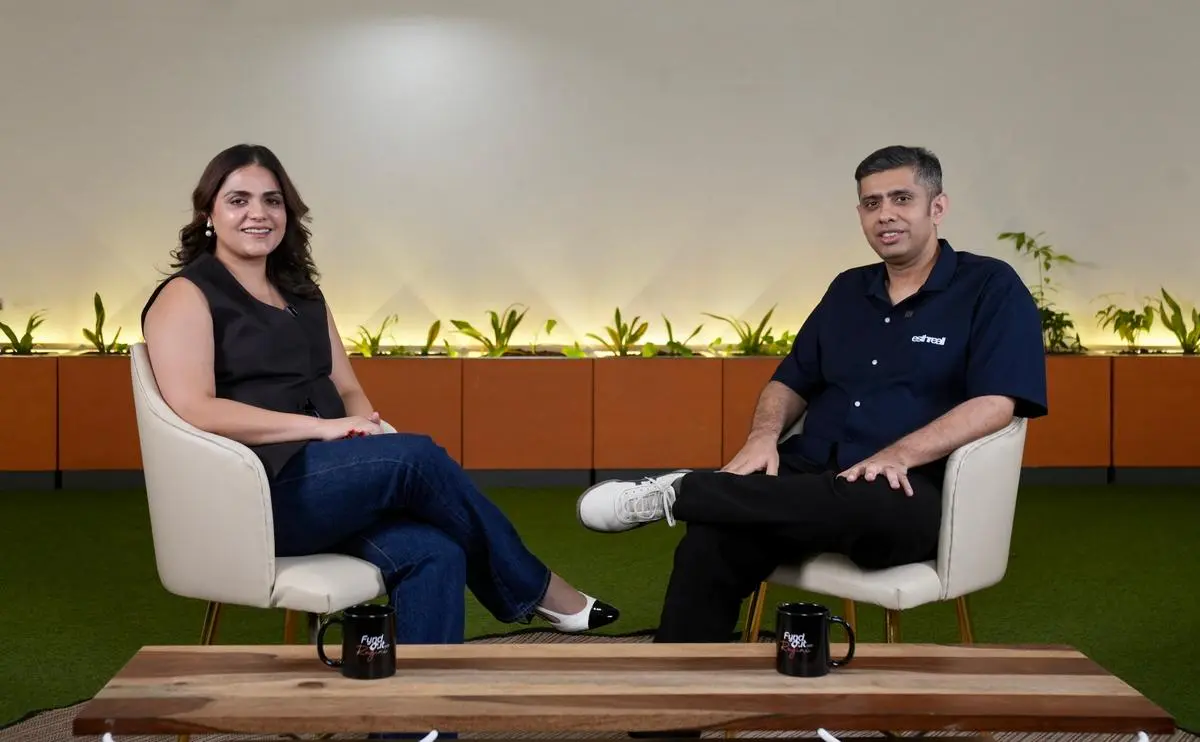
I was at Bain for eight and a half years and Zomato for six, and when I left I knew I wanted to be in commerce but not another marketplace. A common friend introduced me to Vivek Biyani, who was looking at the same opportunity from the offline side.
An online guy only thinks about online. Putting that much capex into a store before you know what it will yield, working out where a customer turns left or right when they walk in, I would never have thought about any of it. He is an offline champion. I run the business, Vivek looks after the balance sheet, which is a distinction a lot of online founders wouldn’t even recognise.
The first business model had to go
We started with rental arbitrage. Take a large space at anchor rates that no individual brand could get, cut it into smaller units, sit on the spread. No commission. We have earned our piece, here is your shop, go call your customers.
It didn’t hold, because it never answered why a consumer would walk into Broadway at all. Departments need marketing. So the model changed: brands pay a fixed minimum that covers our costs, and beyond a threshold we take a commission, whichever is higher. Our stores break even at the minimum guarantee level. Past that, we only make money when the brand makes money.
The numbers I actually watch
A standalone store converts somewhere between 23 and 28% of the people who walk in, and that is counting everyone entering, when people usually arrive in groups of two or three. A mall store sits closer to 12 to 15%, because more people are just browsing.
Profitability is the wrong question for a store. The question is how fast the capex comes back, and for a solid model that should be under 30 months. Several of our brands pull 20 to 25% EBITDA out of our stores. If you do ten lakh of GMV on a 65 to 85% gross margin, after our commission and the mid-mile cost, 25% is very achievable.
Since this conversation
Broadway now runs stores across four cities: Delhi, Hyderabad, Pune and Mumbai. In August 2026 it was announced as the launch retail partner for The Foundery FWD, putting 18 new consumer businesses from the venture builder’s first cohort onto Broadway shelves. Which is roughly the launchpad thesis Sankalp describes above, arriving faster than he predicted it would.
Listen to the full conversation with Sankalp Kathuria on FyndOutWithRagini.