September 4, 2026
He Made ₹100Cr Selling Sleep
SleepyCat originally offered a 30-night trial. The competition offered 100. Kabir’s assumption, and it is most people’s assumption, was that extending the window would push returns up. Longer to change your mind, more mattresses coming back.
The opposite happened. His read is that 30 nights was itself causing returns, because a short window makes people rush to a decision before it closes. Give them 100 nights and the deadline stops being the thing they are reacting to. They just live with the mattress. Returns did not rise. If anything they eased slightly.
It started with a container and a ₹12,000 video
Kabir’s father worked in trade with China, so the first batch of 40 to 50 mattresses came in on an existing container. There was no marketing plan. He made a simple founder-led video, spent somewhere around 12,000 to 15,000 rupees putting it on the Amazon product page, and that was the entire launch.
It sold out in about a month. Then the loop began: get a batch, sell it, personally ask every single buyer for a review, order the next batch. Three or four hundred mattresses in the first three to six months, with 30 to 60 day gaps between batches when he ran out of stock entirely. Customers waited. That, more than the sales number, was the signal.
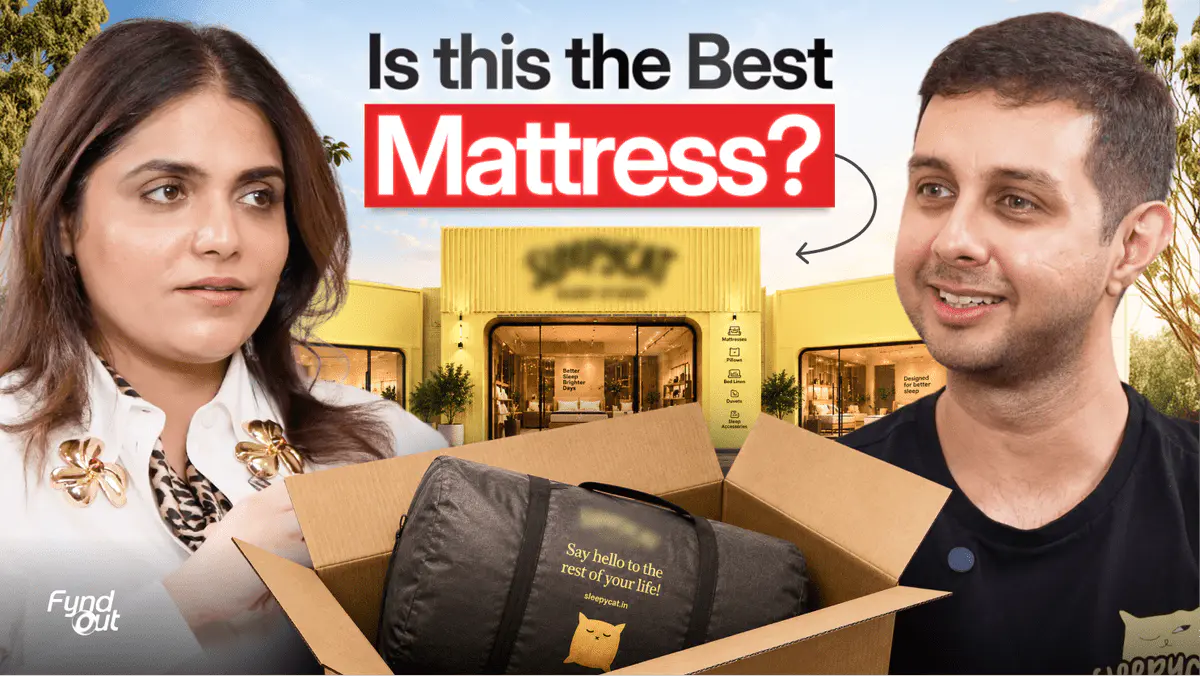
Everyone in India is a first-time mattress buyer
This is the insight the rest of the business is built on. Most of us inherited our mattress, or our parents chose it, or a dealer chose it for us. Kabir is blunt that he did not understand mattresses himself when he started the company.
So more choice does not help. It paralyses. There are literally four mattresses in a SleepyCat store: two mediums and a firm, and you pick your size. All of them carry the same core features. The complexity stays inside the company rather than being handed to a customer who has no framework to judge it with.
The wall that explains the price
Every store has a wall showing the conventional chain: manufacturer to distributor, distributor to dealer, dealer to retailer, retailer to you. Then the SleepyCat version, which is manufacturer to consumer.
It is a piece of visual merchandising doing an argument’s work. In a category where nobody can evaluate the product, the honest way to justify a price is to show what has been removed from it rather than to assert quality the customer cannot verify.
The store metric that decides everything
SleepyCat is now at roughly 50 stores, aiming to close the year near 75. The number Kabir watches before opening any of them is rent to revenue, which he wants at around 10%.
Then the part worth sitting with: marketplace commissions run far above that. So a physical store, properly located, can be a cheaper route to a sale than a marketplace, and it throws in storefront visibility for free. Stores turn monthly profitable within about two to three months and pay back in 12 to 14. The industry benchmark he cites is closer to 18.
Retail is also easier for this category specifically, because touch and feel improves conversion in a way it simply cannot online.
Virtual warehouses inside the real one
The hardest operational part of opening stores turned out to be timing. Every store needs the right assortment across sizes and colours to arrive on the right day. Too early and it blocks the fit-out. Too late and the store opens without stock.
Their fix was to build virtual warehouses inside the physical warehouse, so a store’s inventory could be allocated and blocked before it shipped, the same way an order gets blocked when it comes in. It is an unglamorous solve, and it is the kind of thing that decides whether a rollout works.
The mattress he built for himself
The newest product is called the Founder’s Mattress. Kabir is clear that it is not the best-selling one, because it is the most expensive. It is around three months old and it is the one he built to sleep on himself, using everything he has learned.
That is a defensible reason for a hero product to exist. Not the volume driver, not the entry point, but the clearest statement of what the company thinks good is.
When they recalled a product
A mattress in a box is compressed, and it has to be opened within a certain window to recover its shape. Past that, it may not. SleepyCat found a problem with a base foam and pulled the product.
The physics of the format is not something most customers know when they buy, and the recall is the honest consequence of a company that manufactures its own product rather than badging someone else’s. If you own the manufacturing, you own the defect.
Depth in sleep, not width across the house
Repeat purchase runs around 22% within the first year, which sounds high for a mattress until Kabir explains it: the repeat is not the mattress. It is pillows, comforters, bed sheets, pet mats, mattresses for older dogs who struggle to get out of soft beds, baby mattresses.
Plenty of people told them to move into furniture or chairs. They went deeper into sleep instead, on the argument that sleep touches every sense and there is far more to build inside it than beside it. It is the same discipline as the four-mattress store, applied to the roadmap.
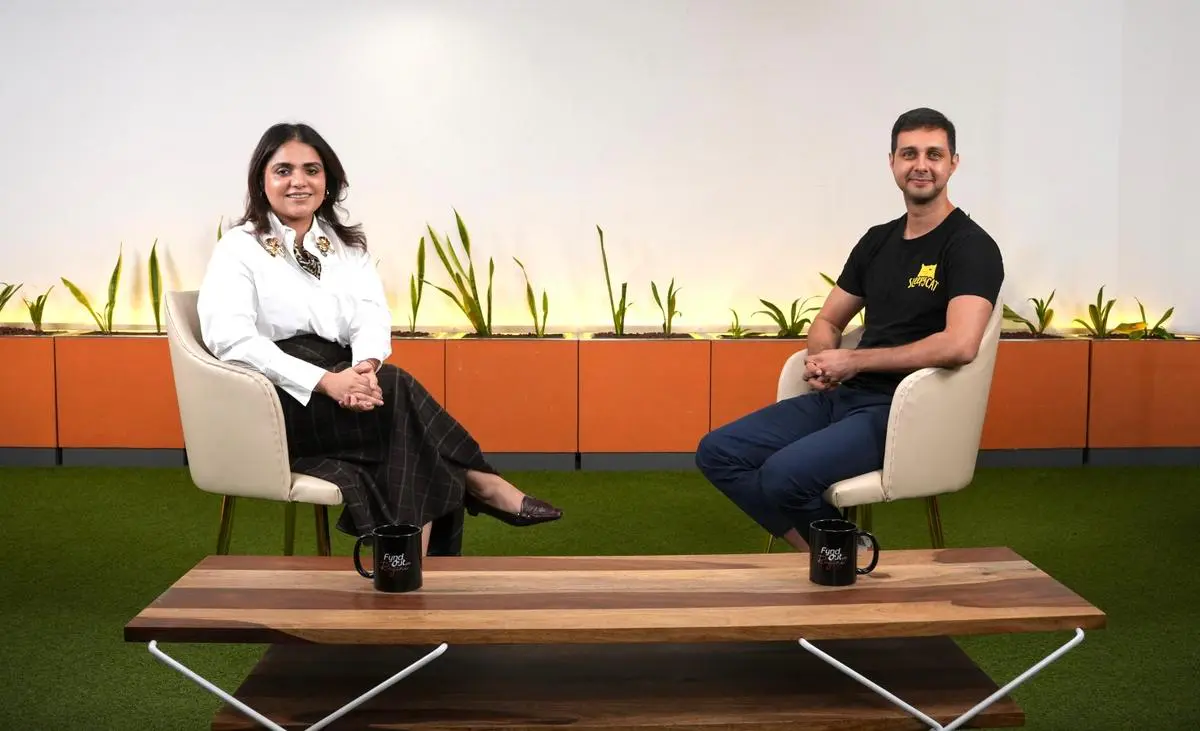
Listen to the full conversation with Kabir Siddiq on FyndOutWithRagini.