Why India's smartest D2C brands are building experience centers, not stores
Something is shifting in Indian retail and it is happening quietly.
A wearable brand that spent years selling entirely online just opened a five-floor wellness destination in the heart of Delhi. It has a gym. A café. A salon spa. A wellness zone. No discounts, no loud launch event. Just a space designed to make you feel something before you buy anything.
More brands are doing this. And the ones doing it well are growing faster than the ones that went offline the conventional way.
What is experiential retail and how is it different from a store?
A traditional store is designed around a transaction. You walk in, you browse, you buy, you leave.
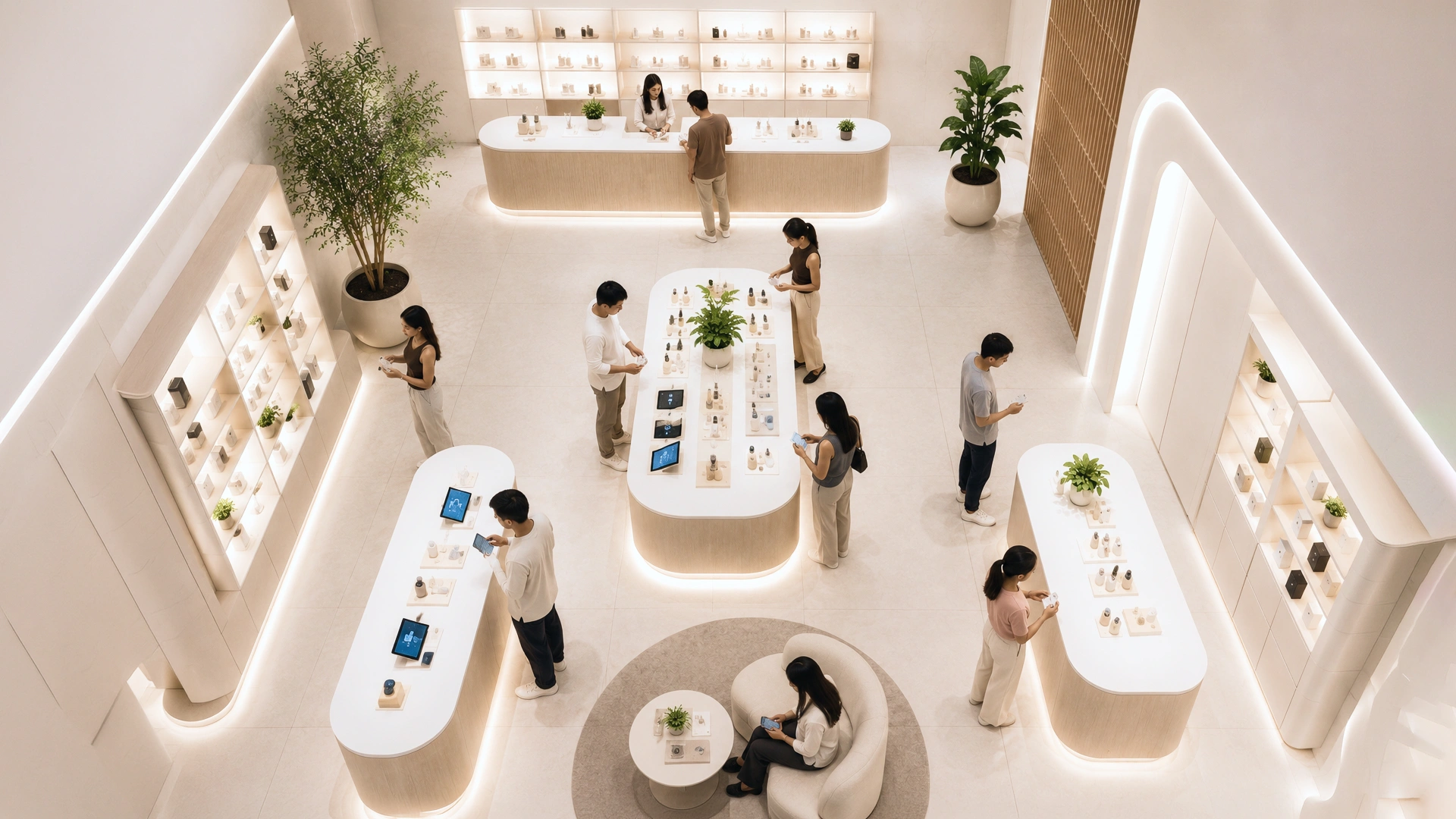
An experience center is built around a feeling. You walk in and the space is designed to help you understand the brand, connect with what it stands for and leave with a memory, not just a shopping bag.
Experiential retail or experiential commerce is a broader shift in how brands think about in-store experience. Instead of using a store solely for sales, brands use it to establish relationships. The product remains at the focus, but the atmosphere surrounding it does a lot of the work.
It can take many forms:
- A demo zone where customers can try the product in a real-use setting
- A wellness or lifestyle space that reflects what the brand believes in
- A café or lounge that gives people a reason to slow down and stay
- An interactive display where the product's impact is explained through experience rather than explanation
Globally recognized companies like Apple, Starbucks, and Nike have grown their offline presence with this strategy. And the smartest D2C brands in India are now adapting to this strategy.
Why going offline the standard way often does not work
Every D2C brand eventually faces limits online. Customer acquisition gets more expensive and ad returns go down. Even with loyal customers, it costs more and more to keep growing.
So, brands often try going offline, getting space in malls, setting up kiosks, or putting up signs to see what happens. Some brands do well with this approach.
Why experience is now the product
Apple stores do not just sell devices. They allow you to take your time, experiment at your own speed and leave with a sense of belonging. Starbucks offers more than just coffee; it is a middle ground between home and work. London's House of Vans features a live music venue, a movie theater and a skate ramp. The shoes are hardly noticeable.
What these brands understood early is that a customer who has an experience remembers it. A customer who makes a transaction forgets it.
In India, this change is just beginning, led by D2C brands in health, wellness, lifestyle and personal care. These are areas where people need to understand the product, not just see it. You cannot fully know what a health wearable does from a product listing. But five minutes inside a space designed around your well-being and you get it immediately.
Experience does what copy cannot.
The Indian consumer rewards this
The millennial and Gen Z consumer is not passive anymore. They compare, research and talk to people before they commit. If your offline presence does not add something meaningful to that journey, it adds nothing at all.
D2C brands in India that focus only on transactions are learning fast that this is not enough. Just getting people in the door does not lead to sales. Spaces without a clear purpose are ignored.
Brands that succeed give people reasons to visit beyond discounts. They design spaces that reflect what their products mean to customers.
A health brand centers on the body. A skincare brand focuses on rituals. A lifestyle tech brand highlights performance and identity. The way they do this may change, but the goal remains the same.
What this looks like in practice
Take Ultrahuman, a health and performance tech brand known for its wearable ring. When they entered India's physical retail market, they had never run a store before. No existing systems, no retail team with prior experience, no inherited process to follow.
They could have started small. Rather than open a standard retail kiosk, they built India's first health and wellness experience center.
Here's what that looked like on the ground:
- Started from zero: No existing store setup, no billing system, no inventory process. Everything was built from scratch before day one.
- Built a destination, not a store: A five-floor space with a gym, café, salon spa and wellness zone, all centered around a single product: the Ultrahuman Ring.
- Launched across multiple formats simultaneously: Kiosks for accessibility and an experience center for depth, running in parallel from the start.
- Doubled orders within the first year: With the right infrastructure in place, offline performance scaled quickly and consistently.
- Tripled their retail footprint in 12 months: From one kiosk to three kiosks and a full experience center, all fully operational.
The space gave people a real reason to walk in, spend time and understand the product in a way that a product page never could.
The operational side that most brand-building conversations ignore
Here is why discussions about experiential marketing in retail miss some key points.
Behind every well-designed offline experience is an operational foundation that nobody sees and if it cracks, the experience cracks with it.
- Slow billing at checkout
- Inventory that does not match up between stores
- Staff unable to answer simple stock questions
- Reports that arrive too late to act on
These issues can quietly ruin an offline launch. For D2C brands entering physical retail for the first time, with no existing retail systems, this risk is very real.
The customer's experience is only as good as the infrastructure that supports it. And developing that infrastructure, especially when starting from scratch, requires as much consideration as the place itself.
What Fynd does for brands entering physical retail
For brands entering physical retail for the first time, Fynd serves as a complete AI in retail operations, not just a software provider. Here is what that looks like in practice:
- End-to-end billing setup configured specifically for how your store operates, whether that's a kiosk, a multi-floor space, or a combination of both.
- Serialized inventory management for every product across every location tracked in real time, so nothing falls through the cracks.
- Live analytics dashboard for a single view of how each store or kiosk is performing, updated in real time so decisions do not wait on reports.
- Custom reporting built around how your business actually runs, not a generic template that needs to be decoded.
- On-ground support from day one, not a handoff after implementation but a partner that helps you get live and stay alive.
When Ultrahuman built their experience center, the entire operation ran on Fynd POS from kiosk billing to the five-floor experience center. The ambition was theirs. The infrastructure made it executable.
This is what the right retail foundation does. It stays invisible so the experience can be everything.
The honest question worth sitting with
If you are a D2C brand planning your offline move, here is what's worth asking before you sign a lease.
- Are you opening a store because the location makes sense?
- Or are you building something your customer will remember, talk about and return to?
The market is patient with the first kind. It rewards the second one.
Experiential retail is not reserved for brands with enormous budgets. They are for brands with a clear point of view on what their product means to the people who use it. The scale can be modest but the intention cannot
The brands winning offline in India right now are not the ones with the most stores. They are the ones with the most intentional spaces.
Planning your offline launch? See how Fynd POS can help you build the operations behind the experience.
Frequently asked questions

Empower your business, every step of the way
More Blogs