July 18, 2026
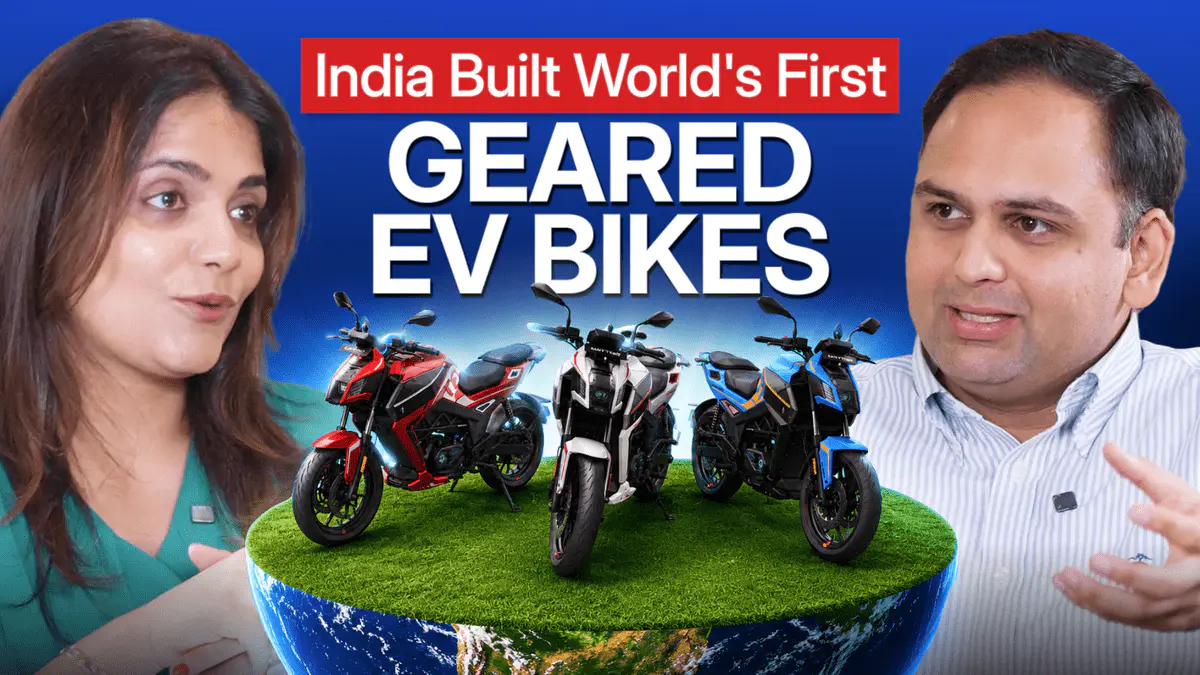
Matter went looking for electric motorcycle technology. Nobody had any.
While the rest of India’s EV market went after scooters, Mohal Lalbhai took the harder problem. No ecosystem existed to buy from, so Matter spent five years building the stack itself.
In 2018 the obvious electric two-wheeler bet in India was the scooter. Mohal Lalbhai went the other way, because motorcycles are about two-thirds of India’s two-wheeler market and nobody was paying attention to them. Matter then went looking for someone to buy the technology from. China, Europe, North America, Japan. None of them had motorcycle-ready electric technology, so in 2019 a startup in Ahmedabad decided to build the whole thing itself. That took five years.
Plenty of people called an Ahmedabad startup insane for trying. Mohal spoke to Ragini about the gearbox, the month the factory stopped, and why he sent 40,000 booking payments back.
The gearbox was a means, not the headline
We are the only geared bike in the world, but that was never the point. The point was the best motorcycle, electric or otherwise, and the gearbox turned out to be necessary to get there. Every patent came out of that exercise.
A rider does not want a glorified scooter. The gearbox keeps the familiarity. The emotion and the heart and soul of the motorcycle are still in there. It just happens to be electric.
The rest of the engineering came from the country itself. You get cold and hot weather here on the same day, sea level and mountains, dry interiors and the coast. Our first prototypes really struggled in the Ahmedabad summer, which is why we ended up putting liquid cooling on an electric motorcycle. Design for India and you have designed for most of the two-wheeler world.
The month we shut the factory down
We started manufacturing in October 2024 and, after five years of designing everything, we were confident we would be out of pilot in six months. It took eighteen. Four months just to get the first vehicle right.
In May 2025 we shut everything for a month. When that many moving parts come together for the first time you genuinely do not know what is going wrong, so you imagine the worst. Designers, R&D, manufacturing, everyone was at the plant. It turned out to be the silliest things. Software bugs. First-time training on the shop floor. But it was the intervention that worked. We went from four months for one vehicle to pushing out ten to fifteen a day.
Why all of it is built in-house
There are close to 2,000 separate parts going into one bike, and when you design all of them there is nobody to fall back on. Design, manufacturing, quality, packaging, shipping. All of it is yours.
Think of Lego. Lego pieces always stack together. Mix in another brand and they might fit, but not necessarily. Every component under the bike has code running somewhere, and if you source them separately you do not know whether that software speaks the same language. That failure does not show up on the ride to office. It shows up further out, in heavy rain, when the rider is least able to deal with it.
The charging infrastructure worry is misinformation
Cars genuinely need charging infrastructure. Our bike charges from the same kind of socket you charge your smartphone from. If India has a billion smartphones, that is a billion charging points already available.
The battery gives about 170 kilometres, more than most riders end up using. Averages vary widely: around 30 to 35 kilometres in Bangalore, 80 to 85 in Jaipur. And because of the gearbox, riders get roughly 25% more range within the first 30 days simply from getting used to it. Day one you might see 120. By day thirty you are getting 150 comfortably.
Returning 40,000 bookings
Bookings crossed 40,000, which was not something we had imagined. It helped us shape how big the plant needed to be, and it created a problem, because there was no way we could deliver even a fraction of that in 12 to 18 months.
So we returned all of the booking money, in about three months. We got some blessings and some abuse. That is part and parcel. We told people we would come back to their city, and we still reach out to those early customers when we enter a new one. Some turn up even now, still curious.
The price ceiling is psychological
An electric bike cannot be more than about 10% to 15% more expensive than the average internal combustion equivalent, and that philosophy governs everything else we do. There is a limit to what a consumer will pay today in the hope of a saving tomorrow. They will probably pay 10 or 15,000 rupees more. Not 50,000. There is also real resistance to crossing a round number: 1,99,999 and 2 lakh are not the same product in a customer’s head.
Meanwhile the cost base keeps moving. Memory prices are our worst bottleneck right now, and you cannot put dynamic pricing on a motorcycle. Absorbing the shock is the short answer. Re-engineering the cost is the real one.
Scale decides this, not the best machine
The plant is set up for 10,000 vehicles a month and we are limited to around a thousand while we come out of pilot. Demand is not the constraint. We are backlogged for the next four months, and I think we are playing catch-up for the next year and a half to two years.
You can have the best product and fail to supply it, or something that is 19 out of 20 that reaches hundreds of thousands of riders. It is the hundreds of thousands that will actually change something. The real impact of an EV is not selling the product. It is the consumer benefiting from it. Until that benefit is registered at scale, selling is just a tool.
Listen to the full conversation with Mohal Lalbhai on FyndOutWithRagini.