At the time of the interview, Superdry Indiranagar had moved up to become the top store on the Fynd Store app among Superdry stores across India. The team said it consistently added more than ₹3 lakh in sales through Fynd Store "ever since the second lockdown." Store sales had been low and walk-ins a challenge. Tushar Rathore, Fynd Store account manager, reached out to the store team to learn how they did it and how they sold outbound.
About this story
Source: an interview with the store team, conducted by Fynd. The figures are what the team reported, not audited numbers.
Product names: "Fynd Store" is now Fynd Store OS. The order-on-behalf workflow is Endless Aisle, and the catalogue sharing is now part of Clienteling.
Period: the ₹3 lakh figure has no stated period. We explain below what that means for how to read it.
Tushar: Noella, why don't we start with you telling us more about your store.
Noella: We're usually a typical ₹15 Lac store. We'd do much more during sales or whenever we have offers running at the store. Walk-ins were low, especially after the lockdown. But they are back in full force after the festive season.
Editor's note: the store's monthly sales target is about ₹15 lakh.

Tushar: Anjali, could you share how Fynd Store has helped you improve customer service?
Anjali: So, the regular use case for Fynd Store for us is when we are not able to find the right size or a fit that the customer demands. In such cases we check the Fynd Store app, select another fulfilling store, and order on behalf of our customer. It becomes easier for us and also keeps the customer satisfied.
This is the Endless Aisle workflow: when the size isn't in the store, staff sell it from another location and arrange delivery.
Tushar: How about outbound sales? How has Fynd Store helped you with it?
Noella: What happened during the pandemic was walk-ins had drastically gone down. We had no choice but to bank on distance selling.
Anjali: Every day, we would get a database of our website's customers with cancellations or returns due to a size/color or product issue. We would call these customers, and assure them that we'd get their desired product from a nearby store. We'd pitch these customers with Superdry's digital catalog, made by Fynd.

The routine, in four steps
Each day, the store received a list of website customers whose orders had been cancelled or returned because of size, colour or a product issue.
Staff called those customers.
They promised to get the wanted item from a nearby store.
They pitched Superdry's digital catalogue.
Tushar: And what was the impact?
Noella: These calls had a healthy 20-25% conversion rate. It helped us in giving personalized experience to our customers. We could build rapport with them and stay assured that they would keep coming back to our store.
Reading the numbers: period, funnel and revenue
The interview gives two figures: more than ₹3 lakh in sales and a 20–25% conversion rate. Here's what each one does and doesn't tell you.
Period
Question | What the story says |
|---|
When did it start? | "Ever since the second lockdown," meaning the second Covid wave of 2021 |
Is ₹3 lakh monthly or in total? | Not stated. The wording "consistently added" suggests a repeating amount, but the interview doesn't say per month |
When was it measured? | Not stated. The post was published in July 2022. Our reading is that the interview was held earlier, since it mentions the festive season and a Black Friday offer |
Funnel
Stage | Reported? |
|---|
Customers on the daily list | Described, with no volume |
Calls made | Not reported |
Calls connected | Not reported |
Catalogues pitched | Described, with no volume |
Orders placed | Not reported directly. The 20–25% conversion rate applies at an unspecified stage |
Editor’s Tip: For successful adoption of an in-store solution, it is important to tie in those targets to the store’s normal workings. For example, assuring the store team that sales made from the Fynd Store app would also count towards the ₹15 lac monthly target achievements.
The 20–25% could mean orders per connected call or per customer pitched. Without call volumes, it can't be turned into a number of orders, and we haven't tried to.
Revenue definition
Question | What the story says |
|---|
Gross or net of returns and cancellations? | Not stated |
Orders placed or delivered? | Not stated |
Net new, or recovered? | The calls targeted customers whose website orders had been cancelled or returned. Some of the sales may therefore be recovered web orders, not new demand. The interview doesn't separate them |
Who gets the credit? | The store. Noella says "the store sale gets added to our PLIs" (the team's incentive scheme), and sales through the app count toward the monthly target |
How big is it? | The store's target is about ₹15 lakh a month. If the ₹3 lakh is monthly, it's about a fifth of that. The interview doesn't confirm it |
Tushar: Tell us about the user adoption of Fynd Store by your store team. Was there any friction?
Anjali: So, initially yes, as earlier there was only a single login for the entire store team. But now we all have our own logins and have the app installed in our phones. We find this new employee-based system better.
Noella: Another major contributor here is the incentives from Fynd team. They are very lucrative and help us to keep the morale high. We do not hesitate to place orders on Fynd Store because ultimately the store sale gets added to our PLIs. We're excited about Fynd's offer for stores on Black Friday. So now, our team is more willing to use Fynd.
Editor's tip: For successful adoption of an in-store solution, it is important to tie in those targets to the store's normal workings. For example, assuring the store team that sales made from the Fynd Store app would also count towards the ₹15 lac monthly target achievements.
The incentive and Black Friday offer described here date from the time of the interview and shouldn't be read as a current programme. Ask Fynd about what applies today.
Tushar: Well, that's nice to know! Would you like to share something about the kind of support you get from the Fynd Store Team?
Anjali: Of course! Fynd team has been a huge help. Siddharth, our Customer Success Manager has always handled every escalation in a timely manner. Sometimes the product is not reflecting on the app, sometimes same-day delivery or urgent deliveries & random requests becomes difficult. But Siddharth always makes sure we get a fast response and helps us with our concerns.
Delivery: what the story shows
What the team did: staff picked a fulfilling store in the app and ordered on the customer's behalf.
What was hard: products sometimes didn't show in the app, and same-day or urgent deliveries were difficult.
What was still ahead: in the final answer, Noella names "real-time digital catalogs & same-day deliveries" as the next thing the team was eyeing.
What's missing: delivery times, on-time rates and the share of orders that failed or were cancelled. The interview has none of them.
If you copy this play, plan the delivery side before the calls:
Promise only what you can keep. Tell customers the delivery window the fulfilling store can meet, not the fastest one possible.
Check stock accuracy first. A catalogue that shows items that aren't there turns a won call into a cancellation.
Agree rules with fulfilling stores. Decide who accepts the order, how fast, and what happens when a store can't.
Track delivered orders, not just placed ones.
Tushar: Happy to hear that! Would love to keep serving you in the same way in future... Speaking of which could you finally share, where do you see your team going from here?
Noella: With our experience we have learnt that Fynd is a great product to increase our store sales. To ensure omnichannel is a success, it has to be a people-driven approach. We've enjoyed learning and growing with the Fynd team. Personalized, real-time digital catalogs & same-day deliveries from Fynd is the next thing we're eyeing. At times we might be skeptical about using Fynd. But ever since we've realized the potential of Fynd, there's no looking bac

Tushar: Well, that's a wrap! Thank you for supporting us. Fynd Team looks forward to more such great months with your store. Hope you enjoy the benefits of the Fynd Black Friday offer, designed especially for the store teams. Thank you and have a good day!
Calling customers: consent and data
The story doesn't say how customers had agreed to be called or sent a catalogue. Before you run this play in India, check the following. This is general information, not legal advice, so confirm it with your counsel.
Question | Why it matters |
|---|
What kind of call is it? | TRAI's rules (TCCCPR) classify commercial calls as transactional, service or promotional. A call about a customer's own cancelled order is closer to a service call. Pitching a catalogue is promotional, and needs consent and a check against the Do Not Disturb preference |
How long does implicit consent last? | Under TRAI's 2025 amendments, implicit consent for transactional and service communication lasts only for the duration of the customer relationship. After that, a service call needs explicit consent. A call weeks after a cancellation may not qualify |
Which number is used? | TRAI uses the 140 series for promotional calls and the 1600 series for transactional and service calls. The amendments also restrict ordinary 10-digit numbers for telemarketing. Ask counsel how this applies to store staff calling from phones |
Which channel carries the catalogue? | SMS and WhatsApp have their own opt-in rules. Share links only with customers who have agreed |
What does the data law say? | The DPDP Rules were notified in November 2025, with an 18-month phased timeline, so the core consent and notice duties apply by mid-May 2027. Use customer data for the purpose it was collected for, give notice, and honour withdrawal |
Practical steps: record each customer's consent status on the call list, check numbers against DND, state the purpose at the start of the call, offer an easy opt-out, and keep a call log.
How this works in Fynd Store OS today
In the 2021–22 story | In Fynd today |
|---|
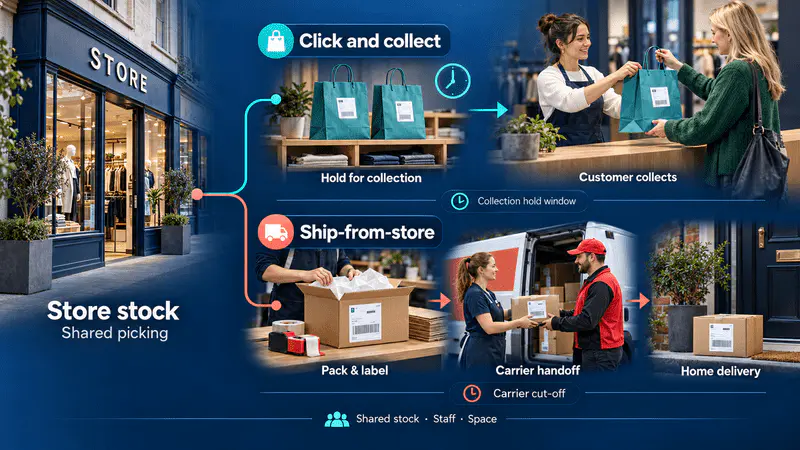
Staff order on behalf of the customer from another store | Endless Aisle: sell stock held at other stores or warehouses, with home delivery, same-day or next-day options, store pickup or curbside, and a mixed cart |
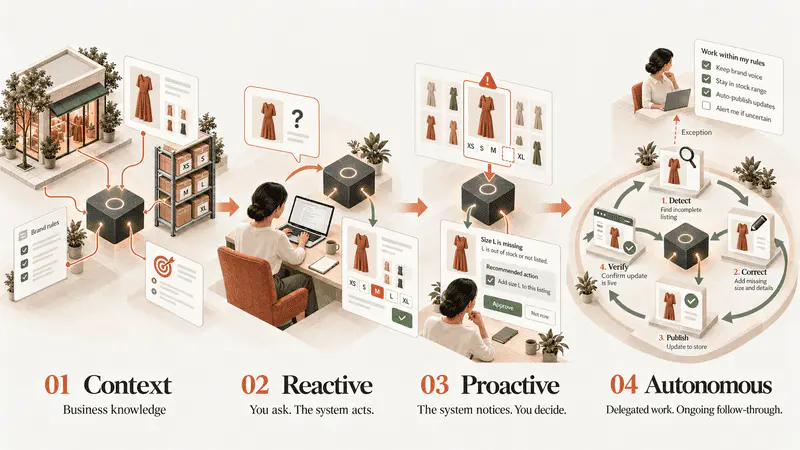
A digital catalogue pitched on calls | Clienteling: staff create and share personalised collections and carts by SMS, WhatsApp or email |
One login for the whole store, then one per person | Store OS with role-based access, sales attributed to the staff member, and activity tracked by person |
A fulfilling store chosen in the app | OMS routes each order to the nearest warehouse, store or partner based on inventory |
Returns | Returns accepted at other stores, in Store OS |
More from the field
Story | What was reported | Scope |
|---|
Superdry Jioworld, Mumbai | One fashion consultant generated 7.2% of the store's sales in a month by sharing custom collections | One person, one store |
Superdry Amritsar | Walk-in conversion rose from 13% to 19% after the team pitched pan-India options to every customer | One store |
Style Baazar | A 4x jump in omnichannel sales in a few months, per its managing director | Started with a 30-store pilot in May 2023 |
Try it in your stores: a four-week pilot
Choose the list. Customers with cancelled or returned online orders for fit, size or product issues, within a recent window.
Check consent for each customer, and scrub against DND.
Write a short script that states why you're calling, offers the item from a nearby store, and gives an opt-out.
Count the sales toward the store's target, as the editor's tip says. It's what makes teams use the tool.
Track the full funnel: customers listed, calls made, calls connected, catalogues sent, orders placed, orders delivered, and returns or cancellations.
Define revenue before you start: report orders delivered, net of returns, and note which customers were recovered web orders.
Review weekly. Look at the connect rate, the order rate and the delivered rate, and fix the weakest stage first.
Note from the editor
Fynd gives its partner stores a personalised approach. At the time, Superdry stores had a single Fynd customer success contact. Collection sharing, cart sharing, Endless Aisle delivery options and cross-store returns are the capabilities behind the workflow in this story.