January 9, 2026
Fynd Hacktimus 2025: A week of purposeful building, learning and hiring
Hacktimus 2025 by Fynd is a 7-day AI and automation hackathon where developers build with Boltic and compete for internships and full-time roles.
Garima Poddar
January 9, 2026
Hacktimus 2025 by Fynd is a 7-day AI and automation hackathon where developers build with Boltic and compete for internships and full-time roles.
Garima Poddar
It began with a simple idea.
What if a hackathon didn’t end with demos and applause, but with real outcomes?
That idea turned into Hacktimus 2025, a week-long build sprint that brought together aspirational engineers, practical issues and a hiring-first mentality. For all those involved, what transpired over the course of seven days was intense, cooperative and incredibly fulfilling.
From the earliest planning discussions, Hacktimus was designed with intent. The goal was to ensure participants weren’t experimenting in isolation but building with clarity around real product workflows. Boltic, Fynd's automation platform that helps developers in connecting services, automating tasks and building workflows without worrying about backend infrastructure, was positioned as the core platform. With participants encouraged to design automation-led solutions using serverless architectures and real integrations.
This clarity helped shape everything that followed, from learning modules and mentorship to evaluation criteria and final outcomes.

Human–AI collaboration was the theme of the hackathon, encouraging participants to create solutions that blended artificial intelligence and human judgment. This theme allowed for flexibility in use cases and implementations while offering a distinct direction.
To avoid friction and dropouts during the event, Hacktimus implemented a mandatory pre-hack learning period. Participants had to complete organized lessons from Fynd Academy that covered the Fynd ecosystem, Boltic fundamentals, serverless best practices and example project walkthroughs.
Live training sessions and technical Q&A sessions ensured that participants joined with a common foundation of knowledge. The hackathon week itself was able to concentrate on building rather than onboarding.
It marked the official start of Hacktimus 2025. More than 200 participants joined both on-site and online to kick off the week. The session focused on setting expectations, walking through the event structure and validating development environments.
The opening address from Fynd’s leadership played a key role in setting the tone, emphasizing execution, learning and ownership. Participants also engaged in initial idea discussions and mentor introductions, ensuring they were ready to move into the build phase with confidence.
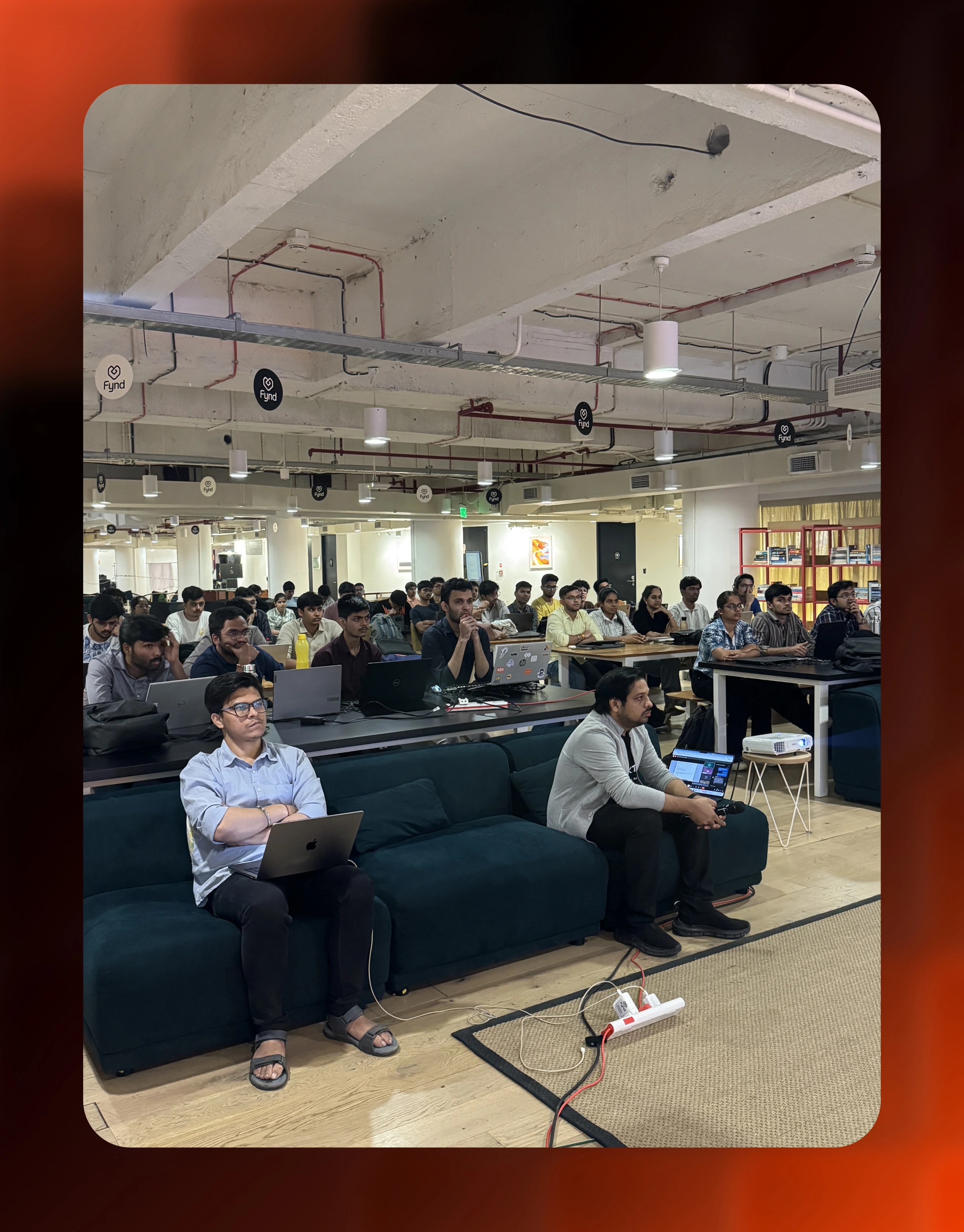
Hacktimus 2025 saw strong participation from engineering students. The event received:
Participants went on to the week-long build phase after the start. With ongoing mentor help, they started putting their solutions into practice while working independently. The focus remained on major backend automation with Boltic, aided by serverless architecture and clear connectors.
A prototype checkpoint throughout the week worked as a vital filter. It was expected of participants to
This checkpoint reduced the pool to those prepared for the last stage and assisted in keeping serious contributors.
The final stage brought together 38 participants for an intense 24 hours build and polish sprint. During this phase, builders focused on
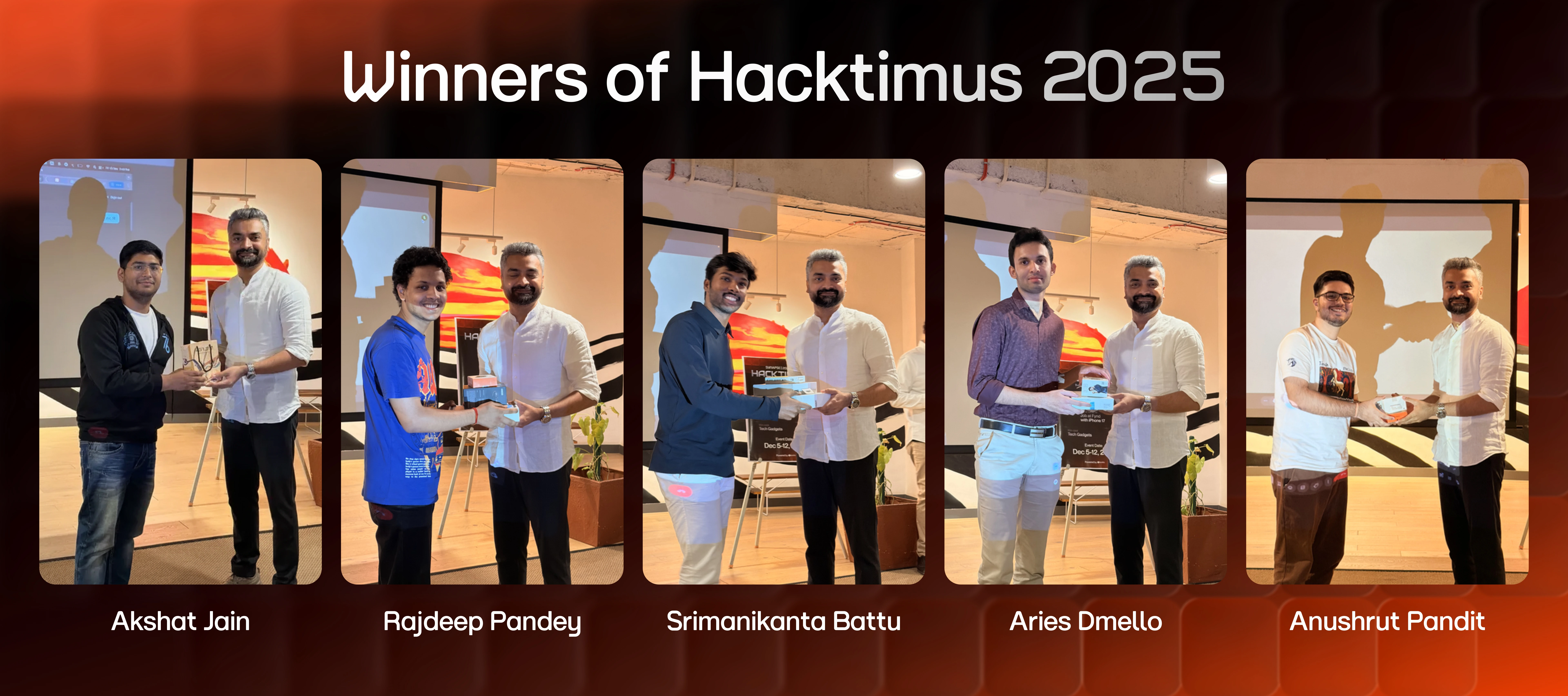
Submissions were evaluated based on their architecture, utilization of Boltic workflows, depth of execution and presentation clarity.
The competition at this stage was fierce, reflecting the quality and depth of work created during the week.
Hacktimus 2025 delivered results that went beyond awards and rankings.
Key outcomes from Hacktimus 2025:
Further, several solutions built during the event showcased practical use cases for Boltic, offering valuable insights into how developers interact with automation workflows and where future improvements could be made.
Curious how these solutions were built? Learn more about Boltic and how it enables automation across real use cases
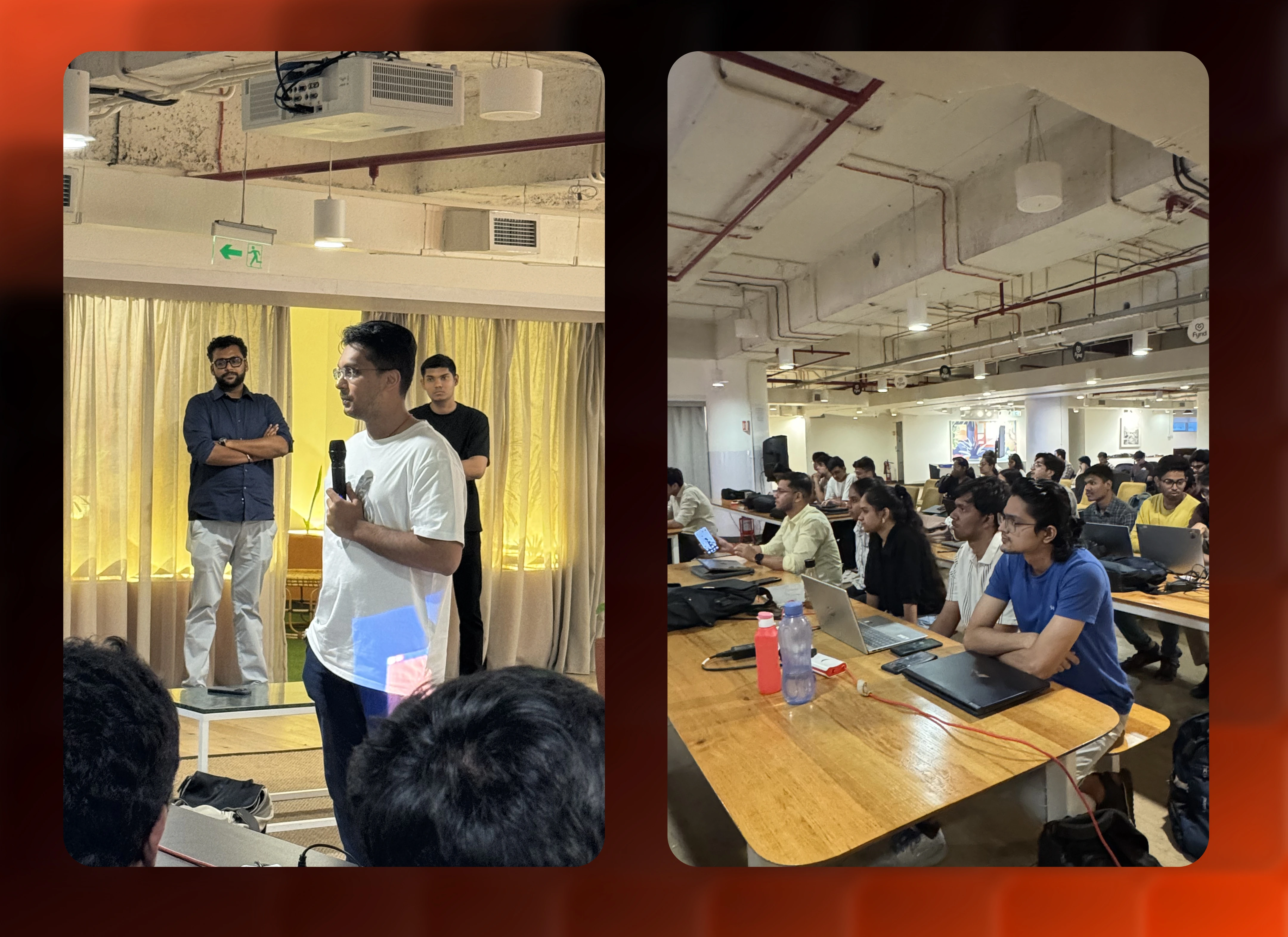
Fynd’s leadership played a crucial role throughout Hacktimus 2025.
Hacktimus 2025 showed that a hackathon can be more than a short-term experiment. The results? From talent discovery to product adoption, demonstrated the value of planning hackathons with long-term objectives, structure and purpose in mind.
Hacktimus was designed as a build-focused, learning-first hackathon with well-defined objectives, quantifiable success measures, and a concentration on planning and execution.
Build. Automate. Get Hired.
Have questions or want to explore collaboration?
~t.compress(q:75)~t.toFormat(f:webp)/cms_uploads/Livspace-x-Fynd-AI-PIM-Blog.png)
How the Fynd AI solution and a custom shoot planning module are helping the home decor brand manages multiple SKUs across its website and marketplaces.
~t.compress(q:75)~t.toFormat(f:webp)/cms_uploads/virtual-makeup-try-on-cover-v4-full-product-details-4k.jpg)
Virtual makeup try-on helps shoppers compare shades and finishes before buying, making online choices easier.
~t.compress(q:75)~t.toFormat(f:webp)/cms_uploads/Mokobara.jpg)
How Mokobara locks feature priority, copy sign-off, and brand style before scaling Amazon listing images and A+ content and what any D2C brand can borrow from it.
Fill out the form
Share your contact information to get started
Speak to an expert
A member of our sales team will get in touch with you