June 27, 2026
An Indian Brand Takes 150 Days To Get An Idea Onto A Shelf
Farooq Adam, Founder of Fynd, on why the fashion calendar broke, what happens when Fynd Create gives a designer hundreds of options instead of ten, and the 1,200 factories sitting behind it.
If a film becomes a trend on Monday, a brand working on a conventional supply chain cannot have a collection responding to it while the trend is still alive. Farooq puts the Indian fashion cycle at 150 to 200 days from idea to market. Global sourcing chains can run even longer, because they are trying to aggregate demand worldwide and predict what customers may want far into the future.
Nobody sitting in 2020 predicted 2020. That is the problem with a forecast that far out, and it is what Fynd Create was built to compress. Farooq spoke to Ragini about design explosions, what small-batch manufacturing did to factories that didn’t ask for it, and why he thinks the creative process itself still needs human taste.
The Work Around The Work
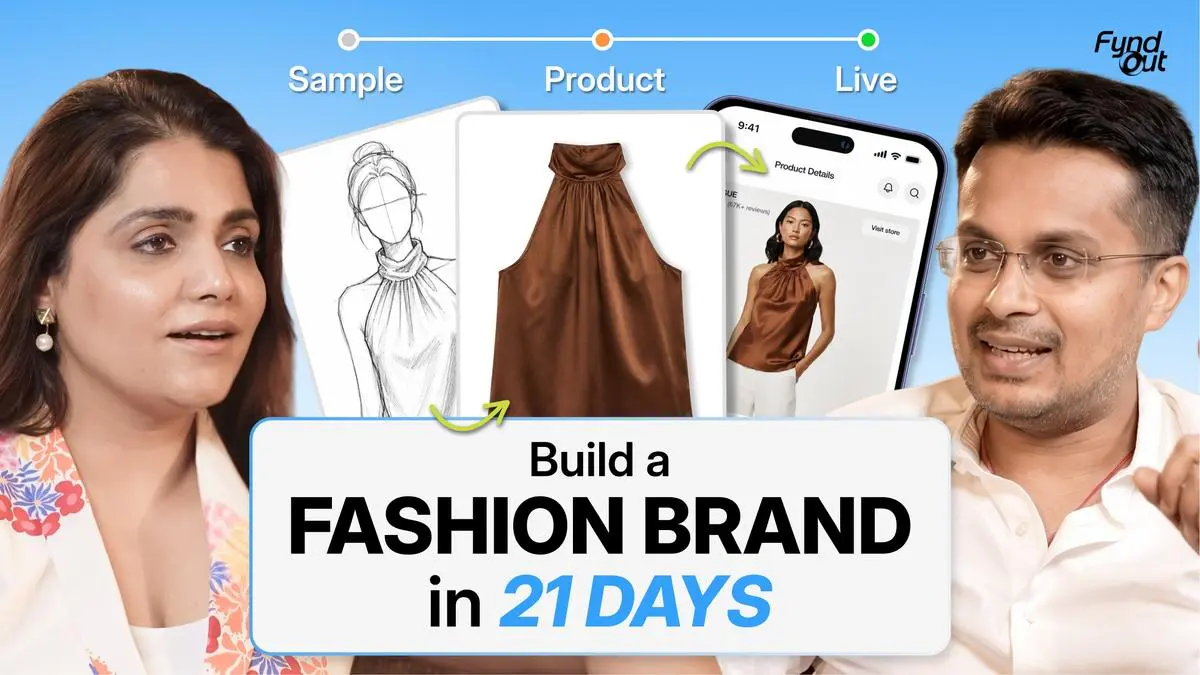
A high-throughput designer might produce a few dozen designs a month, and that isn’t just the design. It is the tech pack end to end that a manufacturer needs. The process is largely manual. Pen and paper, then illustration, then tech pack software, then email or WhatsApp with vendors.
So you have data sitting in multiple places and no clear view of how any of it comes together. Farooq calls it software drudgery. The real work of a designer might be a few hours, and then the work around the work becomes bigger than the outcome itself.
A Design Explosion, Then A Human Filter
In 2022, AI models became good enough to generate genuinely new designs. The idea behind Fynd Create was simple: an idea in your head is a prompt. What if that prompt becomes real output that a brand can select from, instead of the designer having to draw every option?
Instead of ten designs, you can make hundreds.
Fynd’s own designers have seen their productivity go through the roof, but their value has not changed. They still decide what gets made and how. We are making products for humans, and humans still have to decide what humans like. No matter how much data you have, someone still decides. AI can produce thousands almost instantly. It is the curated ones that go to the brand.
Learning A Brand Means Learning What Not To Do
Most of what a brand is already sits in its previous collections. So Fynd Create looks at the archive and understands what the brand has made before. Then the team sets guardrails, and those guardrails are about what not to do and who not to be.
That is where real human taste comes in, and it is iterative.
For someone starting from nothing, Farooq says this is probably the best possible way to begin, because you start with a modern workflow. But the founder still has to take the leap of faith about who they want to serve. Technology can build the mood board and the collection. It cannot make that choice.
Sell It Before You Make It
If you can generate hundreds of designs, don’t manufacture hundreds. Send a few for production and put the rest out as a drop, a register-your-interest page, or an early buy. Then manufacture against the demand you actually see.
That is how Fynd Create changes the starting point. It helps brands test what people may want before committing to full production. Start with small drops, work out what is core to your collection and can be made repeatedly, and build the newness around that core.
What Small Batches Did To 1,200 Factories
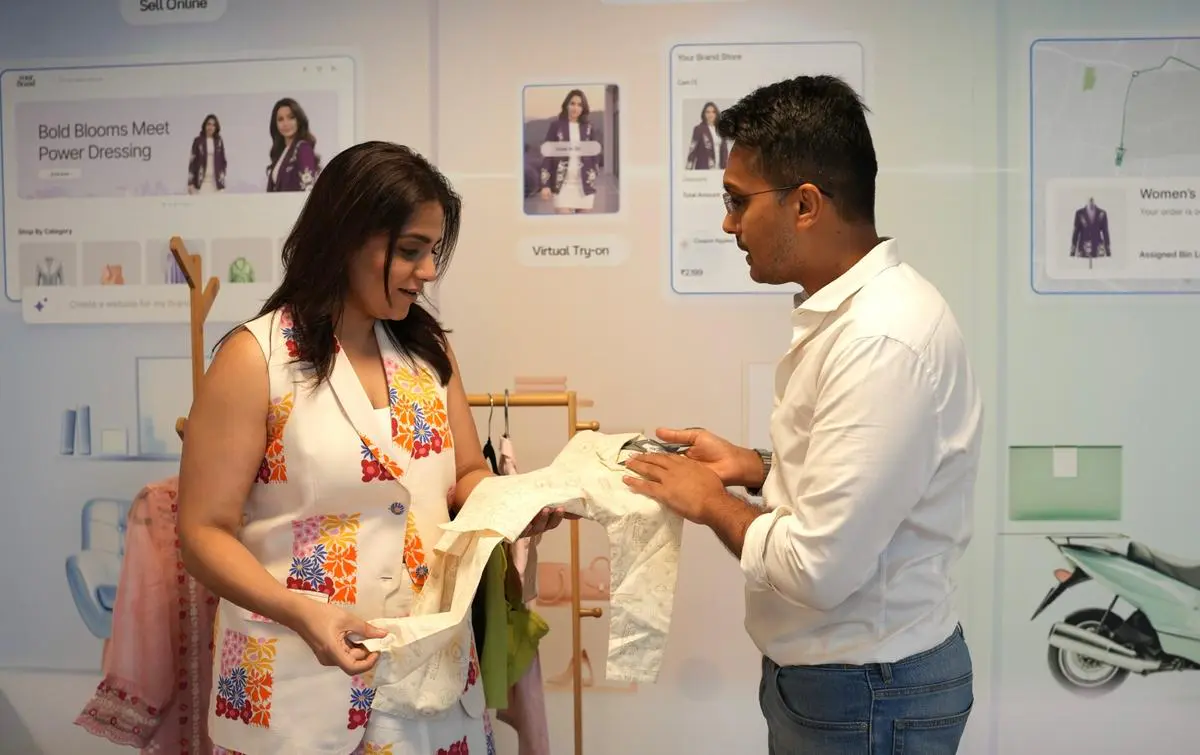
Fynd has onboarded close to 1,200 manufacturers across the country in two years: knitwear, denim, kidswear, ethnic wear specialists, and manufacturers working with region-specific crafts. The process was digitised across daily throughput, shipping, GST, e-invoicing and the movement from tech pack to manufacturing.
When Fynd moved manufacturers from large-batch manufacturing to small-batch manufacturing, it was a genuine shock to their working rhythms. It created chaos in their flows.
Months later, talking to them again, the team found things they hadn’t anticipated. Continuous shipments meant continuous working capital, so capital requirements came down. And when something went wrong in a batch, it could be corrected in the next one instead of discarding the whole run. Their QC got better.
The Actual Minimums
Farooq describes the platform like a buffet. Fynd has decomposed it into services and agentic systems, so brands can pick what works for them. For designs, Fynd expects a brand to take at least 50 designs, because that is what makes a cohesive collection. For manufacturing, the minimum is 150 units per design, which is the point where it works for both the brand and the manufacturing partner.
And low MOQ is a real problem, because nobody wants to work with very small volumes. Because Fynd aggregates demand across brands, it has leverage an individual founder may not have. The manufacturers understand it too. Today’s small brand is tomorrow’s large retailer, and everyone starts small.
Farooq spoke about a manufacturer in Bengaluru who saw the platform and immediately wanted to show it to his son, because now his son could build a brand on top of the capability he had spent decades building. That is going to be a big push: manufacturers becoming D2C brands themselves. It has already happened in China.
India’s Advantage, And The Condition Attached
For China+1, Farooq says India is a strong alternative, and the reason is simple: the whole value chain is here. We are a large agricultural nation, we make fabrics, we have the textile ecosystem, and we have the garment manufacturing ecosystem. It is a one-stop solution.
But nothing happened overnight for China, Korea or Japan. It took decades, because manufacturing requires immense patience to reach that level of precision and throughput consistently.
The thing plaguing our industry is that we don’t keep our promises: on timelines, on quality, on labour laws, on environmental laws. Deliver at the right quality, the right time and the right price, and India is on that path.
Since This Conversation
The larger point is not that AI will replace fashion designers. Farooq says the creative process itself does not change. The tools change.
Fynd Create is trying to compress the parts of fashion that became too slow: trend research, design output, tech packs, vendor discovery and manufacturing. The designer still brings taste. The founder still chooses the customer. The brand still decides what it wants to be.
But if customers are moving faster than calendars, the fashion supply chain has to move too.
Listen to the full conversation with Farooq Adam on Fynd Out With Ragini.