March 21, 2026
Before he took Bestseller from 15 doors to 1,600, he washed dishes for twelve hours a day
Vineet Gautam ran Bestseller India for fifteen years. He founded 91Brands in 2025. He started at the sink in Nirula’s first management training batch, and he thinks every retail professional should still spend time selling in a store.
The dishwashing is not an anecdote added later to make a leadership story sound humble. It was the work assigned to him, twelve-hour shifts, after he chose not to sit for campus placements out of hotel management school. His hands were wrecked at the end of a shift.
What it left him with is a standard he still applies: leaders should understand the jobs their promises depend on. If a task looks small, the question is how to do it better, not how fast to get past it.
The route he took to get here
After Nirula’s came Domino’s Pizza, Cafe Coffee Day, Wills Lifestyle, Idea Cellular and United Colors of Benetton, and then fifteen years at Bestseller India, where he introduced and built Jack & Jones, Vero Moda, ONLY and Selected Homme, growing the business from around 15 doors to more than 1,600. He stepped down at the end of 2024 and launched 91Brands, a platform intended to work in both directions: helping global brands navigate India, and helping Indian brands reach markets abroad.
Each move changed the product and the operating model, and each added a capability. Food service taught process. Telecom taught scale. Fashion joined product, service, merchandising and identity together.
The store employee is your offline SEO
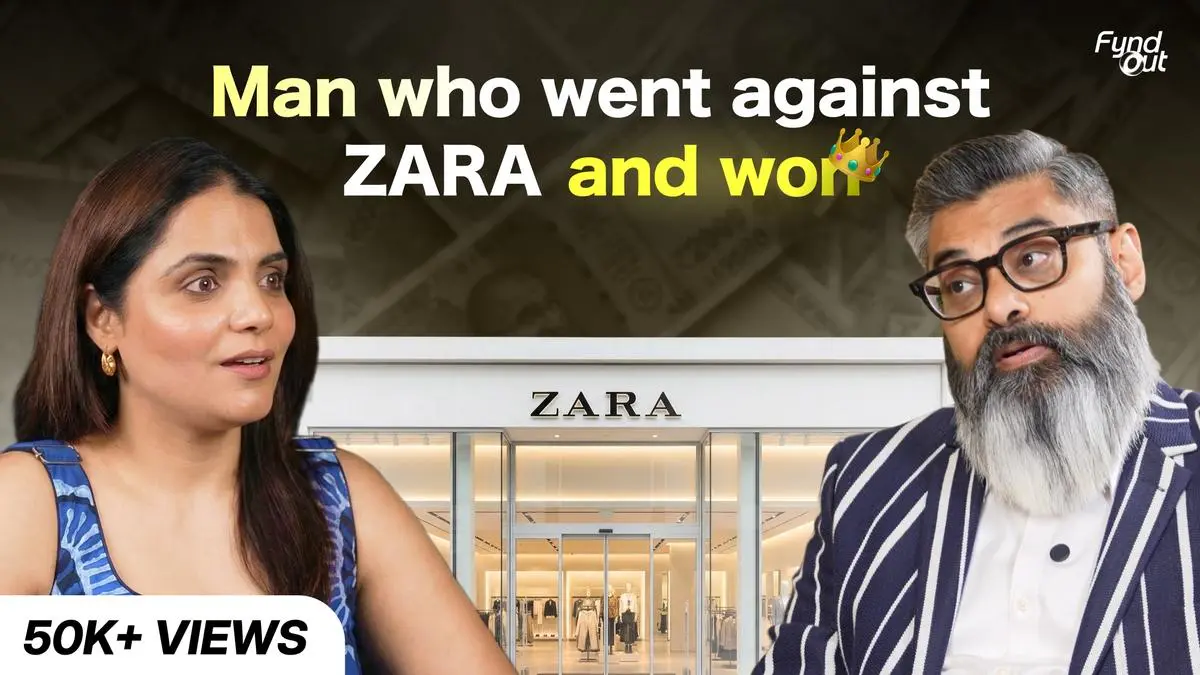
This is his sharpest reframe. Online, search retrieves the right product from a large catalogue. In a store, the staff do exactly that job: read intent, surface the relevant options, explain the product, help the customer compare.
Which makes poor product knowledge the physical equivalent of bad search optimisation. The inventory is sitting right there and the customer cannot find the answer. Training is discoverability infrastructure, not a soft service layer bolted on after the merchandising is done.
The headline metric is an outcome, not a plan
Retail organisations rally around one number because they need a shared direction, and Vineet’s caution is against mistaking that number for an operating plan. NPS, for instance, records what a customer felt after a long chain of connected experiences has already happened.
The actual work sits underneath: discovery, availability, advice, fitting, payment, delivery, returns, recovery. When the headline moves, someone has to trace the sub-journeys and find the behaviour that caused it. A metric focuses attention. It cannot do the diagnosis.
One customer, two channels
A shopper discovers online and buys in store, or tries in store and orders later online. Separating those journeys too rigidly produces an inaccurate picture of both demand and performance, and encourages teams to compete for credit on a single sale.
His framing is that online and offline are different media, not different customers. What that requires is combined measures and shared inventory intelligence rather than two organisations reporting separately on the same person.
He slept at the store for a month
At Domino’s he inherited a large restaurant that had cycled through managers and split into factions. For roughly a month he practically lived there, arriving around opening and staying past midnight.
Presence gave him information no dashboard would have. He saw how the team handled rushes, deliveries, conflict and handovers, and, more importantly, the team saw that he would stay for the difficult parts. Several of those colleagues kept growing with him; one cashier eventually became an area manager.
Learn the product before you get the title
When he moved into fashion at Wills Lifestyle, his first fifteen days went entirely to product and fashion training. Only then was he sent to run a store in Lucknow.
He still thinks physical exposure matters even now that digital learning and AI can deliver information faster. Touching fabric, seeing silhouettes and watching customers create a context slides cannot reproduce. Responsibility should follow familiarity with the product rather than a change of designation.
Shut the thing that is not working
One of his harder-earned rules is to close a failing initiative quickly, because continuing to invest on the grounds that time, money or pride has already gone in converts a past cost into a future liability.
He pairs it with the power of saying no, and with a very concrete question he prefers to ask before any large commitment: what is the maximum you can lose? The answer has to include time and people, because both cost money.
Premiumisation is an operating upgrade, not a price
The word usually gets reduced to charging more. His definition is more demanding: a better product, stronger quality, a more considered experience, capable staff, and technology that removes friction.
Indian consumers will pay more where the value is visible, and value for money remains a powerful expectation regardless. There is no single answer for 1.4 billion people, so the work is identifying the specific customer, occasion and benefit that make a premium credible.
Entrepreneurship is over-glamorised
He is unfashionably direct about this. Founding a company can be meaningful, and so can building an exceptional career inside one. Education and popular culture celebrate designers and founders while largely ignoring the buyers, planners, operators and managers who make retail function.
His advice to would-be founders is to spend a few years learning how a company actually works, because that is where you see how product, cash, people, systems and customers connect. Starting later with informed conviction is not a failure of nerve. And as an investor, what he looks for first is obsession with the product, on the grounds that capital can amplify a sound proposition but cannot manufacture one.
Listen to the full conversation with Vineet Gautam on FyndOutWithRagini.