February 14, 2026
The first ring he ever sold online was the wrong size
Rupesh Jain built Candere, sold it to Kalyan Jewellers, and came back to the category with Lucira and the largest seed round an Indian jewellery startup has raised. He still tells the story about the ring.
It was 2012, the first order on a brand new website, a ₹45,000 engagement ring going to a customer in Bangalore. Everything about it should have been a celebration. The ring arrived and the size was wrong: a broad band needs a size larger, which the customer hadn’t known and nobody had told him. The proposal was days away.
They remade it in 24 hours and Rupesh flew to Bangalore to hand it over himself. He now describes it as the lesson that shaped both companies. Jewellery arrives at a moment in someone’s life that cannot be rescheduled, so what you are actually selling is not the metal.
A second innings, deliberately
Candere started online-first and inventory-light, which was almost heretical in a business where capital sits in stock before demand exists. An order came in, the team coordinated with craftspeople, and the piece got made just in time. Kalyan Jewellers eventually acquired it.
Lucira, which he co-founded with Vandana Jain, raised $5.5 million in seed funding led by Blume Ventures with Spring Marketing Capital and SiriusOne Capital, reported as the largest seed round for an Indian jewellery startup. Angels in the round include the founders of Dot & Key, Livspace, Snitch and Bewakoof.
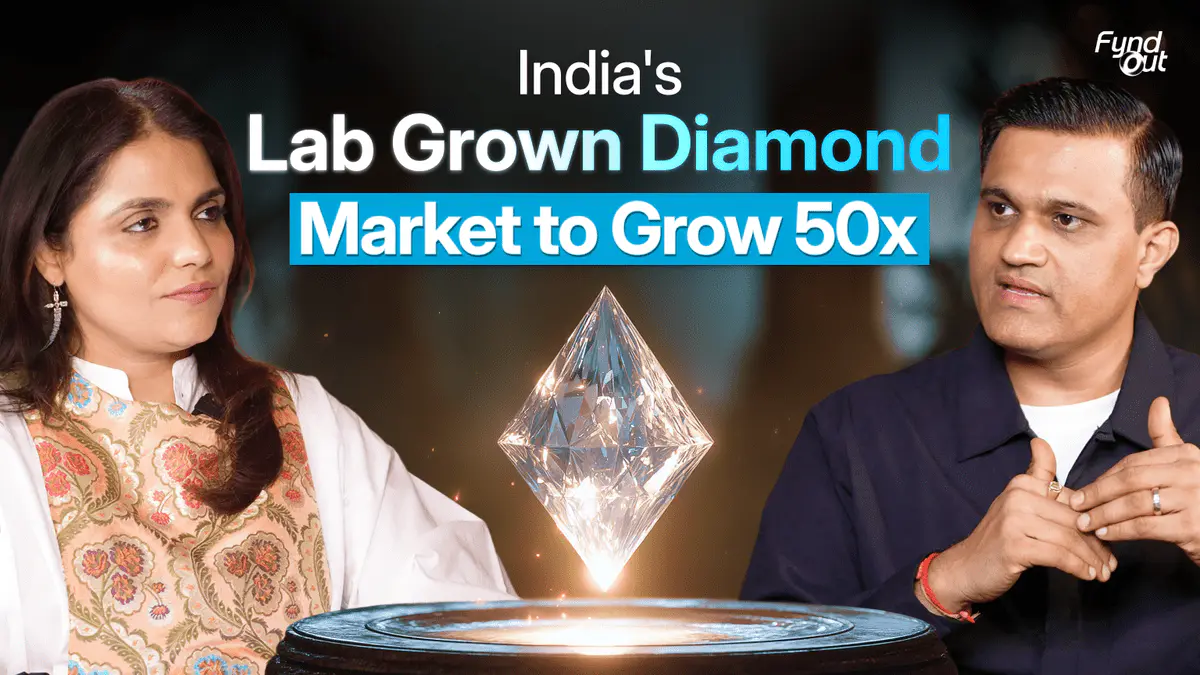
Lab-grown didn’t change the diamond, it changed the merchandise
The number that makes his case is a comparison with his own past. At Candere, solitaires were 3 to 4% of sales, because the price put a single meaningful stone out of reach for most Indian buyers. At Lucira, solitaire-led pieces are around 80%.
That is a different assortment, not just a different price. Customers who used to buy clusters of small stones arranged to look like a solitaire can now buy the solitaire. The ticket sits below ₹2 lakh, mostly between ₹40,000 and ₹1 lakh, which is roughly where a gold purchase already sits, so the diamond stops being reserved for one occasion.
A detail worth knowing: in a lab-grown ring, gold is still around 60% of the cost and the diamond about 40%. India consumes roughly 85% gold by value, so the metal is doing more of the work than the marketing suggests.
He researched the belief before building the brand
From December 2024 the team ran focus groups, three of them, about 30 women in total, in twelve-hour sessions. Group one had already bought lab-grown. Group two were committed mined-diamond buyers. Group three bought gold and had never bought a diamond.
The answers were not a clean yes or no. Existing buyers would buy again. Some mined-diamond loyalists wanted a natural stone specifically for the engagement and were open to lab-grown for everything after. Gold buyers saw a route into a category that had never been affordable. What emerged was not a market abandoning tradition, but one becoming occasion-specific.
The trust architecture is the product
Every piece is certified, by IGI, GIA, SGL or BIS. Lucira offers 100% lifetime exchange and 90% buyback, which is the number that matters, because the honest question customers ask is what happens when lab-grown prices fall further.
Rupesh doesn’t dodge it. He points at Indian consumption of gold as an investment habit and argues that a diamond, mined or grown, has never behaved like one. His comparison is the Basra pearl and the cultured pearl: the cultured version took over the market, and nobody today thinks of a pearl necklace as a bad object because it was farmed rather than found.
India makes them and doesn’t buy them
Around 15% of the world’s lab-grown diamonds are made in India. Indian consumption is roughly 8%. That gap is the business.
The global picture is genuinely unsettled. De Beers launched Lightbox in 2018 and shut it in 2025, which is either an argument for the category or against it depending on who is telling it. Rupesh’s view is that De Beers built an extraordinary marketing machine around scarcity, and that the generation buying now is less interested in inherited rules than in what a piece looks like and what it means to them.
The most striking example he offers is a Reddit thread: a man proposed with a $2,000 lab-grown ring, she had expected a $20,000 natural stone, and the relationship ended over it. His point isn’t that she was wrong. It is that the same object carried completely different meaning to two people in the same room, which is precisely the thing a brand has to navigate.
Design is the constant, the material is not
He is careful not to define Lucira by the stone. Gold purity changes, gemstones come and go, mined and lab-grown can both sit in a collection. What persists is the design: proportion, engineering, finish, how it sits on the hand.
That is also commercially defensive. If customers choose you because the stone is cheaper, someone will always discount further. Regional taste makes it more interesting than it sounds: the south favours smaller stones at higher clarity, Delhi wants larger stones and will trade quality down for size, Mumbai sits between the two.
And the trend he would most like to see retire is the one his old customers relied on: clusters of small stones pretending to be one big one. With lab-grown, nobody has to pretend any more.
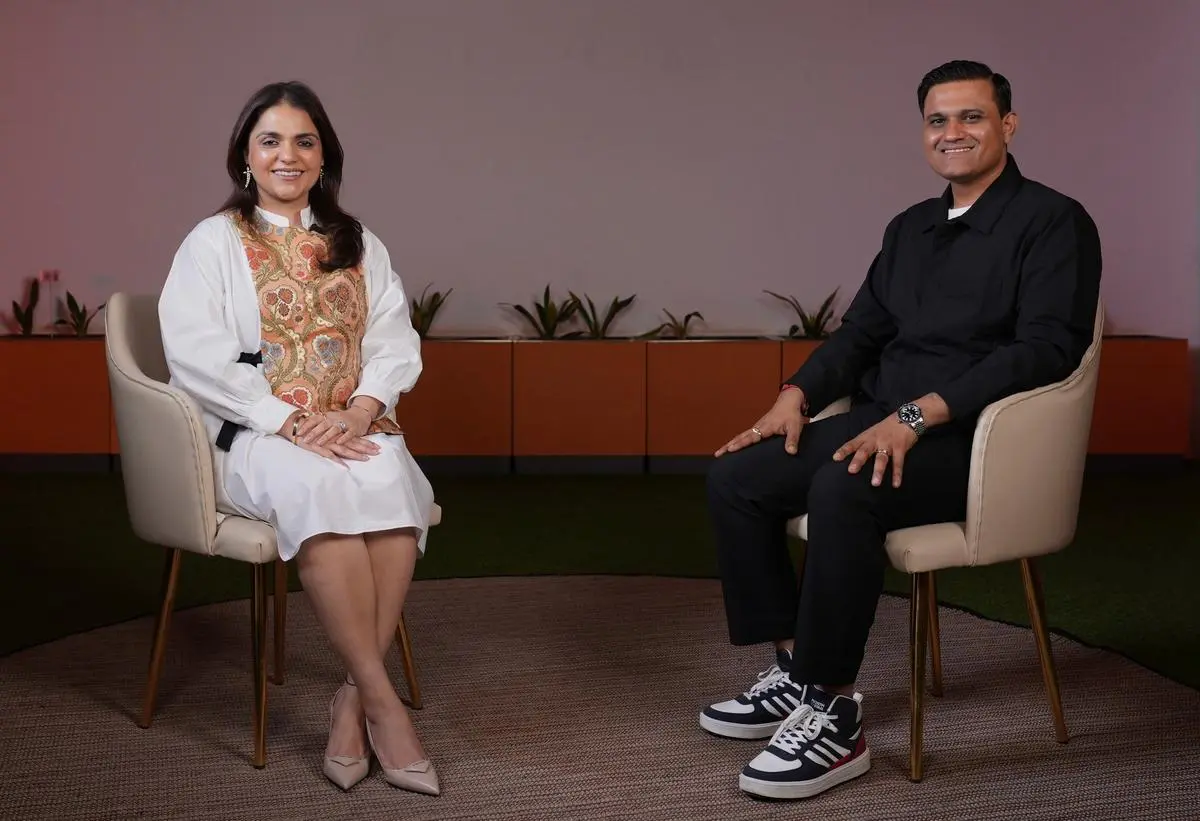
Listen to the full conversation with Rupesh Jain on FyndOutWithRagini.