October 29, 2024
Put the founder’s salary in the model even if nobody is paying it
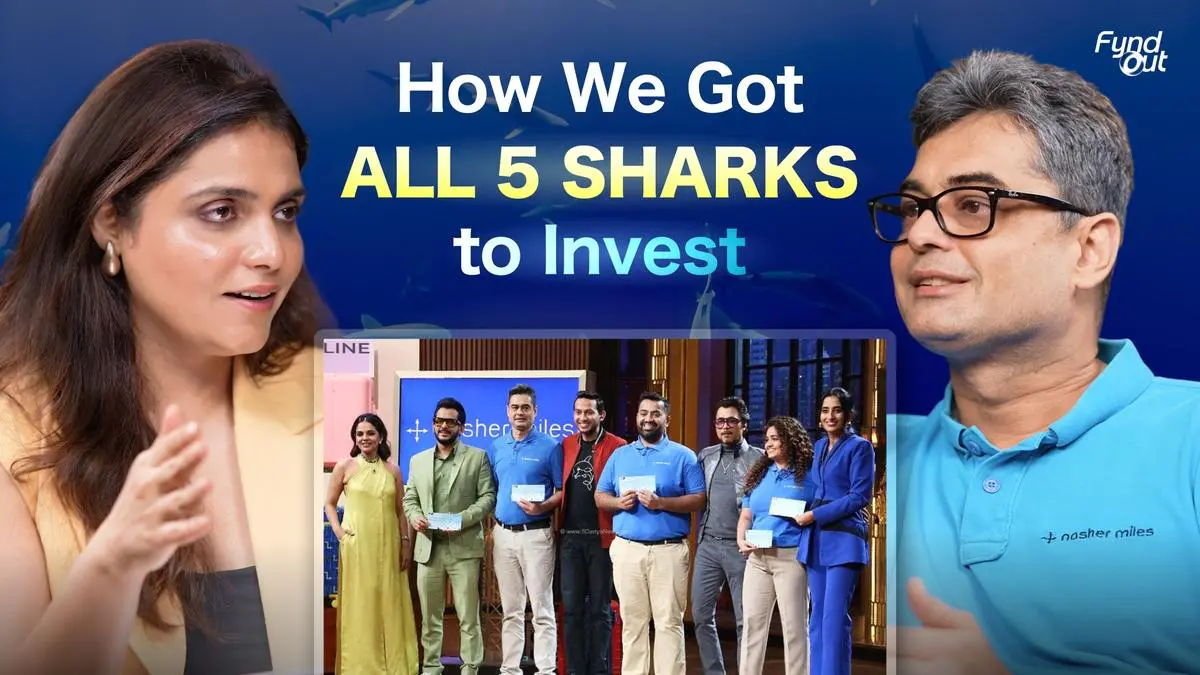
Abhishek Daga co-founded Nasher Miles in 2017 with Lokesh Daga and Shruti Kedia Daga. His advice to founders is mostly about arithmetic, and the parts of it people leave out.
The origin story is a bag at a carousel. Shruti’s mother came home from a trip, tried to open her suitcase, and found the key didn’t work, because it wasn’t her suitcase. Somebody else had walked off with an identical one. In a category where almost everything was black, blue or grey, that was not an unusual accident.
The founders had spent years before that selling other people’s products across Amazon and Flipkart, including established luggage brands, so they already knew the listings, the warehousing, the ad mechanics and the logistics of shipping something bulky. What they didn’t have was anything of their own.
Resellers get replaced
In the early years of Indian e-commerce, small sellers did well because the marketplaces were expanding aggressively. Then bigger sellers arrived with more capital, and the founders could see clearly how easily an intermediary gets displaced.
The answer wasn’t to leave the marketplaces. It was to stop being only a seller on them. Their distribution knowledge could become product equity instead, which is a different asset entirely, and one nobody can take by outbidding you.
They chose luggage by elimination
Sunglasses were considered and rejected: counterfeits, returns, and formidable competitors at both the premium and value ends. Appliances sold well but the after-sales service obligation would have been expensive and hard to scale.
Luggage matched what they already knew and removed the problems they didn’t want to own. They had supplier relationships, they could see how little online competition existed, and they understood shipping something that takes up a lot of space. Category selection was an exercise in finding the most executable opportunity, not the most exciting one.
Two containers is a bet, not a leap
The first order was two containers, each holding around 570 to 580 nested sets of three bags. That is a serious commitment for a new brand.
But it was bounded. The founders were already running an established online trading business, which meant that if Nasher Miles failed they knew exactly how to liquidate the stock, and they had the supplier access and the borrowing capacity to place the order in the first place. Courage in business is usually not the absence of a downside. It is acting once the downside has a floor under it.
The costs founders hide from themselves
This is the part of the conversation worth printing out. A founder can work from home, borrow a desk, skip their own salary, and make the business look far cheaper to run than it is.
Abhishek’s position is that the market cost of the office, the role and every informally supplied resource belongs in the plan anyway. If you would have to pay a manager to replace what you personally do, that expense is real whether or not it leaves the bank account. Otherwise profit is overstated, burn is understated, and pricing gets set using economics that do not exist.
He extends the same thinking to capital, quoting a family saying: if you want to destroy someone, give them more money than they have the capability to handle. Constraint forces prioritisation. Money amplifies whatever system it enters, which in a disciplined company means progress and in an unprepared one means faster waste.
An ambassador is the first line of the budget, not the last
Nasher Miles signed Rishabh Pant, whose challenger energy and comeback story fit the brand. Abhishek is unusually specific about what that actually costs.
His rule of thumb: content production runs at roughly one and a half times the ambassador fee, and distribution needs a buffer of six to seven times the combined spend on top. Then working capital, because if the campaign works you need the inventory and the service capacity to meet it. A famous face without production, media and fulfilment behind it is an expensive asset sitting idle.
Write the terms down before the visions diverge
Nasher Miles is built by family, and Abhishek doesn’t treat that as a warning sign. He does think roles, broad terms, how disagreements get resolved and how someone exits should be discussed at the start, even if the only record is an email.
The point isn’t that anyone expects betrayal. Reasonable people develop genuinely different views about geography, pace, capital and product, and a company shouldn’t become collateral damage because its founders never planned for honest disagreement.
The idea was visible to everyone
Colourful luggage was not a protected secret. Suppliers are findable, listings are public, and thousands of people had noticed the same frustration at the same baggage carousels.
What separated them, in his telling, is that noticing a gap and running a business through it are unrelated skills. Somebody had to place the order, fund the inventory, solve the logistics, answer the complaints, survive travel stopping altogether during the pandemic, and then hire for channels the team had never operated in. The idea opened the door. Execution is what kept it open.
Listen to the full conversation with Abhishek Daga on FyndOutWithRagini.