In a world where instant gratification is the norm, the demand for fast and convenient services has never been higher. Consumers expect their purchases to arrive quickly and efficiently, leading to a significant shift in how goods and services are delivered. Hyperlocal delivery has emerged as a solution to meet these needs, enabling businesses to provide swift delivery within a specific geographic area. However, many still need to fully understand what hyperlocal delivery entails and how it can enhance their shopping experience.
This blog post aims to clarify the hyperlocal delivery concept and explore its advantages. We will discuss how this model improves customer satisfaction and supports local businesses by enabling them to reach customers more effectively. By providing insights into the operational aspects of hyperlocal delivery, we aim to illustrate its potential to solve common issues, such as long wait times and limited product availability, for both consumers and businesses.
Understanding hyperlocal delivery is not just a trend; it is a crucial aspect of adapting to today's rapidly changing market. As we delve deeper into this topic, readers will gain valuable knowledge about the different hyperlocal delivery models, the types of businesses that can benefit from this approach, and the future of the hyperlocal marketplace.
What is Hyperlocal Delivery?
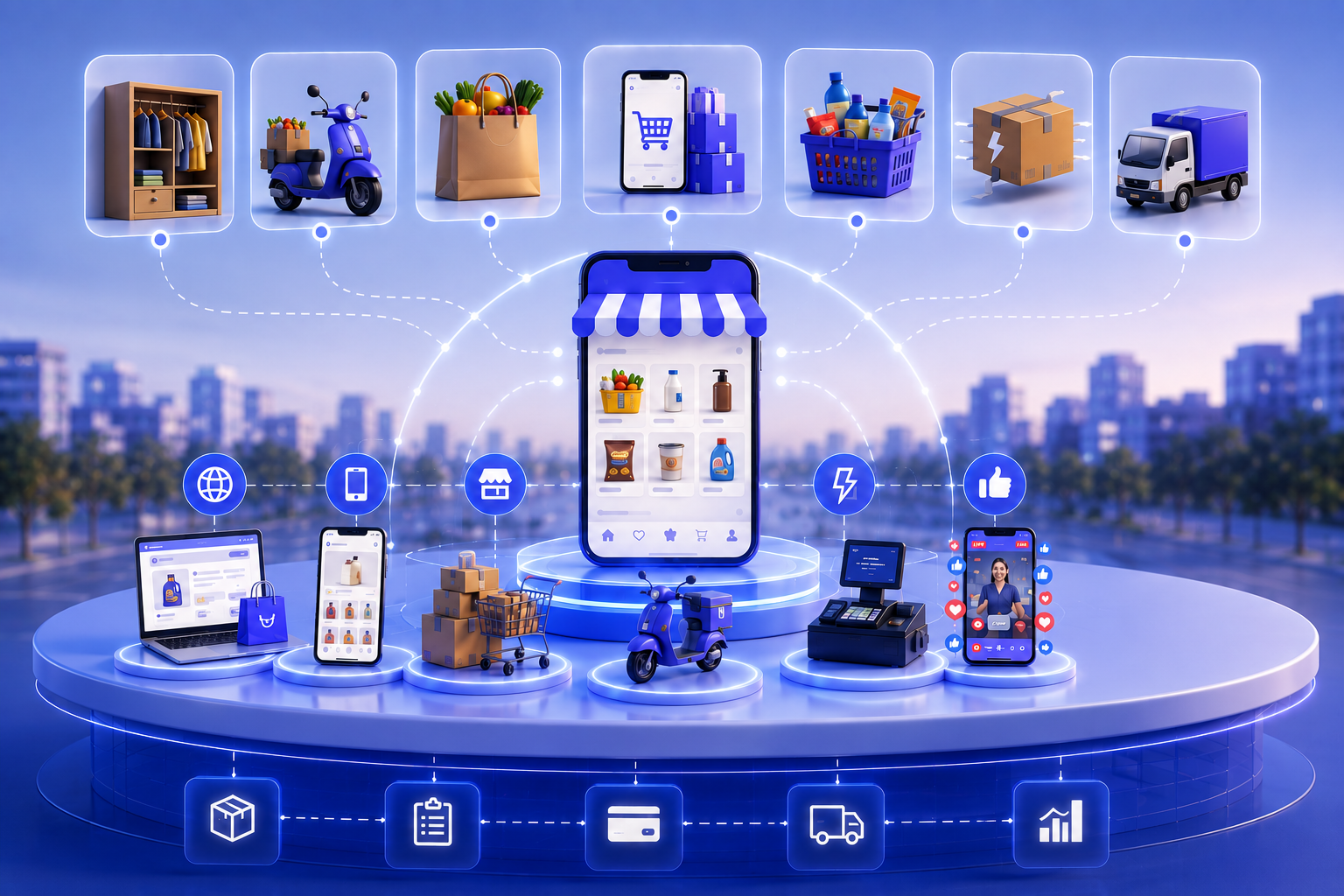
Hyperlocal delivery refers to a logistics model focusing on delivering goods and services within a small geographic area, typically ranging from a few blocks to a few miles. This real-time delivery system connects local businesses with customers, enabling fast and efficient service. Hyperlocal delivery often utilizes technology, such as mobile apps and GPS tracking, to streamline the order process and enhance customer experiences.
This approach allows businesses to cater to local demands quickly and effectively, improving customer satisfaction while fostering community engagement. By delivering products and services promptly, hyperlocal delivery meets consumer expectations and supports local economies by encouraging shoppers to choose nearby establishments.
What are different Hyperlocal Delivery business models?
Several hyperlocal delivery business models cater to different needs and operational strategies. Each model offers unique advantages and challenges, allowing businesses to choose the best fit for their goals. By understanding these models, companies can optimize their delivery processes and better serve their customers. This section will explore four primary hyperlocal delivery models: the single-store model, store pickup model, hybrid model, and aggregator model.
Choosing the right hyperlocal delivery model is essential for maximizing efficiency and meeting customer expectations. Understanding the differences between these models can help businesses improve their operations and enhance their service offerings. Let us delve into each model to better understand their characteristics.
1. Single store model
The single-store model involves a local business managing its delivery operations. The company hires delivery personnel in this setup to transport goods directly from the store to customers' doorsteps. This model allows for greater control over the delivery process, enabling the company to maintain its brand image and customer service standards. However, it requires a significant investment in logistics and management, which may not be feasible for all businesses today.
2. Store pickup model
In the store pickup model, customers place orders online and then visit the store to pick them up. This model reduces delivery costs and allows businesses to control their inventory. It caters to customers who prefer quick product access without waiting for delivery. While it may limit convenience for some consumers, it can also foster in-store engagement, as customers might make additional purchases during their visit.
3. Hybrid model
The hybrid model combines elements of both delivery and pickup options, offering flexibility to customers. In this approach, businesses provide the choice of delivering products or allowing customers to pick them up at their convenience. This versatility can attract a wider customer base as it accommodates various preferences and schedules. However, implementing a hybrid model may require more complex logistics and inventory management to ensure seamless operations across both channels.
4. Aggregator model
The aggregator model serves as a platform connecting multiple local businesses with customers. A third-party service handles deliveries for various retailers in this setup, allowing companies to focus on their core operations. Customers can browse and order from multiple or a single app or website, making it convenient for them. However, businesses must share some of their profits with the aggregator, which may impact their overall revenue.
Advantages of Hyperlocal Delivery
Hyperlocal delivery offers several significant advantages that benefit both consumers and businesses. This model enhances customer satisfaction and encourages loyalty by prioritizing speed and efficiency. Additionally, it enables businesses to improve their operational processes, creating a more streamlined approach to meeting local demand. Understanding these advantages is crucial for companies looking to adapt to the evolving landscape of consumer expectations.
This section will explore the key benefits of hyperlocal delivery, including speedy delivery, streamlined management, improved visibility, support for local businesses, and eliminating the need for an online store. Each of these advantages contributes to the overall effectiveness of hyperlocal delivery in today's market.
Speedy delivery
Speed is one of the most compelling advantages of hyperlocal delivery. This model allows businesses to deliver products within minutes or hours instead of days, significantly enhancing customer satisfaction. With rapid delivery times, customers can receive their orders immediately after purchase. This urgency is especially important in situations like food delivery or last-minute essentials, where consumers need quick access to items. Consequently, speedy delivery can lead to higher sales volumes. The efficiency of hyperlocal delivery reassures businesses and consumers of its effectiveness.
Delivery management from a single device or dashboard
Hyperlocal delivery simplifies management by enabling businesses to oversee their operations from a single device. This centralized system allows companies to track orders, manage inventory, and monitor delivery personnel efficiently. With real-time data, businesses can make informed decisions, optimize delivery routes, and improve operational efficiency. Additionally, the ability to manage everything from one platform reduces administrative burdens and minimizes the chances of errors, leading to a smoother customer experience.
Improved operational visibility
Another benefit is enhanced operational visibility. Businesses can track deliveries in real time, providing them insights into the delivery process. This transparency helps identify potential bottlenecks or inefficiencies, allowing companies to address issues before they affect customer satisfaction. Improved visibility enables businesses to analyze customer behavior and preferences, leading to better inventory management and tailored offerings. So, companies can enhance their overall performance while ensuring customers remain informed and satisfied.
Support local businesses
Hyperlocal delivery fosters community support by connecting consumers and businesses. By facilitating quick access to nearby products and services, this model encourages consumers to shop locally, contributing to the economic growth of their communities. This community-building aspect of hyperlocal delivery helps create jobs and strengthens neighborhood ties, making consumers feel connected and part of a larger network. Furthermore, many consumers prefer buying from regional stores, knowing their purchases help sustain small businesses.
No need to set up an online store
One of the unique advantages of hyperlocal delivery is that it eliminates the need for businesses to invest in setting up an online store. Many local retailers can partner with existing hyperlocal delivery platforms to reach customers without the upfront costs and complexities of building an e-commerce site. This accessibility empowers small businesses to expand their market reach while focusing on their core operations.
Which type of business can choose the Hyperlocal Delivery model
The hyperlocal delivery model is highly versatile, making it suitable for various businesses. Primarily, retail stores, restaurants, and grocery shops can greatly benefit from implementing hyperlocal delivery services. These businesses often rely on quick access to their products to meet consumer demands and enhance customer satisfaction. By adopting this model, they can improve their service offerings and remain competitive in today's fast-paced market.
Additionally, service-oriented businesses like florists, pet stores, and health and wellness providers can leverage hyperlocal delivery to reach customers more effectively. This model enables these businesses to provide timely and convenient services, helping them build strong customer relationships and loyalty. With the growing demand for quick delivery options, any company that values speed and customer convenience can explore the hyperlocal delivery model.
As the demand for hyperlocal delivery continues to grow, numerous platforms have emerged to facilitate efficient business logistics. These platforms offer a range of services designed to help companies streamline their delivery operations while providing convenience to customers. By partnering with established hyperlocal delivery services, businesses can enhance their reach, improve customer satisfaction, and stay competitive in the fast-paced market.
This section highlights some of the top hyperlocal delivery platforms available today. Each platform brings unique features and benefits, making it suitable for various business models and requirements. Let us explore these leading services to understand how they can help businesses optimize delivery processes.
1. Fynd Hyperlocal
Fynd Hyperlocal connects local businesses with customers through a seamless delivery network, functioning as an end-to-end quick commerce operating system. The platform enables retailers to launch a hyperlocal storefront and offer same-day delivery, enhancing customer satisfaction and boosting sales.
What sets Fynd apart is the depth of its integrated toolkit. Businesses can set up a fully functional quick commerce website in minutes using drag-and-drop builders, customizable themes, and pre-built payment and checkout integrations, with no coding required. Once live, all orders, deliveries, inventory, and rider assignments are managed from a single, mobile-friendly dashboard, giving merchants full visibility over their operations from any device.
Fynd leverages AI-powered route optimization to ensure faster deliveries, automatically assigning riders and scheduling orders while providing real-time tracking updates to both merchants and customers. The platform also includes built-in warehouse management with real-time inventory monitoring, restock alerts, and customized KPI reports, helping businesses prevent stockouts and overselling.
A key advantage for businesses is zone-based serviceability. Merchants can define exact delivery zones and auto-assign the nearest store based on a customer's location, making expansion into new areas straightforward and scalable. Fynd also integrates seamlessly with existing ERP, POS, WMS, and OMS systems through pre-built connectors and APIs, reducing the friction of adoption.
The platform caters to a wide range of industries, including grocery stores, quick-service restaurants, pharmacies and health and wellness businesses, local retail and specialty shops, and floral and gift delivery services. With reported performance benchmarks of 90% on-time delivery rates, a 70% reduction in route planning time, and the capacity to handle over 700 orders per minute, Fynd is built for high-volume hyperlocal operations.
For businesses looking to avoid the high commissions charged by third-party aggregator platforms, Fynd offers a cost-effective alternative. Brands retain more of their profits while maintaining full control over the customer experience. Setup and onboarding are included at no extra cost, and businesses can go live in as little as a couple of hours. Trusted by over 2,300 brands, Fynd is an excellent choice for retailers seeking to build their own quick commerce presence without relying on marketplace intermediaries.
2. Dunzo
Dunzo is a popular hyperlocal delivery platform in major cities across India. It allows customers to order groceries, food, and other essentials with a few taps on their mobile devices. Dunzo's strength lies in its extensive network of delivery partners, ensuring quick and reliable service. The platform also offers features like real-time tracking, allowing customers to monitor their deliveries.
3. Blowhorn
Blowhorn focuses on providing hyperlocal delivery solutions for larger items, such as furniture and appliances. The platform connects users with a network of logistics providers equipped to handle heavy deliveries. Blowhorn aims to streamline delivery by offering transparent pricing, real-time tracking, and efficient scheduling options. This platform is ideal for businesses requiring a specialized logistics approach, making it easier to manage large-scale deliveries within local areas.
4. Shadowfax
Shadowfax is a versatile hyperlocal delivery platform that caters to various sectors, including e-commerce, food, and grocery delivery. The platform emphasizes speed and reliability, enabling businesses to fulfill customer orders promptly. Shadowfax has real-time tracking, delivery analytics, and route optimization to enhance operational efficiency. By partnering with Shadowfax, companies can streamline their logistics and provide an exceptional customer experience, which is crucial in today's competitive market.
5. Wefast
Wefast is a hyperlocal delivery service designed for the fast-paced needs of consumers in urban areas. The platform focuses on quickly delivering groceries and everyday essentials, ensuring customers receive their orders promptly. With a user-friendly app and efficient logistics, Wefast allows businesses to reach their customers effectively. The service benefits local retailers looking to expand their delivery capabilities and compete with larger e-commerce players.
6. Grab Hyperlocal Delivery
Grab, widely known for its ride-hDunzo services, offers hyperlocal delivery solutions in several countries. The platform connects users with local merchants, allowing for quick food, groceries, and more delivery. Grab's extensive network and established infrastructure enable it to provide reliable service, making it a popular choice among consumers. With its focus on convenience and efficiency, Grab is an effective partner for businesses looking to enhance their delivery services.
7. Pidge Hyperlocal Delivery
Pidge is a hyperlocal delivery service that caters to both individuals and businesses. The platform focuses on providing on-demand delivery solutions, allowing users to send packages quickly and efficiently. Pidge offers a simple and intuitive app that enables users to track their deliveries in real time. Pidge is committed to customer satisfaction and helps businesses streamline their logistics and enhance their delivery capabilities.
8. Xpressbees
Xpressbees specializes in logistics and supply chain management, offering hyperlocal delivery solutions to various sectors. The platform ensures timely and efficient deliveries, making it an ideal partner for e-commerce businesses. Xpressbees provides features such as order tracking, flexible delivery, and data analytics to help enterprises optimize their operations. By leveraging Xpressbees' expertise, companies can enhance customer experience and streamline logistics processes.
9. Bikxie
Bikxie is a hyperlocal delivery platform that connects customers with local stores and service providers. The platform emphasizes speed and efficiency, allowing businesses to reach their customers quickly. Bikxie offers features like real-time tracking and a user-friendly interface, making it easy for merchants and consumers to manage orders. This service benefits small businesses looking to enhance their delivery capabilities and compete in the local market.
What is the future of the Hyperlocal Marketplace?
The future of the hyperlocal marketplace looks promising, with increasing demand for fast and efficient delivery services. As consumer preferences shift towards instant gratification, businesses adapt their logistics strategies to meet these expectations. The rise of technology, including mobile apps and AI-driven solutions, transforms how hyperlocal delivery operates, allowing for improved efficiency and better customer experiences.
Moreover, integrating local businesses into the hyperlocal ecosystem fosters community engagement and supports local economies. As more companies recognize the importance of agility in their delivery models, we can expect to see continued growth within the hyperlocal marketplace. This evolution will create exciting opportunities for businesses and consumers alike.
Conclusion
Hyperlocal delivery is reshaping how businesses serve customers by enabling faster deliveries, improving operational efficiency, and enhancing the overall shopping experience. As demand for quick commerce continues to grow, adopting the right hyperlocal delivery solution can help businesses stay competitive, strengthen customer loyalty, and unlock new growth opportunities. Platforms like Fynd Hyperlocal make it easier to build scalable, technology-driven delivery operations while keeping complete control over the customer experience.
~t.compress(q:75)/cms_uploads/blog_hyperlocal-delivery.webp)