July 31, 2026
Top AI skin analysis apps every beauty brand should know in 2026
Compare the top AI skin analysis apps for beauty brands in 2026. See how they boost engagement, sales and loyalty. How Fynd GlamAR fits in.
Garima Poddar
~t.compress(q:75)/cms_uploads/ChatGPT-Image-Jul-31-2026-04_11_24-PM.png)
July 31, 2026
Compare the top AI skin analysis apps for beauty brands in 2026. See how they boost engagement, sales and loyalty. How Fynd GlamAR fits in.
Garima Poddar
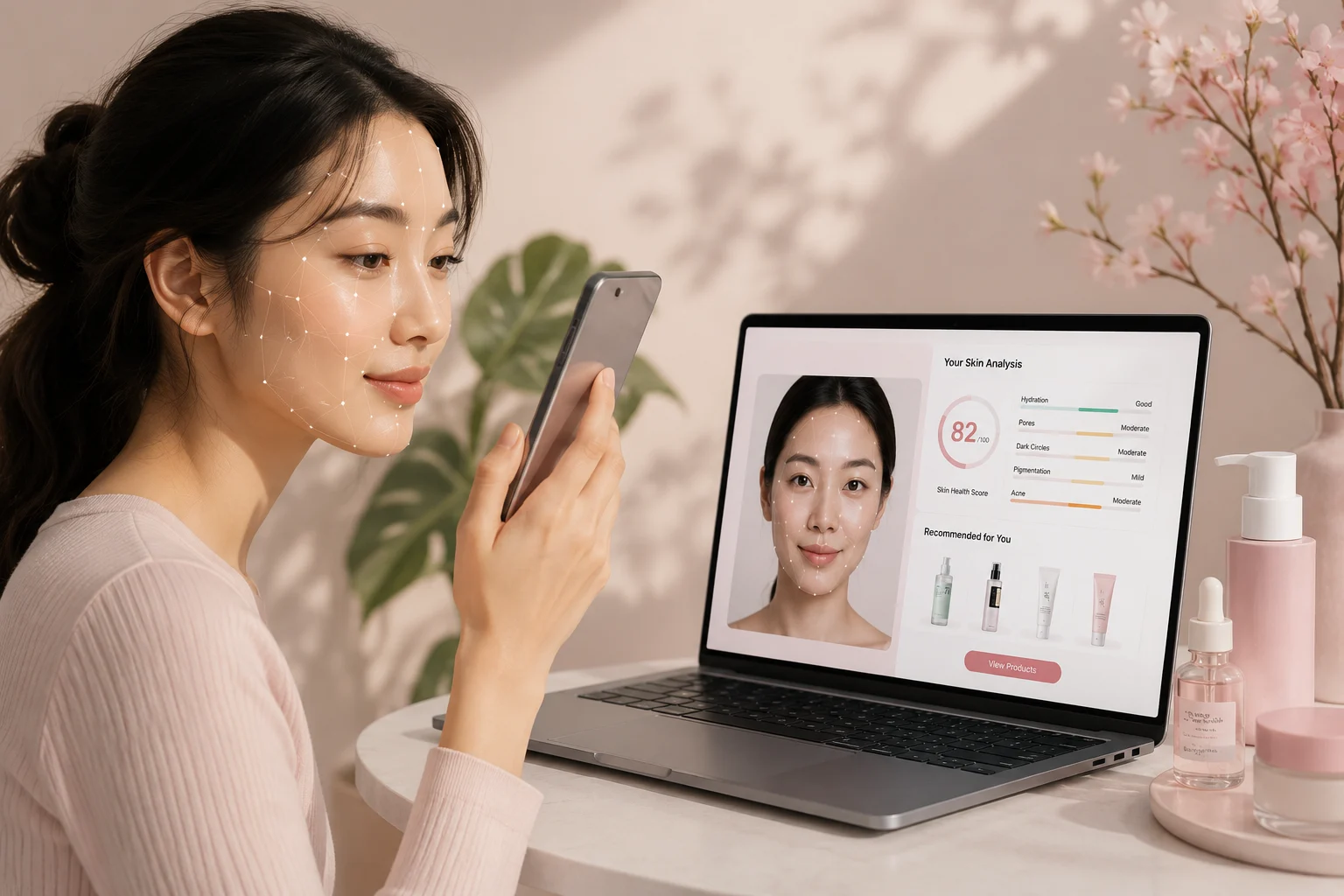
Beauty shopping has changed. Customers do not want generic product lists - they want to know what truly works for their skin. That is why more beauty brands are using AI skin analysis apps. These tools scan skin, identify issues like dryness, pigmentation or fine lines and suggest products tailored to individual needs.
For brands, this is no longer optional. It is what turns one-time buyers into loyal customers. This blog explains how AI skin analysis works, highlights top providers and helps you choose the right one for your brand.
Real-time analysis with AR features
Easy setup, customisable recommendations
Focus on ingredient transparency and eco-friendly advice
AI skin analysis uses computer vision to study photos or live video of a face. It detects hydration, pigmentation, texture and fine lines, then creates a detailed skin profile within seconds. The more it is used, the smarter its recommendations become.
Real-time results: Instant feedback without waiting for a dermatologist
Personalised recommendations based on real skin data
AR integration: See how products might look before buying
Useful insights for brands to shape products and campaigns
It changes how customers feel about your brand by building trust and driving sales.
Better engagement: Personalised consultations feel genuine, not salesy
More conversions: Customers buy confidently when products match their skin
Stronger loyalty: Customers return to brands that understand them
It also makes operations smoother:
Faster consultations: Seconds instead of 15 minutes
Smarter decisions: Skin data guides product development and marketing
Great for brands needing deep analysis, like dermatology clinics and luxury brands.
Best for: Clinics, premium brands
Features: Detailed skin reports, customisable dashboards, advanced machine learning
Simple yet effective for small to mid-sized brands wanting easy setup.
Best for: Small and mid-sized brands
Features: Clear reports, smooth e-commerce integration, flexible pricing
Focuses on sustainability with eco-friendly product recommendations.
Best for: Eco-conscious brands
Features: Sustainable matches, ingredient transparency, values-driven insights
Best For | Standout Feature | Cost | |
DeepAR | Large retailers, dermatology | Deep, detailed reports | Premium |
Banuba | Small-to-mid brands | Easy setup, flexible pricing | Affordable |
ModiFace | Sustainability-focused brands | Eco-conscious recommendations | Moderate |
AI skin analysis began in beauty but is expanding:
Personalised skincare and smarter virtual try-ons
Facial recognition to recommend frames that fit
Skin tone data to suggest complementing pieces
AI suggests interior tones that suit a person’s space
Data side: Do not neglect privacy - skin data is sensitive. Also, ensure a smooth user experience or customers will drop off.
Rollout side: Train staff well and use data beyond sales to improve products and marketing.
Fynd GlamAR’s AI skin analysis easily integrates into existing setups. It provides real-time, accurate assessments and recommendations, enhancing engagement and sales.
User experience and data security are priorities, ensuring a smooth, safe customer journey. Explore how GlamAR boosts conversions for D2C beauty brands with its AI Skin Analyser.
Many beauty brands now offer AI skin analysis online, giving personalised product advice from home. This leads to happier customers and stronger sales.
If your brand has not adopted this yet, now is a great time, whether you are new or established.
Define your goal - boost engagement, sales or product recommendations.
Choose the right app based on features, integration ease and cost.
Train your team to understand and explain the tool.
Monitor performance, gather feedback and improve continuously.
A leading beauty retailer added AI skin analysis to their online store, letting shoppers get skincare recommendations from home. The result: a 20% jump in online sales and a noticeable lift in customer satisfaction.
Another retail brand used in-store AI skin assessments to guide customers toward the right products in real time. That single change drove a 30% increase in foot traffic and stronger repeat visits.
Skin analysis technology is not slowing down. Better image recognition and more advanced personalisation models are already reshaping how brands connect with customers and the AI skincare market is expected to grow around 15% every year over the next five years, driven by rising demand for personalized beauty experiences as per the Statista, 2025 report. Industry research from McKinsey also points to AI adoption accelerating sharply across the beauty sector in the coming years.
For brands, this means the window to get ahead of the curve is now - not later
Look for a tool that is simple to set up and does not need heavy technical resources. It should still deliver detailed, personaliaed skin assessments without requiring a dedicated tech team to run it.
It makes recommendations feel personal instead of generic. That builds trust, keeps customers on the page longer and often leads to better conversion rates since people buy what's actually right for them.
Yes - most modern tools, including GlamAR's, are built to integrate smoothly with existing storefronts so the analysis-to-purchase journey feels seamless rather than bolted on.
Look for detailed, dermatology-grade reports and customizable dashboards. These are especially valuable for high-end beauty brands and clinics that need more than a basic skin score.
Because customers increasingly want proof, not just claims. Tools that combine skin analysis with ingredient transparency and sustainable recommendations help brands back up their values with data.
GlamAR builds AI skin analysis directly into your brand's ecosystem, delivering real-time assessments and recommendations without a complex setup while keeping user experience and data security front and center.
Read how a leading Mauritius K-Beauty ecommerce platform transformed online skincare shopping with Fynd GlamAR's AI Skin Analysis and personalised product recommendations.

Myntra M-Now, AJIO Rush, Zilo, Slikk and KNOT compared across three fulfillment models. How fashion brands sell across all of them from one inventory system.

Global logistics giants are pouring millions into cold chain. Here's how Fynd delivers temperature-controlled pharma logistics without the billion-dollar price tag.
Fill out the form
Share your contact information to get started
Speak to an expert
A member of our sales team will get in touch with you