For years, the retail industry has treated online and offline commerce as opposing forces. Every advance in e-commerce has sparked fresh predictions about the decline of physical retail, while shopping malls have often been positioned as the side struggling to keep pace with digital-first competitors.
The reality is far more complex. Physical retail continues to play a critical role in the customer journey. Consumers still value the ability to see products in person, try them before purchasing, receive immediate gratification, and interact with knowledgeable store associates. What has changed is not the importance of physical stores, but the role they are expected to play within the broader shopping experience.
How has the retail mall experience changed in 2026
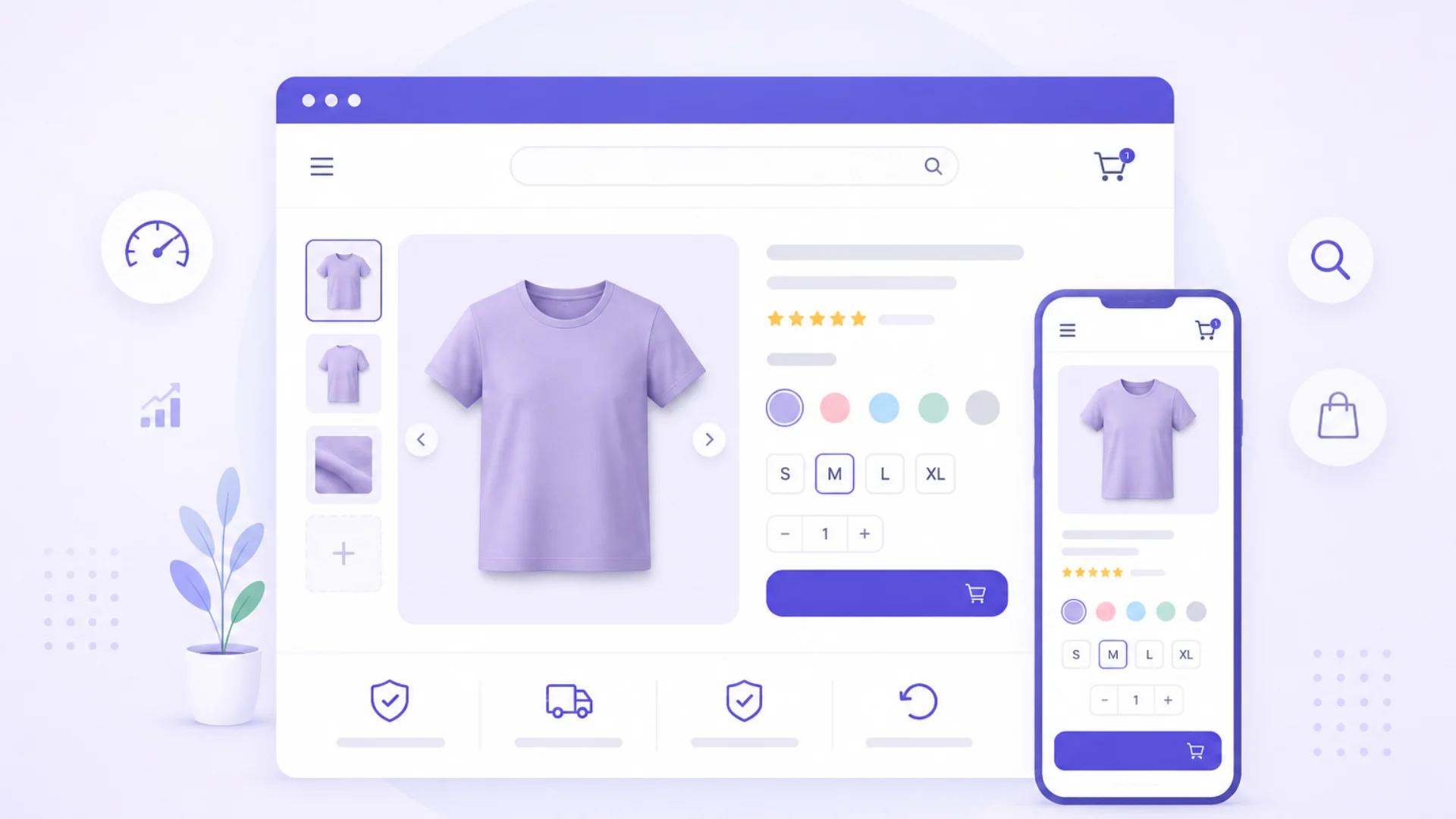
Modern consumers do not think in channels. They move fluidly between websites, mobile apps, social media platforms, marketplaces, and physical stores. A customer may discover a product on Instagram, research it on a retailer's website, compare prices online, and visit a store to complete the purchase. Another customer may browse in-store and ultimately place the order online later that evening. To the customer, these are not separate experiences. They are all part of a single shopping journey.
The challenge facing mall retailers is that customer expectations have evolved significantly faster than the operational systems supporting many physical stores. While consumers expect a seamless transition between digital and physical touchpoints, many retailers continue to operate with disconnected systems that create friction at the exact moment a customer is ready to buy.
Why omnichannel retail matters for mall retailers today
Consider a familiar scenario. A customer walks into your store after researching your latest collection online. She already knows the product she wants, the size she needs, and the price she expects to pay. In many ways, she represents the ideal shopper because most of the decision-making process has already taken place.
So, the discovery phase is complete, the interest has been established and the purchase intent is high. Now, all she needs from the store is confirmation of product availability and a straightforward path to purchase.
Instead, when she enters the store, the product is not visible on the floor. A store associate attempts to locate it but cannot immediately determine whether another size is available. Why? Because there is no real-time visibility into inventory across locations. The associate checks the stockroom, makes a few calls, and returns without a clear answer. At last, after several minutes of uncertainty, the customer leaves, and in many cases, she completes the purchase elsewhere.
What makes this situation particularly frustrating is that the customer was already ready to buy from the retailer. They did not lose the sale because of poor products, weak marketing, or pricing concerns, but because of operational friction.
This behavior is increasingly common. Studies show that 81–87% of shoppers research products online before making an in-store purchase, highlighting how much of the buying decision is completed before a customer even enters a store.
And when a retail store fails to deliver the item the customer came looking for it results in lost revenue, low customer satisfaction and affects long-term loyalty. Each missed opportunity makes it easier for competitors to win customers who were already within reach.
Why omnichannel technology has become a necessity for mall retailers
Retailers operating within shopping malls face a distinct set of challenges. Unlike standalone stores, mall retailers compete in environments where customers have immediate access to multiple alternatives. If a shopper cannot find what they need in one store, they can simply continue their search a few doors away. This makes every customer interaction more important.
Research shows that two-thirds of consumers will leave a store and shop elsewhere when the item they want is out of stock, making inventory availability a direct competitive advantage in high-traffic retail environments.
In other words, every stockout, every delayed inventory lookup, every long checkout queue, and every operational inefficiency creates an opportunity for a competitor to capture the sale. In fact, 62% of consumers report switching to a competing brand because of stockouts, while 82% say they would try a competitor if their preferred product is repeatedly unavailable.
Therefore, for mall retailers, their success will no longer be determined solely by product assortment, store design, or location itself. It will now increasingly depend on their ability to create a connected experience that bridges the gap between digital discovery and in-store execution.
An omnichannel experience is not defined by the number of channels a retailer operates. It is defined by how effectively those channels work together to support the customer journey.
A customer asks for a product that is unavailable in-store. Instead of losing the sale, a store associate locates inventory elsewhere and arranges home delivery.
A shopper arrives to collect an online order. The associate has visibility into the purchase and recommends complementary products based on the customer's interests.
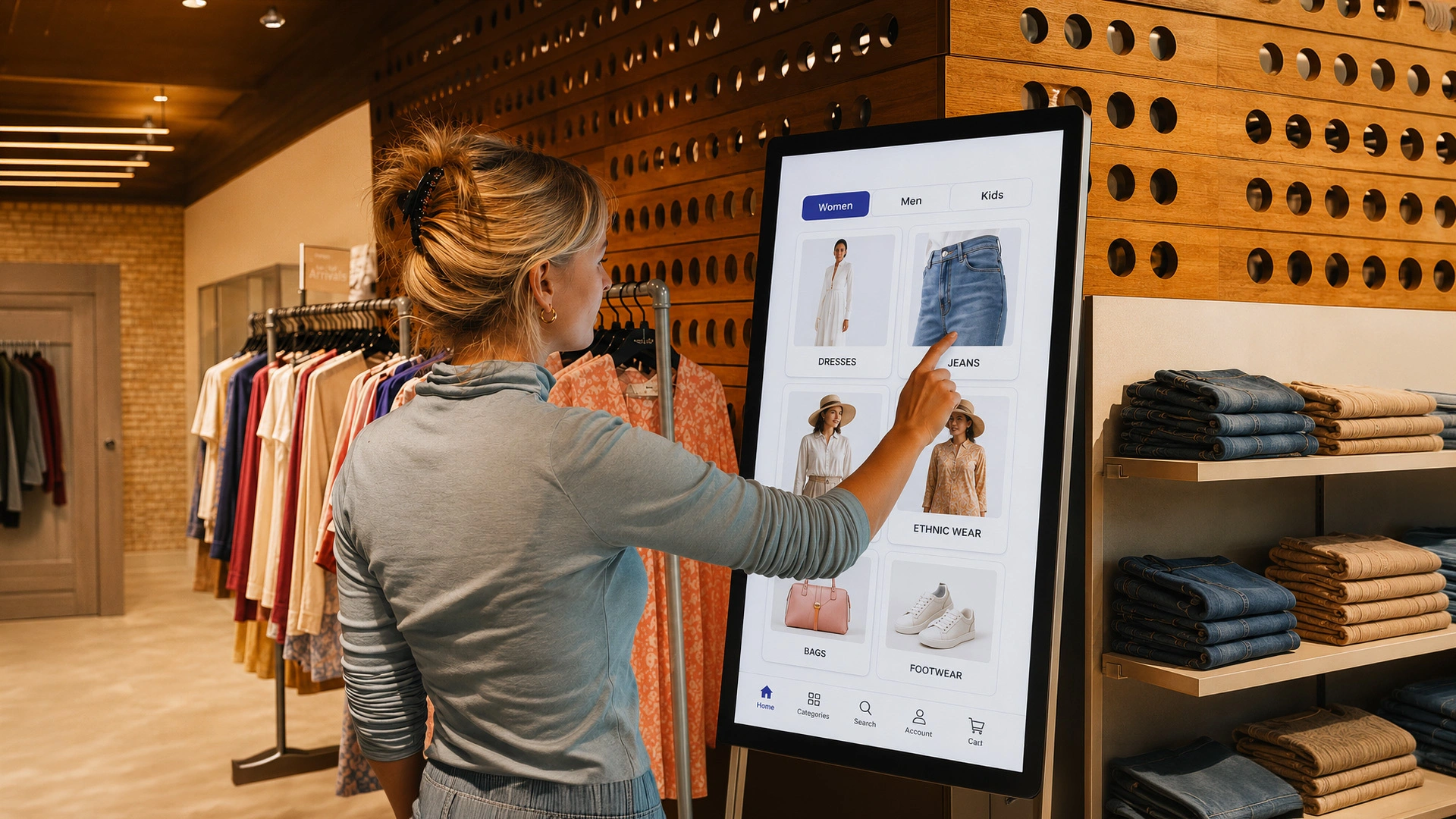
A customer prefers a self-service experience. They scan products, complete payment independently, and leave without waiting in line.
A returning customer enters the store. Staff members can access purchase history and preferences, enabling more informed and personalized recommendations.
These experiences may appear simple from the customer's perspective, but they require significant coordination behind the scenes.
Fynd Store OS is designed to help retailers connect their physical stores with the broader commerce ecosystem.
Running across mobile devices, tablets, kiosks, and point-of-sale terminals, Store OS gives store teams access to inventory, customer information, order management, fulfillment workflows, and checkout capabilities through a unified platform.
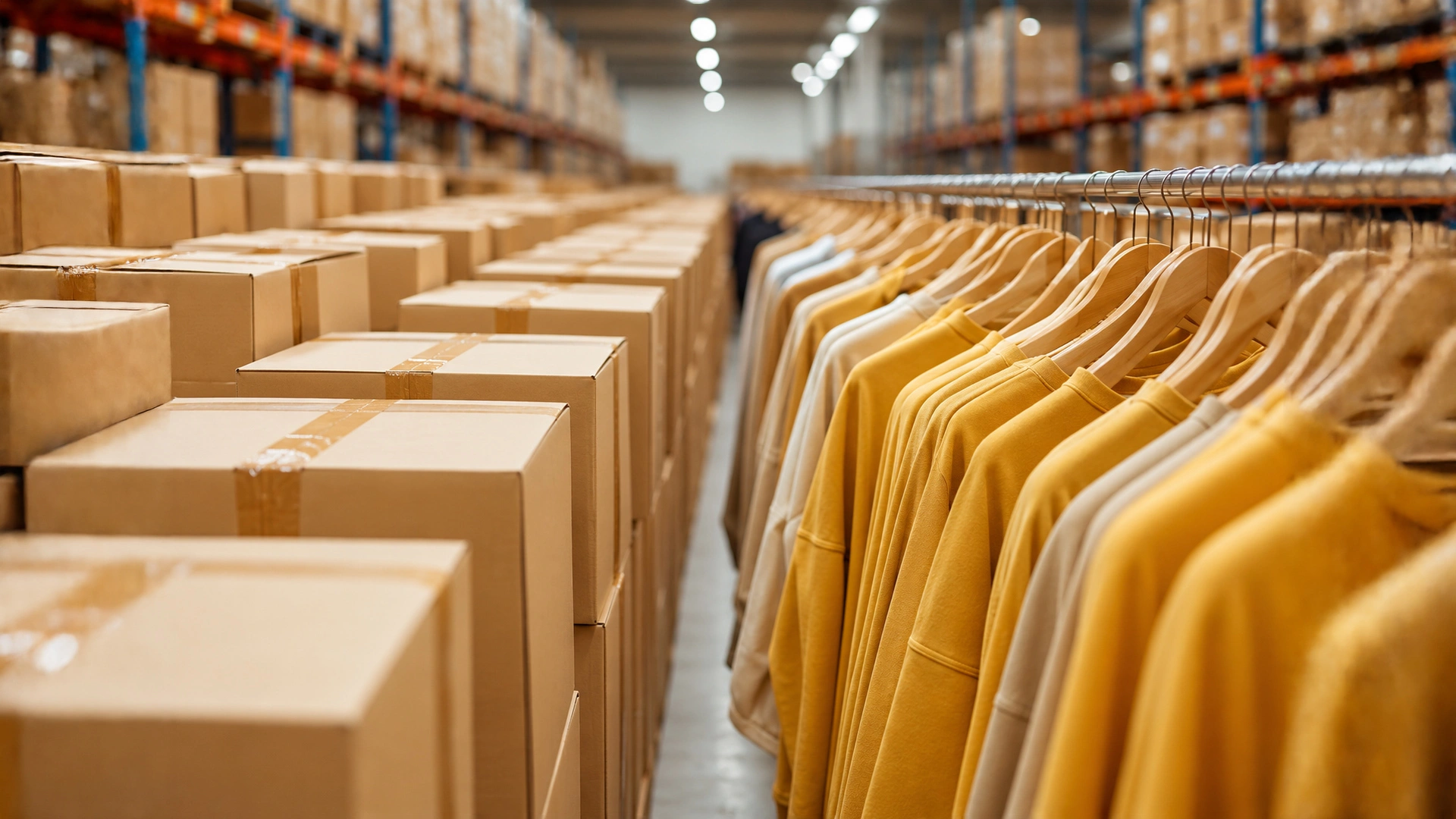
For example, when an associate checks product availability through StoreOS, they are not only viewing inventory in their own store. The platform provides visibility into inventory across the retailer's entire network, including nearby stores, warehouses, and fulfillment centers. This enables associates to immediately identify alternative fulfillment options such as ship-from-store, home delivery, or click-and-collect without leaving the customer waiting.
Similarly, when an online order is placed, StoreOS synchronizes order information across channels. By the time a customer arrives in-store for pickup, store staff already have access to order details, fulfillment status, and customer information. The handoff between digital and physical channels becomes seamless because both are operating from the same source of truth.
Customer data plays an equally important role. Purchase history, browsing behavior, loyalty information, and past interactions can be surfaced directly within the store experience. Instead of relying solely on product knowledge, associates can make recommendations based on a customer's actual shopping preferences and purchase patterns.
StoreOS also extends beyond assisted selling. Through self-checkout and mobile-assisted checkout capabilities, customers can complete transactions independently while inventory, payments, promotions, and loyalty benefits remain synchronized in real time. This reduces queue times while ensuring operational consistency across channels.
Behind every interaction, StoreOS continuously orchestrates multiple workflows:
Real-time inventory synchronization across stores and warehouses
Centralized order management and fulfillment routing
Unified customer profiles and purchase history
Store associate tools for assisted selling
Integrated promotions, pricing, and loyalty programs
Checkout and payment processing across assisted and self-service journeys
The result is a connected retail operation where customers can move effortlessly between online and offline touchpoints without encountering disconnected systems or inconsistent experiences.
When inventory, orders, customer data, and store operations operate as a unified ecosystem, physical stores become more than transaction points. They become fulfillment hubs, service centers, and experience destinations that are capable of converting demand into revenue regardless of where the customer chooses to shop.
The impact of connected retail operations can already be seen across some of India's largest retail networks. Raymond partnered with Fynd to strengthen its omnichannel capabilities, beginning with a pilot across 20 stores before expanding the implementation to 200+ stores across seven Raymond Group brands. By leveraging Fynd Store OS, Raymond enabled store teams to access inventory across locations, support Endless Aisle journeys, and streamline order fulfillment through a unified platform. Instead of treating stores as isolated sales channels, Raymond transformed them into connected fulfillment and customer engagement hubs capable of serving demand regardless of where inventory was located. |
How Fynd’s Endless Aisle technology helps retailers prevent lost sales
Inventory availability remains one of the most common reasons retailers lose sales. When a product is unavailable in-store, many customer interactions come to an abrupt end. The shopper leaves disappointed, and the retailer loses revenue that may have been recoverable.
Store OS enables associates to access inventory beyond the four walls of their location. Products can be sourced from warehouses, nearby stores, or online inventory pools and delivered directly to the customer. This transforms a stockout from a dead end into a fulfillment opportunity. Instead of informing customers that a product is unavailable, associates can focus on finding the best way to deliver it. The customer receives the product they were looking for, and the retailer retains the sale.
How Fynd’s mPOS improves the in-store customer experience
Checkout remains one of the most important moments in the customer journey. Even highly engaged shoppers can become frustrated by long queues and unnecessary delays. During peak shopping periods, these inefficiencies can directly impact conversion rates.
Store OS enables mobile checkout through handheld devices, allowing associates to complete transactions anywhere within the store. This creates a more convenient experience for customers while improving operational flexibility for retail teams.
For pop-up stores, seasonal activations, kiosks, and event-based retail environments, mobile point-of-sale capabilities also eliminate the need for fixed checkout infrastructure. The result is a faster and more efficient path from product discovery to purchase.
How Fynd’s self-checkout and Scan & Go improve retail convenience
Not every customer wants assistance. Many shoppers prioritize speed and autonomy. They prefer to browse, purchase, and leave without engaging in lengthy interactions. Store OS supports self-checkout kiosks and Scan & Go experiences that allow customers to manage the purchasing process independently.
For retailers operating in busy mall environments, these capabilities can significantly improve throughput during peak periods while reducing pressure on store teams. Customers gain greater control over their experience, while retailers improve efficiency without compromising service quality.
Customers do not think about inventory locations, fulfillment networks, or operational constraints. They simply want a convenient way to purchase what they need.
Store OS enables retailers to combine products from different fulfillment sources within a single order. A customer can purchase an item available in-store while simultaneously ordering another product for home delivery.
This reduces friction, prevents abandoned purchases, and increases the likelihood that customers complete their entire purchase journey with a single retailer rather than splitting it across competitors.
How Fynd’s distance selling helps retailers engage customers beyond the store
The customer journey does not always end when a shopper leaves the store. Many purchasing decisions are made after a visit, particularly for high-consideration products or repeat purchases.
Store OS enables store associates to continue engaging customers through digital storefronts that can be shared via channels such as WhatsApp and SMS.
Associates can recommend products, share curated collections, and follow up with interested shoppers even after they have left the mall. For retailers focused on clienteling, relationship-driven sales, and customer retention, this creates new opportunities to generate revenue beyond traditional in-store interactions.
The future of retail will not be defined by online commerce alone, nor will it be driven exclusively by physical stores. It will belong to retailers that successfully connect both worlds.
Physical stores continue to offer advantages that digital channels cannot fully replicate, including human interaction, product discovery, immediate fulfillment, and immersive brand experiences. At the same time, customers increasingly expect the flexibility, visibility, and convenience that digital commerce has normalized.
The retailers that succeed in the years ahead will be those that remove friction between these environments and create experiences that feel connected from beginning to end.
Fynd Store OS helps retailers achieve this by connecting inventory, orders, fulfillment, customer data, and in-store operations through a unified platform designed for modern retail. Because the most effective retail experiences are not the ones customers notice.
~t.compress(q:75)/cms_uploads/How-retail-malls-can-compete-with-e-commerce-using-omnichannel-shopping.webp)