September 28, 2025
Fleet management for autonomous vehicles: Trends and outlook
This guide to fleet management of autonomous vehicles outlines the benefits, challenges, and trends that shape a more profitable operation for your business.

September 28, 2025
This guide to fleet management of autonomous vehicles outlines the benefits, challenges, and trends that shape a more profitable operation for your business.
It still stays with me, the very first time I saw one of our trucks heading away from a busy intersection without a driver. It was a rainy Thursday morning, the ones where traffic crawls, and half my mind expected some mayhem.
The vehicle was gliding, signaling, braking, and adjusting its speed adequately, much like an expert driver. Years of exposure to fleet management have taught me that efficiency is not all about hard quantitative theory but about anticipating the unexpected.
For logistics, the term "autonomous vehicles" has ceased to be in the far distant future; they are in effect quietly changing the way routes are considered or operational costs are calculated. However, the journey is not a smooth one, given the technology failure, regulatory challenges, staff adaptation, and initial costs.
Hence, alongside innovation, fleet management has to continue ensuring safety, efficiency, and reliability. In this article, I will present the benefits of autonomous vehicles, emerging trends, and what this means for the future of fleet operation.
Autonomous vehicle fleet management goes beyond truck tracking or route planning. Instead, it also considers all networked self-driving assets to make sure they operate safely and reliably.
In my opinion, it includes monitoring vehicle performance, scheduling preventive maintenance, and route optimization, considering traffic and weather data, along with evolving regulatory compliance.
Unlike conventional fleets, autonomous vehicles generate a regular and streaming influx of data, which, if harnessed correctly, could quickly reduce downtime, lower operational costs, and increase safety. Managing the fleet efficiently is what turns futuristic technology into real-world business benefits.
Over the years, I have observed how autonomous vehicles have fashioned fleet management into a highly data-driven system. It's important to understand how these vehicles operate in order to reap the benefits while equally ensuring safety and efficiency. Every component comes into play, which I will discuss in the below section.
This combination of cameras, sensors, LiDAR, and AI algorithms aims to improve road safety compared with human-driven vehicles. These systems develop prevention measures against obstacles, read signs, adjust speeds accordingly, and allow dynamic reactions of vehicles to changing road conditions.
From my experience, I see that this technology diminishes human errors while at the same time bringing consistency to operations. In fact, if you see the statistics, it also shows that the global autonomous vehicle development platform market size will grow to USD 139.60 billion by 2032. This clearly shows that there would be a demand for the use of technologies, such as AI and LiDAR.
One big advantage of AVs is that you can monitor and control them remotely. You can monitor a dashboard and track each vehicle in your fleet. You can receive alerts from the system and intervene if the need arises.
With such a high view of the operations, it becomes easy to improve safety and reduce downtime, thereby ensuring that things keep running even in the face of any unforeseen challenge.
An autonomous vehicle generates huge amounts of operational data. By analyzing different metrics such as traffic flows, vehicle performance, and fuel consumption, you can dynamically optimize the routes based on such inputs.
Data-driven routing delivers higher efficiency and lower fuel costs, and allow fleets to realign to actual life challenges more adeptly than their conventional counterparts.
The greatest change I have witnessed is predicting maintenance before failure: Autonomous vehicles monitor their mechanical and software systems continually and alert fleet managers to potential issues.
Predictive maintenance cuts down on breakdowns, extends the life of a vehicle, and keeps maintenance costs down.
Since the autonomous fleet depends on connected systems, cybersecurity holds the highest priority. From my experience, technically speaking, for safe and reliable operations, vehicles should be protected against cyber threats, and the AVs must be updated with the latest software version at all times. Without these aspects, even the most highly technical AVs will be vulnerable to threats.
AVs operate within a complex regulatory environment, and compliance is a basic mandate. Geofencing features keep vehicles within approved zones and speed limits while conforming to the insurance requirements. For the fleet to run smoothly, compliance features must be managed efficiently.
Autonomous fleets tend to be either electric or hybrid, thus putting a new concept of operational planning. After careful monitoring of battery health, charge scheduling, and integration of energy management with route planning can limit downtime, thereby making it very cost-efficient. In my experience, the integration is pretty much essential for running the fleet in a sustainable manner.
From my point of view in managing fleets, this realization drew me into acknowledging that autonomous trucking is no longer an idea for the next decade; it is now becoming a real, changing law of logistics.
The business cases for it are strong: autonomous trucks go nonstop, reduce TCO, and solve the perennial driver shortage issue. Challenges are there, of course. The question is: will the technology be reliable in every single road condition? How do you deal with a patchwork of regulations? And what are the integration options for these trucks into modern supply chains? So, let's take a look at it:
Generally, there are five main categories under which real deployments of autonomous trucks on public roads can be categorized.
From my experience, I'd say early adoption will favor hub-to-hub routes, but long-haul and intra-city distribution will take a bit longer to automate fully.
1. U.S. – Higher adoption for long-haul and mid-distance hub-to-hub applications due to great TCO benefits and driver shortage. By 2035, autonomous trucks are projected to account for around 30% of new truck sales for mid-distance hub-to-hub applications.
2. Europe – There is a huge TCO benefit, but there are restrictions on cross-border operations that make adoption slower. The mid-distance hub-to-hub applications may see adoption up to 26% by 2035.
3. China – Slower adoption due to higher upfront investment and low TCO benefits, though with government backing, the pace may pick up.
Autonomous trucking needs many other things for a successful deployment. From what I have experienced, it is the ecosystem around them that determines if they can truly create value. Here's how a piece fits into the larger puzzle:
1. Fleet Operators – The control tower of operations. These days, they must monitor systems remotely and have emergency response measures put in place should an unforeseen situation occur.
2. Warehouses – A truck may drive itself, but it still needs to be loaded and unloaded. The upgraded dock and the easy layout automation help in the seamless transfer between vehicle and facility.
3. Staff – The personnel and technology go together. The drivers could now very well become supervisors or technicians needing training to manage AV systems and coordinate operations.
4. Digital platforms – Managing a mixed fleet of various OEMs relies on an integrated transport management system (TMS) that provides routing, load matching, and fleet visibility.
5. Regulators, insurers, and investors – There cannot be an ecosystem without trust from these stakeholders. They provide the legal, financial, and safety frameworks on which AV fleets scale with confidence.
When all of these come together, there will be far more than just an autonomous truck offering efficiency; it becomes a resilient, data-driven, and flexible logistics system for fleet managers.
Within the fleet and logistics industry, I came to realize something in the course of my operations: that an autonomous vehicle can only be as capable as its management system. With little or no oversight, even the finer AVs can drag their feet in performance or run the risks of being operationally impaired. With fleet management, efficiency, safety, and profitability can be ensured for companies to invest in autonomous technologies.
Fleet management allows companies to optimize routes, minimize idle time, and enhance delivery schedules. Monitoring, tracking, and analysis on a real-time basis ensure vehicles are working under peak capacity. This helps in reducing fuel costs and minimizing wear and tear.
An autonomous vehicle needs maintenance. A fleet management system will monitor vehicle health, viewing issues before they worsen. Predictive maintenance means less downtime, a longer life for the vehicle, and reliability, which is vital in logistics when every delay counts.
Autonomous vehicles present new challenges with respect to safety. For example, pedestrian crossings, debris on highways, or erratic behavior from other drivers could create a problem for AVs to make decisions. Fleet management tracks driving patterns and road conditions, and monitors software updates to keep the AVs compliant. Monitoring AV performance mitigates accidents, limits liabilities, and ensures safe operations.
Fleet management generates crucial data regarding utility, energy consumption, and operational performance of vehicles. Analyzing such data enables managers to make decisions regarding fleet size, route planning, or investments in new technologies so that autonomous operations become efficient and scalable.
It is one thing that logistics and fleet operation experiences have taught me: to succeed, one needs more than technology. Being considered efficient and safe by the best fleet operators, autonomous vehicles are nevertheless subject to challenges that need to be carefully managed. Therefore, it is important to understand these challenges to ensure long-term sustainability.
A huge capital outlay is required for the acquisition of autonomous vehicles. Apart from the vehicles themselves, an operator also has to invest in fleet management platforms of the highest standards, sensor calibration, connectivity infrastructure, and staff training. This can be a barrier for smaller companies competing in large-scale operations.
The regulations pertaining to autonomous fleets differ widely from region to region, many still being in flux. Hence, most operators are experiencing uncertainty about where and how AVs can legally operate. The constantly changing sets of rules are turning into a hindrance to strategic planning and investment decisions.
Building public confidence is another major hurdle for autonomous fleets. Even isolated incidents can have a profound impact on trust. The question of liability arises after an accident, but it is difficult to understand who is at fault: the manufacturers, the software developer, or the fleet operators.
Fleet operators can manage hybrid fleets that combine traditional vehicles and AVs. But this also brings with it a challenge. It becomes difficult to align advanced AV telematics with older systems. On top of that, it gets harder to maintain consistent service standards across both vehicle types, and it needs a lot of work to retrain the drivers so they can stay aligned with the new workflows. Without addressing these gaps, you might face inefficiencies, higher costs, and operational disruptions.
| Challenge | Possible solutions |
|---|---|
| High initial investment | Adopt phased implementation Explore leasing models Partner with tech providers Use ROI-based investment planning |
| Regulatory uncertainty | Maintain active compliance monitoring Join industry associations for policy updates Design flexible operational strategies |
| Public trust and liability concerns | Implement safety protocols Use real-time monitoring Secure insurance tailored to AV operations Engage in public awareness campaigns |
| Integration with legacy fleets | Invest in interoperable fleet management platforms Standardize processes across vehicle types Retrain the workforce Gradually phase in AVs into operations |
Compliance is as important as technology. Autonomous vehicles are subjected to overlapping regulations in transport, safety, and technology, and violations can cause penalties, restrictions, or liability in resultant accidents.
Safety rules vary immensely according to jurisdiction. Some regions require lots of certification before an activity can be tested, while others allow pilots to proceed without so many checks.
A recommended practice is to act according to the highest available safety regulations, hence minimizing risk and maintaining minimal readiness as laws become more stringent.
Traditional insurance models, such as physical damage coverage, workers' compensation, etc., are not at all suitable for AV risks. Liability may be shared between the operator, the manufacturer, and the software provider in certain cases.
Clear insurance and liability regimes must be established for the protection of the business to instill trust in the client and the public. For instance, the newer insurance models should offer usage-based insurance and product liability coverage.
Autonomous vehicles generate and transmit large quantities of sensitive data. Regulations on privacy, for example, the GDPR and CCPA, set stringent requirements for handling such information, and cyberattacks increase vulnerability, making AVs valuable targets. Hence, the safe encryption of data transmission, access control, and real-time monitoring are important to protect data.
Manufacturers use different systems and protocols, raising integration challenges for mixed fleets. Without universal standards, operators will have to set internal standards on issues such as safety, reporting, and maintenance to ensure consistent performance across all vehicles.
Effective management of an autonomous fleet is ascending to a new high because its conventional concepts no longer hold any value. It has turned into software, data, and infrastructure. Now, operators think about how their electric and cloud-tethered vehicles fit with city infrastructure.
It uses new considerations that shape the new phase:
Let’s explore each trend and a few actions that fleet operators must take.
Early deployments in autonomy are mostly battery-electric vehicles (BEVs) because they are cheaper to operate than traditional vehicles and have wider integration opportunities with advanced driver assistance systems. Additional regulations for emission control also support these products; however, the real challenge lies not in the adoption of BEVs but in building the necessary charging ecosystem all around.
Actions to take:
Autonomous vehicles generate a huge amount of data every second, some of which cannot be sent to the cloud. For example, braking, steering, or hazard detection must be handled by the vehicle or close-by edge servers, while the cloud remains essential for analytics, updates, and managing a fleet at scale.
Actions to take:
There will always be edge cases – high complexity, road construction zones blocking a street, emergency vehicles, or last-minute delivery routes. This is true even for excellent AV systems. This is where teleoperation is making a great leap. Operators are building their remote operation centers (ROCs) and trained staff can virtually step in when the vehicle needs human oversight. 5G networking is making it all possible at scale.
Actions:
Aurora, a Pittsburgh-based self-driving truck company, has launched a fully driverless freight service on public roads in Texas. Its 18-wheelers have already transported perishables between Dallas and Houston alone, racking up over 1,200 miles.
After four years of driving tests, in combination with safety drivers, and completing a rigorous “safety case,” which is an evidence-based analysis, the system has been considered for public use.
All I can say is that the shift to autonomous vehicles is no longer a dream or a futuristic concept. It is already a reality in the logistics field. Fleet management for autonomous vehicles is not a straight path and comes with its challenges, like the need for new skills, and the initial costs are high as well. Furthermore, there’s also regulatory uncertainty. To combat these issues, fleet operators must harness the power of a TMS. It has the power to automate compliance, and most importantly, it can transform a collection of independent smart vehicles into a powerful, unified, and resilient logistics network.
Technology is advancing at a fast pace, but application-wise, it depends on the routes. Consider first fixed corridors with long-haul capabilities. For local deliveries, run a pilot test as it will confirm the performance on your routes and with your specific cargo. From that analytical data, you can scale with the best TMS possible.
Safety redundant mechanisms are embedded in the autonomous vehicle. It uses the layered approach of LiDAR, radar, and cameras to enhance safety and provide redundancy. The primary objective is to reduce human error, which is the fundamental cause of most accidents.
This all seems like an expensive initial investment, but in reality, it can deliver a strong return on investment (ROI). Smaller companies should look for leasing arrangements or for obtaining services from a technology provider so they might avoid big capital expenditures. You then reap the benefits of improved efficiency and reduced operational costs without assuming the risk of full ownership.
A TMS simplifies your role by providing a single dashboard for real-time monitoring and data analysis. It automates complex tasks like predictive maintenance and route optimization. Your new job will focus more on data interpretation, remote operations, and systems management, so training will center on these new skills.
The legal framework is still evolving, but liability is being moved from the individual driver to the manufacturer, the software developer, or the fleet operator. The new insurance programs are developed in view of this liability shift. An up-to-date TMS is your best insurance as it can provide an indisputable data log in court or before an insurance agency.
The best solution would be an interoperable fleet management platform that seamlessly integrates advanced AV telematics with your existing systems. This would provide for the same level of service across both vehicle types and allow for operations to be optimized so that the transition becomes smooth.

Looking for the best AI product recommendation software? Learn how to evaluate ecommerce recommendation platforms, compare essential features and choose the right solution for higher conversions and revenue.
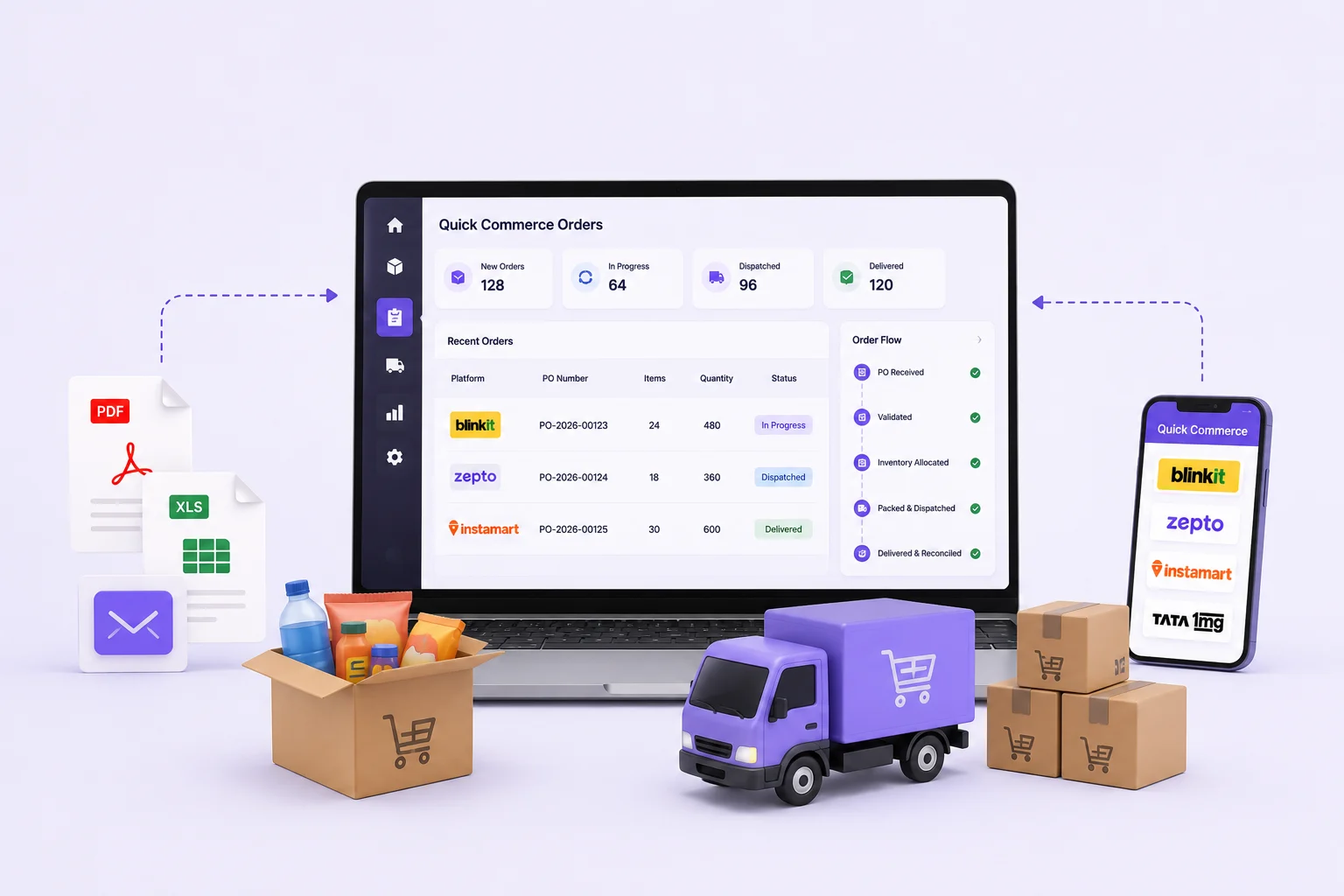
While marketplaces run on APIs, Quick commerce still runs on manual POs. See how Fynd automates Blinkit, Zepto and Instamart orders and fulfillment end to end.

How Fynd saved ₹13 crore a year by owning its tools instead of renting them. Here's the full story
Fill out the form
Share your contact information to get started
Speak to an expert
A member of our sales team will get in touch with you